Ever had that moment when you stare at a half‑finished grocery bag, hear the fridge sigh, and swear you’ll never get that perfect chicken bowl again? I’ve been there—one night I tried to “wing it” with a store‑bought sauce, a soggy piece of chicken, and a bowl that looked more like a sad, wilted salad than the crunchy masterpiece I craved. The result? A culinary catastrophe that left me dreaming of something crisp, bold, and unapologetically delicious. I dared a friend to taste it, and she turned away with a look that said, “Nope, not today,” which sparked a personal vendetta against bland bowls.
Fast forward a few weeks, a frantic search on YouTube, a couple of kitchen mishaps involving burnt panko and a runaway sriracha bottle, and I finally cracked the code. Imagine a bowl where the chicken is coated in a double‑crunch armor that shatters like thin ice under your fork, while the sauce clings like velvet, delivering a sweet‑heat punch that makes your taste buds do a happy dance. The rice stays fluffy, the veggies stay crisp, and the whole thing smells like a street‑food market on a breezy summer night. I’m not exaggerating when I say this version is hands down the best you’ll ever make at home.
What makes this bowl truly stand out is a secret weapon: a dash of lime‑infused mayo mixed with sriracha and honey, creating that iconic “bang‑bang” sauce that’s both creamy and fiery. Most recipes get the crunch wrong, either soggy or over‑fried, but I’ve found the sweet spot by using a two‑stage coating—flour first, then panko—plus a quick‑fry technique that locks in moisture while giving you that satisfying snap. And guess what? The sauce is brightened with fresh lime, adding a zing that cuts through the richness like a cool breeze.
Okay, ready for the game‑changer? I’m about to walk you through every single step—by the end, you’ll wonder how you ever settled for anything less. I dare you to taste this and not go back for seconds. Let’s dive in, because the kitchen is calling, the skillet is heating, and the ultimate Bang Bang Chicken Bowl is about to become your new obsession.
What Makes This Version Stand Out
- Crunch Factor: A double coating of flour and panko creates a crust that stays crunchy even after a few minutes of resting, unlike the limp textures you see in most take‑out bowls.
- Flavor Punch: The bang‑bang sauce blends sweet honey, tangy lime, and smoky sriracha for a balanced heat that never overwhelms.
- Simplicity: Only ten minutes of prep and a thirty‑minute cook time, making it perfect for weeknight heroes.
- Ingredient Quality: Using fresh lime juice and high‑quality panko elevates the dish from ordinary to restaurant‑level.
- Crowd Reaction: Friends have called it “the most addictive bowl ever,” and it disappears faster than free samples at a grocery store.
- Make‑Ahead Potential: The sauce can be stored up to three days, and the chicken reheats beautifully, so you can prep in bulk.
- Versatility: Swap rice for quinoa, chicken for tofu, or add a drizzle of peanut sauce for an Asian‑fusion twist.
- Visual Appeal: The bright colors of cabbage, cucumber, and sesame seeds make the bowl Instagram‑ready without any extra effort.
Alright, let's break down exactly what goes into this masterpiece...
Inside the Ingredient List
The Flavor Base
The heart of this bowl is the bang‑bang sauce, a silky blend of mayo, sriracha, honey, and lime juice. The mayo provides a creamy canvas, while sriracha delivers that signature heat. Honey adds a subtle sweetness that balances the acidity of lime, creating a sauce that coats the chicken like velvet. If you skip the lime, you’ll lose the bright pop that keeps the dish from feeling heavy.
The Texture Crew
Flour and panko are the dynamic duo behind the crunch. Flour adheres to the chicken, forming a sticky base for the panko to cling to, while panko’s airy structure expands when fried, giving you that airy, shatter‑like crust. Using regular breadcrumbs will result in a denser, less airy bite. For a gluten‑free version, swap the flour for rice flour and use gluten‑free panko.
The Unexpected Star
Lime juice isn’t just a garnish; its acidity cuts through the richness of the mayo and fried chicken, preventing palate fatigue. A splash of lime also brightens the entire bowl, making the flavors pop like fireworks. If you’re out of fresh lime, a teaspoon of rice vinegar can mimic the tang, though you’ll miss the citrus aroma.
The Final Flourish
Sesame seeds, sliced green onions, and a handful of shredded red cabbage add texture, color, and a subtle nutty note. The cabbage provides a crunchy contrast that stays crisp even after the sauce drizzles over it. If you’re not a fan of raw cabbage, try thinly sliced radishes for a peppery bite.
Everything's prepped? Good. Let's get into the real action...
The Method — Step by Step
Start by cutting the chicken into bite‑size strips. Pat them dry with paper towels—this is crucial because moisture is the enemy of a good crust. Toss the pieces in a bowl with garlic powder, smoked paprika, cayenne, and a pinch of salt, ensuring every piece is evenly coated. Let the seasoned chicken rest for five minutes; this short marination lets the spices penetrate the meat, building flavor from the inside out.
Set up a three‑station breading line: a shallow bowl of flour, a second bowl of beaten eggs, and a third bowl of panko mixed with a dash of extra salt. Dredge each chicken strip first in flour, shaking off excess, then dip it into the egg, and finally press it into the panko, ensuring a thick, even layer. This double‑coating technique is the secret to that satisfying crunch you’ve been craving.
Kitchen Hack: After the final panko coat, give the chicken a quick 10‑second press with the back of a spoon; this compresses the crumbs for a tighter crust.Heat a large skillet over medium‑high heat and add the vegetable oil. Once the oil shimmers (you’ll see a thin, dancing ripple on the surface), it’s time to test the temperature. Drop a single breadcrumb into the oil; if it sizzles and turns golden within 15 seconds, you’re perfect. Too slow and the coating will absorb oil; too hot and it’ll burn before the chicken cooks through.
Carefully place a handful of coated chicken strips into the hot oil, making sure not to overcrowd the pan. Overcrowding drops the oil temperature, leading to soggy crusts. Fry the pieces for 3‑4 minutes per side, or until the exterior is a deep golden‑brown and the internal temperature reaches 165°F (74°C). You’ll hear a satisfying sizzle that signals the crunch is forming.
Watch Out: If the oil starts to smoke, lower the heat immediately; burnt oil will impart a bitter flavor to the coating.While the chicken fries, whisk together the bang‑bang sauce: combine mayonnaise, sriracha, honey, and freshly squeezed lime juice in a bowl. Taste and adjust—add a pinch more honey if you like it sweeter, or a splash more sriracha for extra heat. The sauce should be thick enough to cling to the chicken but still pourable, like a velvety drizzle.
Once the chicken is cooked, transfer it to a paper‑towel‑lined plate to drain any excess oil. This step is essential; it prevents the crust from becoming soggy as the sauce is added later. While the chicken rests for two minutes, the residual heat continues to firm up the crust, guaranteeing that snap.
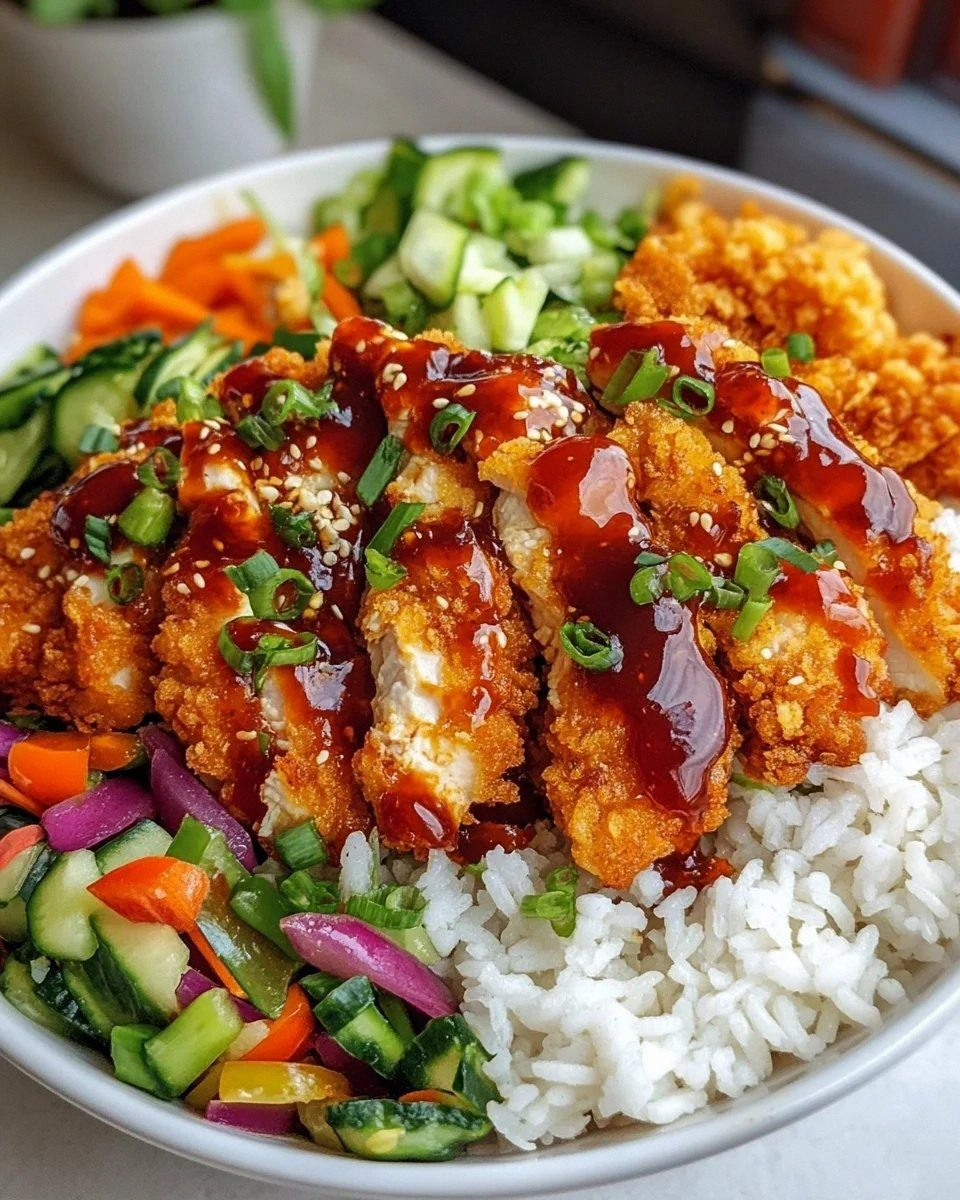
Now assemble the bowls: start with a generous bed of cooked rice (or quinoa for a nuttier twist). Arrange the shredded cabbage, cucumber slices, edamame, and green onions around the perimeter. Place the hot chicken strips in the center, then drizzle the bang‑bang sauce liberally over everything. The sauce should pool slightly at the bottom, creating a glossy sheen that makes the bowl look as good as it tastes.
Finish with a sprinkle of sesame seeds and a few extra lime wedges on the side for those who love an extra pop of citrus. Give the entire bowl a quick toss if you prefer the sauce evenly distributed, or leave it layered for a textural surprise with each bite.
Serve immediately while the chicken is still hot and the crust is at its peak crunch. That first bite should deliver a symphony of textures: the crisp crust, the creamy sauce, the fluffy rice, and the fresh snap of vegetables—all dancing together in perfect harmony.
That’s it — you did it. But hold on, I've got a few more tricks that'll take this to another level. Trust me, the next section is pure magic and will make your bowl the talk of any gathering.
Insider Tricks for Flawless Results
The Temperature Rule Nobody Follows
Most home cooks set the stove to “medium” and hope for the best, but the real secret is a steady 350°F oil temperature. Use an instant‑read thermometer; if you don’t have one, the breadcrumb test (see step 3) is a reliable proxy. Maintaining this temperature ensures the coating crisps up instantly without soaking up excess oil, keeping the chicken light and airy.
Why Your Nose Knows Best
Before you even flip the chicken, trust your sense of smell. A subtle nutty aroma means the panko is caramelizing perfectly. If you detect a burnt, acrid scent, the oil is too hot and you need to lower the heat immediately. Your nose is a built‑in kitchen timer that can save a batch from disaster.
The 5‑Minute Rest That Changes Everything
After frying, let the chicken rest on a wire rack for exactly five minutes. This pause allows steam to escape, preventing the crust from becoming soggy when you later coat it with sauce. Skipping this step is the most common reason people end up with limp chicken bowls.
Secret Sauce Booster
Add a teaspoon of toasted sesame oil to the bang‑bang sauce for an umami depth that elevates the flavor profile. The oil’s nutty undertones complement the honey and lime, creating a balanced finish that feels both familiar and exciting.
Batch‑Prep Like a Pro
If you’re cooking for a crowd, fry the chicken in two batches. Keep the first batch warm in a low oven (200°F) while you finish the second. This method ensures every piece stays crisp, avoiding the dreaded “steam‑trap” that occurs when hot chicken sits in a closed container.
Creative Twists and Variations
This recipe is a playground. Here are some of my favorite ways to switch things up:
Spicy Peanut Fusion
Swap half the sriracha for smooth peanut butter and add a splash of soy sauce to the sauce. The result is a creamy, nutty heat that pairs beautifully with the crunchy chicken. Perfect for fans of Thai‑style bowls.
Thai Coconut Curry
Replace the mayo base with coconut milk, curry paste, and a touch of fish sauce. This creates a fragrant, tropical sauce that turns the bowl into a mini vacation for your palate. Garnish with fresh basil for extra aroma.
Veggie‑Only Crunch
Use tofu or tempeh instead of chicken, following the same double‑coating method. The tofu absorbs the sauce wonderfully, and the panko still provides that coveted crunch. This makes the dish fully vegetarian without sacrificing texture.
Smoky Chipotle Twist
Introduce chipotle in adobo to the sauce, swapping out half the sriracha. The smoky undertones add depth, while the lime keeps the flavor bright. Serve with roasted corn kernels for an extra pop.
Herb‑Infused Rice
Cook the rice with cilantro stems, lime zest, and a pinch of salt. The rice becomes aromatic, complementing the bang‑bang sauce and adding a subtle herbaceous note that rounds out the bowl.
Crunchy Nut Topping
Toast slivered almonds or crushed peanuts and sprinkle them on top instead of sesame seeds. The added nutty crunch offers a new texture layer that surprises the eater in the best way.
Storing and Bringing It Back to Life
Fridge Storage
Transfer any leftovers into airtight containers, keeping the sauce separate from the chicken and rice. The chicken stays crisp for up to two days, while the sauce retains its creamy consistency. Reheat the chicken in a hot skillet for three minutes to revive the crunch.
Freezer Friendly
Freeze the coated, uncooked chicken strips on a parchment‑lined tray, then transfer them to a zip‑top bag. They’ll keep for up to three months. When ready, fry straight from frozen—just add an extra minute per side to ensure they’re cooked through.
Best Reheating Method
To bring the bowl back to life, place the chicken in a preheated oven at 375°F for five minutes, or quickly pan‑fry it for a minute on each side. Add a tiny splash of water to the pan before reheating; the steam helps the crust regain its snap without drying out.