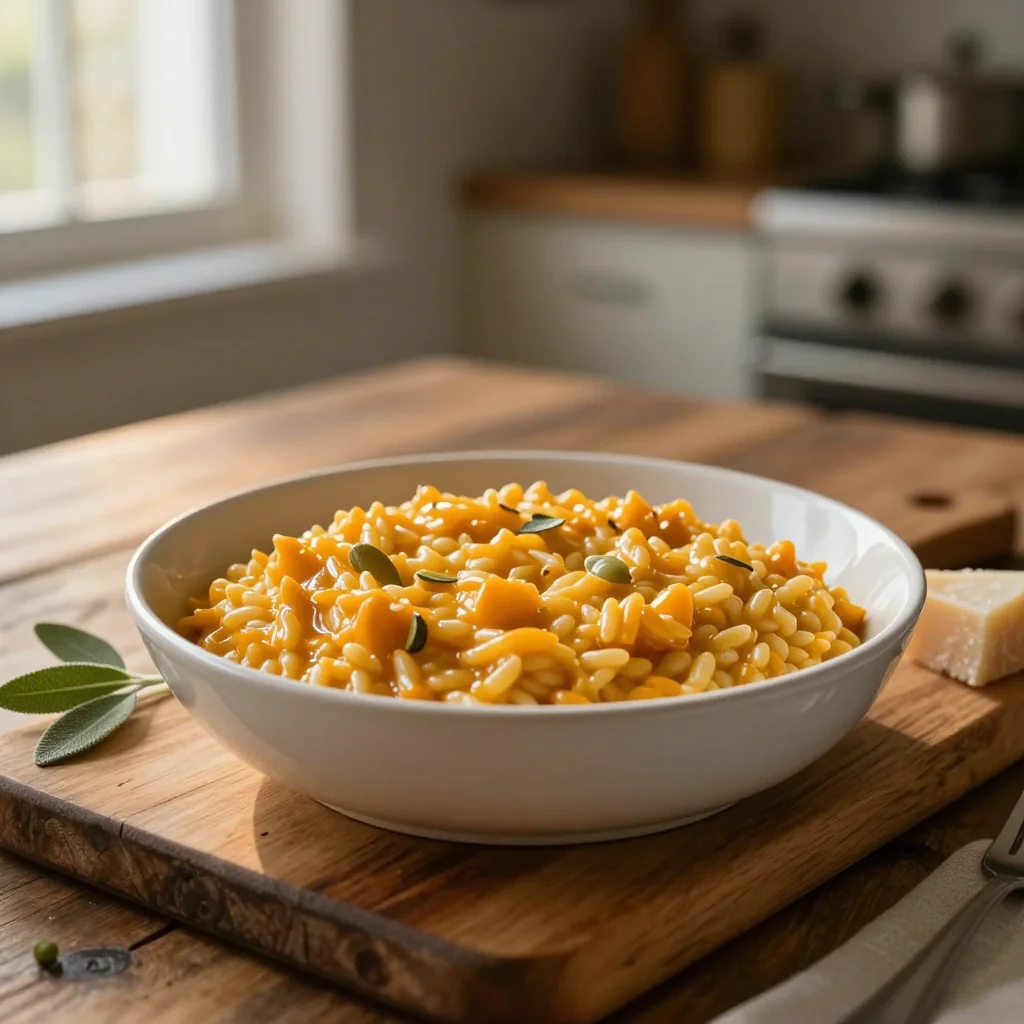
When the first chill of autumn brushed my kitchen windows, I found myself yearning for a dish that felt both cozy and celebratory. I remember strolling through a bustling farmers' market in Siena, the scent of roasted pumpkin mingling with fresh sage leaves, and an elderly vendor offering me a taste of his homemade pumpkin puree. That moment sparked the idea of marrying the sweet, velvety notes of butternut squash with the classic Italian comfort of risotto.
Risotto, a staple of Northern Italian cuisine, is renowned for its creamy texture and the patience it demands. By introducing butternut squash, we not only add a natural sweetness but also a beautiful orange hue that brightens any dinner table. The sage, with its slightly peppery aroma, cuts through the richness, while Parmesan provides that essential umami backbone.
In this guide, I’ll walk you through every step— from roasting the squash to achieving that perfect al dente bite— so you can recreate a restaurant‑quality dish at home. You’ll learn why each technique matters, how to balance flavors, and the little tricks that keep the risotto creamy without drowning it in butter.
Ready to dive in? Let’s turn those humble ingredients into a show‑stopping plate that will impress family and friends alike.
🌟 Why This Recipe Will Captivate You
Combining the earthy elegance of Italian risotto with the sweet warmth of autumnal squash creates a dish that feels both familiar and exciting.
- ✨ Unparalleled Creaminess: The natural starches released from the Arborio rice and the pureed butternut squash blend together, eliminating the need for excessive butter while still delivering a luxuriously silky mouthfeel.
- ✨ Balanced Sweet‑Savory Profile: The subtle sweetness of the squash is perfectly countered by the salty, nutty Parmesan and the aromatic, slightly bitter sage, ensuring every bite is harmoniously layered.
- ✨ Nutrient‑Rich Comfort: Packed with beta‑carotene, fiber, and essential minerals, this risotto offers a wholesome alternative to heavier cream‑based dishes without sacrificing indulgence.
- ✨ Simple Yet Sophisticated: Though the technique requires attention, the ingredient list is straightforward, making it accessible for home cooks who want to elevate their repertoire.
- ✨ Versatile Presentation: Whether served in a rustic bowl or plated elegantly with a drizzle of browned butter, the dish adapts to casual family meals and formal dinner parties alike.
- ✨ Seasonal Flexibility: While perfect for autumn, the recipe shines year‑round, especially when you can find fresh butternut squash at your local grocery.
🥗 The Ingredients
📝 Complete Ingredient List
For the Risotto Base:
For the Garnish & Finish:
🔍 Focus on Key Ingredients
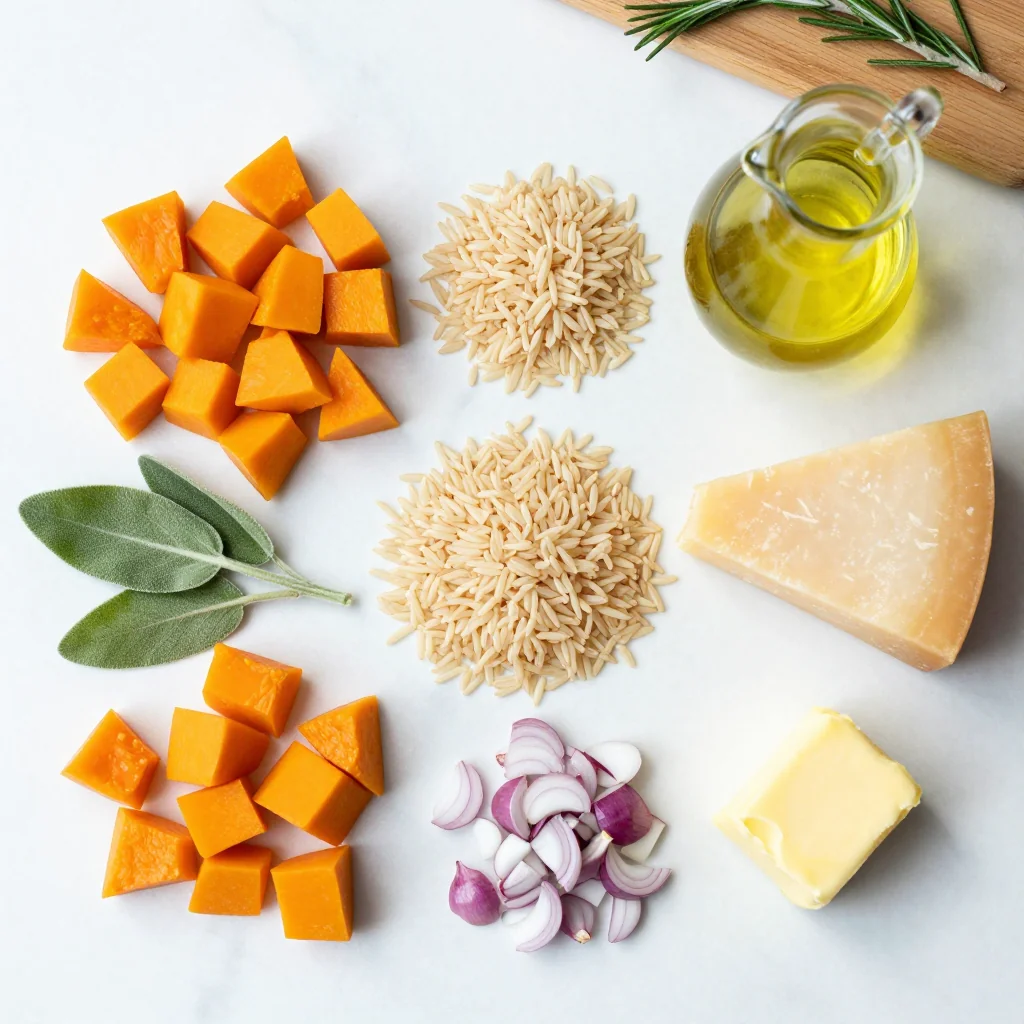
Butternut Squash
The star of this dish, butternut squash offers a naturally sweet, buttery texture that becomes silky when pureed. Look for a squash with a deep orange hue and a firm rind; this indicates maturity and a higher concentration of beta‑carotene. When roasted before blending, the sugars caramelize, adding depth to the risotto’s flavor profile.
Arborio Rice
Arborio’s high amylopectin starch content is what gives risotto its signature creaminess. Unlike other short‑grain varieties, Arborio releases starch gradually as it cooks, allowing the liquid to be absorbed while maintaining a firm bite. Rinse the rice briefly to remove excess surface starch, but keep it slightly damp to encourage that creamy release.
Fresh Sage
Sage is the aromatic bridge between the sweet squash and the salty cheese. Its slightly peppery, earthy notes cut through the richness, creating a balanced palate. Use the leaves whole during cooking to infuse the broth, then finish the dish with a finely chopped sprinkle for a fresh, bright finish.
🔄 Quick Substitutions
| If you don’t have... | Use instead... |
|---|---|
| Butternut squash | Acorn squash or sweet potatoes |
| Vegetable broth | Chicken broth or mushroom stock |
| Parmesan cheese | Grana Padano or Pecorino Romano |
👨🍳 Step‑by‑Step Instructions
Follow these detailed steps to create a risotto that’s creamy, flavorful, and perfectly balanced. Patience and attention to texture are key, but the results are well worth the effort.
📋 Phase 1: Preparation & Mise en Place
Start by preparing all components so you can focus on the cooking process without interruptions.
Roast the Butternut Squash
Preheat your oven to 200 °C (390 °F). Toss the cubed squash with 1 tbsp olive oil, a pinch of salt, and a drizzle of maple syrup for extra caramelization. Spread on a baking sheet and roast for 25‑30 minutes, turning halfway, until the pieces are tender and lightly browned. The edges should develop a golden crust that adds subtle smoky notes to the final puree.
Puree the Roasted Squash
Transfer the roasted cubes to a food processor while still warm. Add a splash of warm vegetable broth (about 60 ml) and blend until smooth. The puree should be creamy but not watery; you can adjust the consistency later with additional broth if needed. Set aside.
Prepare Aromatics
Finely dice the onion and mince the garlic. In a large, heavy‑bottomed saucepan, heat the remaining 1 tbsp olive oil over medium heat. Add the onion and sauté for 3‑4 minutes until translucent, then stir in the garlic and cook for another 30 seconds, being careful not to let it brown.
🔥 Phase 2: Cooking the Risotto
This phase builds the creamy texture that defines a perfect risotto.
Toast the Arborio Rice
Add the Arborio rice to the saucepan with the aromatics. Stir constantly for 2‑3 minutes, allowing each grain to become lightly translucent around the edges. This toasting step coats the rice with oil, helping it release starch gradually during the simmering stage.
Deglaze with White Wine
Pour the dry white wine into the pan, stirring constantly. The liquid should sizzle and reduce within 1‑2 minutes, leaving a fragrant aroma. This deglazing lifts any caramelized bits from the bottom, enriching the flavor base.
Incorporate Warm Broth Gradually
Begin adding the warm vegetable broth, one ladle (≈120 ml) at a time. Stir continuously and wait until the liquid is almost fully absorbed before adding the next ladle. This slow absorption process creates the creamy emulsion characteristic of risotto. Expect to add about 6‑7 ladles, taking roughly 18‑20 minutes.
Stir in the Squash Puree
When the rice is just shy of al dente, fold in the roasted squash puree. The puree will deepen the color to a vibrant orange and add a silky layer of sweetness. Continue stirring for another 2‑3 minutes, allowing the flavors to meld.
✨ Phase 3: Finishing Touches & Plating
The final moments bring everything together for a harmonious finish.
Enrich with Butter and Parmesan
Remove the pan from heat. Stir in the unsalted butter and freshly grated Parmesan cheese until fully melted. This “mantecatura” step creates a glossy sheen and adds richness without making the dish heavy.
Season and Add Sage
Season the risotto with salt and pepper to taste. Fold in the chopped fresh sage, reserving a small pinch for garnish. The residual heat will release the sage’s essential oils, infusing the dish with its fragrant essence.
Plate and Garnish
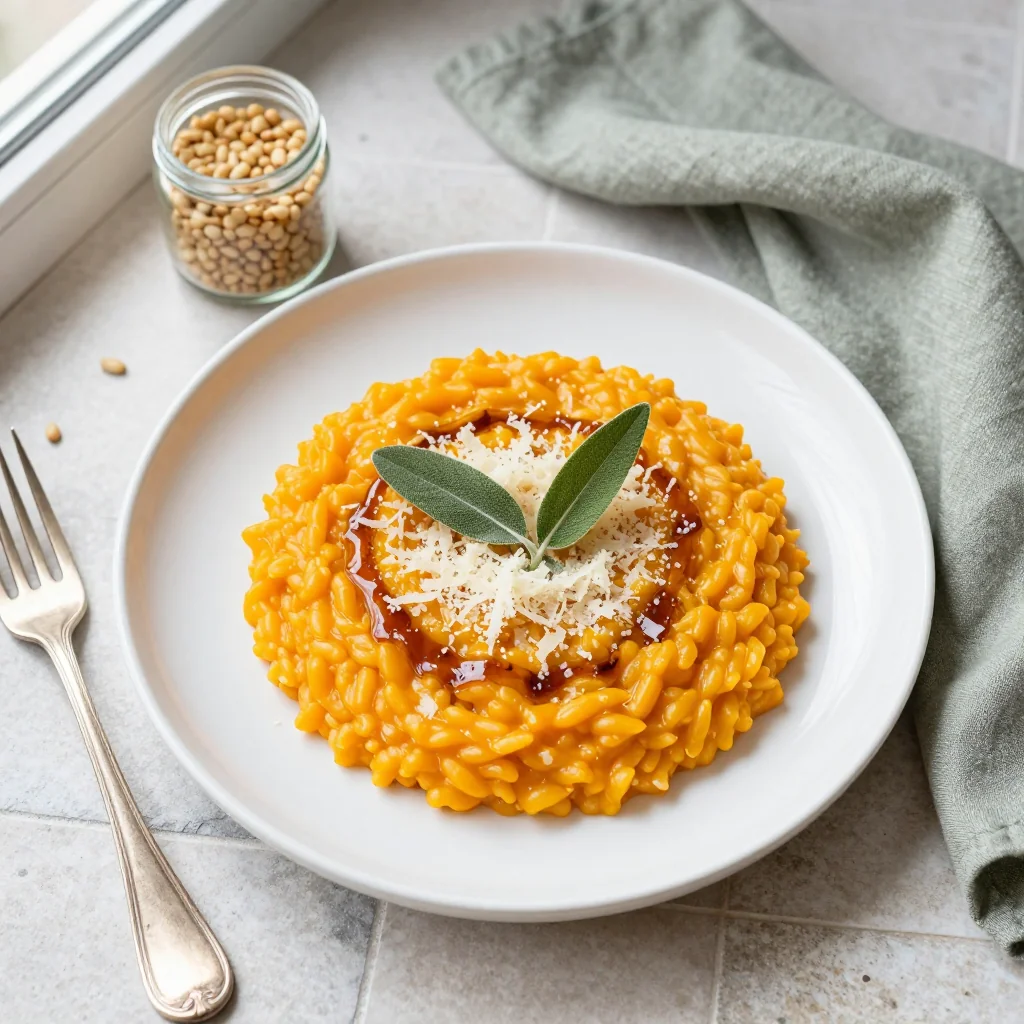
Using a warm spoon, mound the risotto onto plates. Drizzle a thin stream of high‑quality extra‑virgin olive oil, scatter toasted pine nuts, and finish with a final dusting of grated Parmesan and a few whole sage leaves for visual contrast.
💡 Expert Tips & Tricks
🛒 Choosing the Right Ingredients
When selecting butternut squash, look for a uniform, deep orange color and a weight that feels solid for its size. Fresh sage should have bright green leaves without any brown edges; a quick sniff should reveal a slightly peppery aroma. For the broth, homemade vegetable stock provides a cleaner flavor, but a low‑sodium store‑bought version works in a pinch. Finally, invest in a good quality Parmesan; the nutty depth it brings cannot be replicated by pre‑grated alternatives.
🔪 Preparation Techniques
Peel the butternut squash with a sturdy vegetable peeler or a small serrated knife to avoid waste. Cut it into uniform cubes (about 2 cm) to ensure even roasting. When dicing the onion, keep the pieces small to blend seamlessly into the risotto base. Mince garlic just before use to preserve its pungency, and always have the broth pre‑heated to maintain a constant temperature during cooking.
🌡️ Mastering the Cooking Process
Maintain a gentle simmer on the broth; a rolling boil will cause the rice to cook too quickly on the outside while remaining hard inside. Stirring constantly not only prevents sticking but also releases starch, creating that coveted creaminess. If the risotto looks too dry before the rice is fully cooked, add a splash of warm broth or even a splash of water.
🍽️ Presentation & Service
Warm each plate in the oven for a minute before plating to keep the risotto from cooling too fast. Use a shallow bowl or a wide, shallow plate to showcase the vibrant orange hue. Finish with a drizzle of olive oil in a thin spiral and a few whole sage leaves for an elegant visual cue. Pair with a crisp white wine to cut through the richness.
🏆 Pro Tips
Elevate your risotto from home‑cooked comfort to restaurant‑level excellence with these professional insights.
- 🎯 Temperature Consistency: Keeping both the broth and the pan at a steady, moderate temperature ensures the rice cooks evenly. Sudden temperature spikes can cause the outer grains to soften too quickly, leaving the center undercooked.
- 🎯 Timing the Cheese: Add Parmesan at the very end of cooking, after removing the pan from heat. This prevents the cheese from curdling and preserves its silky melt, contributing to the overall gloss of the dish.
- 🎯 Butter Emulsion: When incorporating butter, cut it into small cubes and add gradually while whisking. This creates an emulsion that coats each grain, delivering a luxurious mouthfeel without greasiness.
- 🎯 Sage Infusion: Lightly crush the sage leaves before adding them to the broth. The bruising releases essential oils, intensifying the herb’s flavor without overwhelming the palate.
- 🎯 Roast for Depth: Roasting the squash rather than steaming it adds caramelized sugars and a subtle smoky note, which balances the cheese’s saltiness and the broth’s earthiness.
- 🎯 Portion Scaling: Use the portion adjuster below to scale ingredients precisely. The script recalculates numeric quantities while preserving non‑numeric items like “to taste”.
“Risotto is the ultimate test of a chef’s patience and precision; when done right, it’s pure comfort on a plate.” — Chef Massimo Bottura
🔄 Variations & Adaptations
The core of this recipe is flexible, allowing you to tailor it to dietary preferences, flavor cravings, or seasonal produce.
🥬 Vegetarian / Vegan Version
Swap the Parmesan for a vegan nutritional yeast or a plant‑based Parmesan alternative. Replace butter with a vegan butter or a splash of coconut cream for richness. Ensure the broth is vegetable‑based and free from animal products.
- Vegan Parmesan: 50 g nutritional yeast mixed with 1 tbsp ground cashews and a pinch of garlic powder.
- Vegan Butter: 30 g plant‑based butter or 2 tbsp olive oil.
🌶️ Flavor Twists
Experiment with complementary flavors to keep the dish exciting throughout the year.
Spicy Version:
Stir in ½ tsp red‑pepper flakes during the broth addition and finish with a drizzle of chili‑infused olive oil.
Mediterranean Version:
Add ¼ cup chopped sun‑dried tomatoes and a handful of Kalamata olives after the squash puree is incorporated. Finish with a sprinkle of fresh oregano.
Asian‑Inspired Version:
Replace white wine with dry sherry, add 1 tbsp toasted sesame oil, and finish with a garnish of toasted sesame seeds and thinly sliced scallions.
⚠️ Dietary Adjustments
Gluten‑Free:
All ingredients are naturally gluten‑free; just verify that the broth and any pre‑packaged items are labeled gluten‑free.
Lactose‑Free:
Use lactose‑free butter and replace Parmesan with a lactose‑free cheese alternative or nutritional yeast.
Low‑Calorie:
Reduce butter to 1 tbsp, use low‑fat Parmesan, and increase the proportion of broth to rice for a lighter texture.
👶 Family‑Friendly Version
For younger palates, omit the sage and reduce the amount of Parmesan. Add a handful of sweet peas or finely diced carrots for color and extra nutrition. Serve with a side of soft‑cooked chicken strips for added protein.
📦 Storage & Reheating
🧊 Conservation
In the Refrigerator:
- Duration: 3 days
- Recommended container: airtight glass or BPA‑free plastic
- Tip: Place a sheet of parchment paper on top to prevent a skin from forming.
In the Freezer:
- Duration: 2 months
- Method: Cool completely, then transfer to a freezer‑safe bag, removing excess air.
- Defrosting: Thaw overnight in the refrigerator or use the microwave’s defrost setting.
💡 Reheat gently; rapid heating can cause the rice to become grainy.
♨️ Reheating
🔥 Oven (Recommended):
- Preheat to 180 °C (350 °F).
- Cover the dish with aluminum foil to retain moisture.
- Heat for 12‑15 minutes, stirring halfway.
- Remove foil, add a splash of broth or water, and continue for 5 minutes.
⚡ Microwave (Quick):
- Place portion in a microwave‑safe bowl, cover with a vented lid.
- Heat on medium power for 1‑2 minutes, stir.
- Repeat in 30‑second intervals until hot.
🍳 Stovetop:
Warm in a skillet over low heat, adding a tablespoon of broth and stirring constantly until the risotto regains its creaminess.
🍷 Perfect Pairings
🥗 Side Dishes
- Arugula Salad with Lemon Vinaigrette: The peppery arugula cuts through the richness, while the citrus brightens the palate.
- Roasted Brussels Sprouts with Balsamic Glaze: Their caramelized edges echo the sweet notes of the squash.
- Garlic‑Sautéed Green Beans: Simple, crisp, and adds a contrasting texture.
🍷 Wine & Beverage Pairings
- Pinot Grigio: Its crisp acidity balances the creamy risotto and highlights the sage.
- Chardonnay (unoaked): Offers a buttery mouthfeel without overwhelming the dish.
- Non‑Alcoholic: Sparkling apple cider with a splash of rosemary-infused water.
🍰 To Complete the Meal
Begin with a light fennel‑orange salad, follow with the risotto, and finish with a delicate pear tart drizzled with honey and a sprinkle of toasted almond slivers. The progression moves from bright to comforting, ending on a sweet, airy note.
❓ Frequently Asked Questions
Q: Can I use pumpkin instead of butternut squash?
Yes, canned pumpkin puree can substitute, but fresh roasted butternut offers a richer texture and deeper flavor. If using canned, add a teaspoon of maple syrup to mimic the caramelized sweetness you’d get from roasting.
Q: How do I know when the risotto is perfectly cooked?
The rice should be al dente—soft on the outside with a slight bite in the center. Test a grain by biting; it should feel tender yet retain a faint firmness. The overall consistency should be creamy, not watery.
Q: My risotto turned out too thick. What should I do?
Gradually stir in additional warm broth or water, a tablespoon at a time, until you achieve a velvety consistency. Remember that the risotto will thicken slightly as it rests, so aim for a slightly looser texture before serving.
Q: Can I make this recipe vegan?
Absolutely. Replace butter with vegan butter or olive oil, and use nutritional yeast or a vegan Parmesan substitute. Ensure the broth is plant‑based and free from animal additives.
Q: How can I avoid the rice becoming mushy?
Maintain a steady simmer and add broth slowly, allowing each addition to be absorbed before adding more. Over‑stirring or adding too much liquid too quickly can break down the starches excessively, leading to a mushy texture.
Q: Is it possible to prepare the risotto ahead of time?
You can cook the risotto up to the point of adding butter and cheese, then cool it quickly and store. Reheat gently, adding a splash of broth, and finish with the butter, cheese, and sage just before serving to restore its creaminess.
🎉 To Your Kitchen!
This Butternut Squash Risotto marries the comforting heartiness of classic Italian cuisine with the bright, autumnal flavors of roasted squash and sage. By mastering the patient stirring and precise timing, you’ll achieve a dish that feels both indulgent and wholesome. Remember, the key lies in the gradual addition of broth, the careful balance of sweet and savory, and the final touch of butter and Parmesan that creates that glossy finish.
If you try this recipe, share your experience in the comments below, ask any lingering questions, and don’t forget to rate the dish. Your feedback helps the community grow and inspires new variations!
Have you tried this recipe?
Leave a comment and a rating below! Share your photos on Instagram with #SquashRisottoMagic to be featured.
Butternut Squash Risotto with Parmesan and Sage
A creamy, autumn‑inspired risotto that blends sweet pumpkin, sage, and Parmesan for ultimate comfort.
📝 Ingredients
Risotto Base
Garnish & Finish
👨🍳 Instructions
- 1
Preheat oven to 200 °C, roast cubed squash with olive oil and a pinch of salt for 25‑30 minutes until caramelized.
- 2
Puree the roasted squash with a splash of warm broth until smooth; set aside.
- 3
Sauté onion in olive oil until translucent, then add garlic and cook briefly.
- 4
Add Arborio rice, stirring for 2‑3 minutes to toast the grains.
- 5
Deglaze with white wine, letting it reduce fully.
- 6
Gradually add warm broth, ladle by ladle, stirring constantly until each portion is absorbed.
- 7
When rice is al dente, fold in the squash puree and continue cooking for 2‑3 minutes.
- 8
Remove from heat; stir in butter and grated Parmesan until melted.
- 9
Season with salt, pepper, and chopped sage; reserve a pinch for garnish.
- 10
Plate the risotto, drizzle olive oil, sprinkle pine nuts, extra Parmesan, and whole sage leaves.
🥗 Nutritional Information (per serving)
*Values are estimates based on standard ingredient data.
📚 You Might Also Like
Mushroom & Truffle Risotto
Lemon Basil Pasta
Roasted Beet Salad with Goat Cheese




💬 Comments & Reviews
Leave a Comment
[Comments will appear here]