I remember the night I tried to impress my in‑law family with a homemade stuffing that would rival any holiday classic, and the kitchen looked like a battlefield. The scent of garlic and onions filled the air, mingling with the buttery aroma of toasted bread that had already begun to sing. I was juggling a skillet, a pot of broth, and a cutting board that was suddenly too small for my ambitions. The moment I realized the stuffing was too dry, I panicked—my heart racing, my hands trembling, my taste buds already craving a fix. I was about to throw in the towel when a friend whispered, “Just add a splash of chicken broth and a handful of fresh herbs.” That single suggestion turned a potential disaster into a dish that now lives on my fridge forever. Now, I’m ready to share the exact steps that made that night unforgettable, and trust me, by the end of this post you’ll wonder how you ever made stuffing any other way.
What Makes This Version Stand Out
Flavor Depth: The combination of fresh herbs and a touch of Parmesan turns the stuffing from ordinary to unforgettable. Each bite delivers a layered profile—savory chicken, earthy mushrooms, and a herbal finish that lingers. The secret is in the herb blend; fresh parsley brightens while dried sage and thyme anchor the dish.
Texture Contrast: The crisped buttered bread cubes give a satisfying crunch, while the sautéed vegetables soften into a silky bed. The result is a harmony of textures that feels like a comforting hug. It’s the kind of dish that makes you reach for a second plate before the first one is even finished.
Simplicity: Even though it feels gourmet, the recipe uses pantry staples and only a handful of fresh items. You don’t need a fancy spice rack or a kitchen gadget you’ll never use again. The method is straightforward enough that even novice cooks can master it.
Make‑Ahead Friendly: Once baked, the stuffing keeps its flavor for up to three days in the fridge. It can be reheated in the oven or microwave with a splash of broth, and it still tastes as good as when it first came out. This makes it a perfect go‑ahead dish for busy weeknights.
Audience Appeal: Whether you’re feeding a crowd or just feeding yourself, the dish scales beautifully. The generous mix of vegetables and protein means it satisfies a range of palates, from the health‑conscious to the comfort‑food lover. Guests will leave asking for the recipe, and you’ll be the hero.
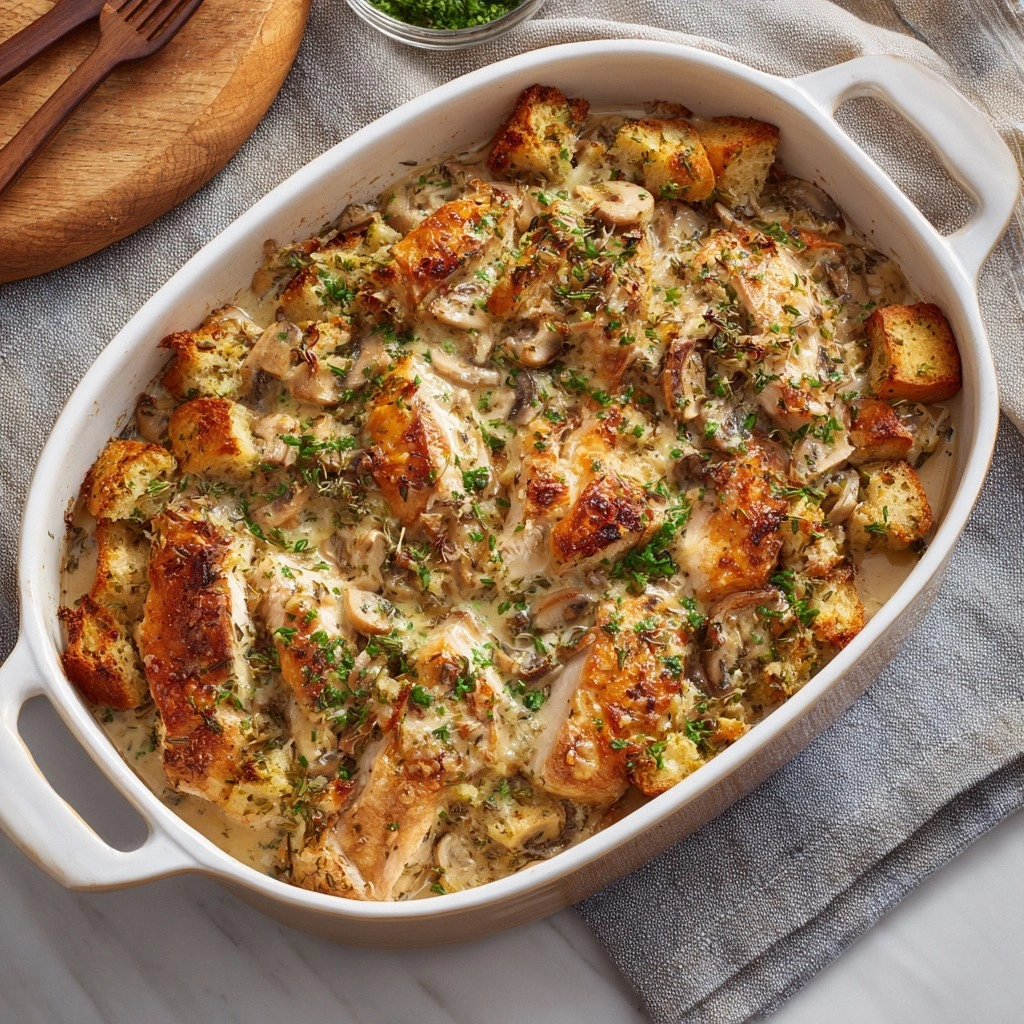
Visual Impact: The golden, bubbling top with a sprinkle of parsley looks like a masterpiece. It’s a dish that not only tastes great but also looks like it belongs on a fine dining menu. Your guests will be impressed before they even take a bite.
Alright, let’s break down exactly what goes into this masterpiece…
Inside the Ingredient List
The Flavor Base
The chicken is the star of the show, providing a lean protein that absorbs the savory broth. It’s cut into bite‑sized cubes so it cooks quickly and evenly. If you skip the chicken, the dish becomes more of a vegetarian stuffing, which is fine if you’re looking for a lighter option.
Onions, garlic, celery, and carrots form the classic mirepoix that forms the aromatic foundation. Together, they create a sweet‑savory base that balances the richness of the butter and the herbs. If you leave out any of these, the stuffing will lack depth and will taste flat.
Mushrooms add umami and a meaty texture that complements the chicken. Sautéing them until they release their juices ensures they’re not soggy when baked. A good rule of thumb: use a variety of mushrooms for a more complex flavor.
The chicken broth is the liquid that brings everything together. It hydrates the bread cubes, loosens the herbs, and creates a cohesive bite. If you don’t have broth, a splash of water with a pinch of salt will do, but the flavor will be noticeably lighter.
Butter is essential for crispness and flavor. It browns the bread cubes, giving them a golden crunch that’s impossible to replicate with oil alone. If you’re avoiding dairy, a neutral oil will work, though the taste will be a bit milder.
Fresh parsley provides brightness that cuts through the richness. It also adds a pop of color that makes the dish visually appealing. If you’re out of parsley, a handful of fresh basil or cilantro can substitute, but the flavor profile will shift slightly.
The Texture Crew
The bread cubes are the backbone of the stuffing. They give the dish structure and a satisfying chew. Day‑old bread is best because it’s less likely to become gummy when it soaks up the broth.
Eggs act as a binder, keeping the stuffing together during baking. They also add richness and a subtle custard-like quality. If you’re vegetarian or have dietary restrictions, you can omit the egg; the dish will still hold together, but the texture will be slightly looser.
Parmesan cheese adds a nutty depth and helps the top brown beautifully. It also contributes a savory saltiness that balances the herbs. A vegan alternative could be nutritional yeast, but the flavor will be noticeably different.
The olive oil is used to sauté the vegetables, ensuring they get a nice caramelization. It also helps the herbs stick to the bread. If you prefer a lighter version, you can reduce the amount of oil or use a spray instead.
The dried herbs—sage, thyme, and rosemary—bring a warm, earthy backbone. Their flavors intensify when toasted in butter, adding a complex aroma. If you’re short on time, fresh herbs can replace dried, but the intensity will be less pronounced.
Salt and pepper are the final seasoning that ties all components together. They’re essential for balancing the dish’s flavors. Remember to taste before baking, as the baking process can mellow the seasoning slightly.
The Unexpected Star
A splash of lemon zest or a drizzle of balsamic glaze can elevate the stuffing from great to extraordinary. The citrus brightness cuts through the richness and adds a subtle zing that wakes up the palate. Try it on your next batch for a festive twist.
If you’re a fan of pumpkin, adding a tablespoon of pumpkin puree introduces a subtle sweetness and a hint of autumn. This works well with the sage and thyme, creating a seasonal variation that feels both comforting and sophisticated.
A handful of toasted walnuts or pecans introduces crunch and a nutty flavor that pairs beautifully with the Parmesan. These nuts also add a protein boost and make the dish more filling. If you’re allergic, simply omit them; the stuffing will still shine.
A dash of smoked paprika brings a subtle smokiness that enhances the roasted flavors. It’s a quick way to add depth without extra cooking steps. Use sparingly—just a pinch is enough to transform the dish.
Finally, a spoonful of Dijon mustard can add a sharp bite that balances the sweetness of the carrots and the richness of the butter. This is a great option for those who like a little kick in their comfort food.
Everything's prepped? Good. Let's get into the real action.
The Method — Step by Step
- Preheat your oven to 375°F (190°C). Line a 9×13 inch baking dish with parchment or lightly grease it. This step ensures the stuffing releases easily and prevents sticking. The oven’s steady heat will create a golden crust that’s impossible to resist.
- In a large skillet, melt the butter over medium heat until it foams. Add the diced onion, celery, and carrot, sautéing until the vegetables soften and the onion turns translucent. This sautéing stage is where the aroma starts to build, and you’ll hear the sizzle that signals everything’s working.
- Stir in the minced garlic and sliced mushrooms, cooking until the mushrooms release their juices and start to brown. The garlic will give a fragrant punch, while the mushrooms add earthy depth. Watch for the mushrooms to caramelize; that’s when the flavor hits its peak.
- Add the diced chicken to the skillet, seasoning with salt, pepper, sage, thyme, and rosemary. Cook until the chicken is just browned on the outside, not fully cooked through. The goal is to develop a golden sear that locks in juices.
- Pour in the chicken broth, stirring to deglaze the pan and lift any browned bits. These bits are flavor gold—don’t let them sit on the bottom. The broth will create steam that helps the bread cubes soften.
- Transfer the entire mixture to a large mixing bowl. Add the bread cubes, beaten egg, and Parmesan cheese, tossing to coat everything evenly. The egg will bind the stuffing, while the cheese adds a savory depth and helps the top brown beautifully.
- Pour the mixture into the prepared baking dish, spreading it out evenly. Sprinkle the chopped parsley on top for a fresh burst of color. The top layer will crisp up into a golden crust as it bakes.
- Bake for 30 minutes, or until the edges are golden and the top is slightly crisp. Halfway through, give the stuffing a gentle stir to ensure even cooking. The scent of toasted herbs and melted butter will fill your kitchen, making the anticipation almost unbearable.
That's it — you did it. But hold on, I've got a few more tricks that'll take this to another level.
Insider Tricks for Flawless Results
The Temperature Rule Nobody Follows
Many people bake at a high temperature and then lower it midway, hoping the stuffing will stay moist. In reality, the higher heat dries out the center before the crust forms. Stick to a single 375°F setting and use a thermometer to check that the internal temperature reaches 165°F for the chicken. This ensures safety and moisture.
Why Your Nose Knows Best
Before you even take the dish out of the oven, give it a sniff. The aroma of toasted herbs and butter is a reliable indicator of doneness. If you smell a faint nutty scent, it’s ready. If it still smells raw, give it another 5 minutes. Trust your nose; it’s your best sous‑chef.
The 5-Minute Rest That Changes Everything
After baking, let the stuffing rest for 5 minutes before serving. This pause allows the juices to redistribute, preventing a dry bite. It also makes slicing cleaner, as the structure sets. A quick rest can be the difference between a soggy mess and a masterpiece.
The Secret to a Crispy Top
Sprinkle a light dusting of breadcrumbs over the top before baking. The breadcrumbs absorb excess moisture and create a crunchy layer that’s delightful to bite into. For an extra touch, toss the breadcrumbs with a pinch of dried rosemary before adding.
The Classic Pairing
Serve the stuffing alongside roasted root vegetables or a crisp green salad. The contrast in textures and flavors elevates the entire meal. If you’re aiming for a holiday feel, a side of cranberry sauce adds a sweet‑tart note that complements the savory stuffing.
Creative Twists and Variations
This recipe is a playground. Here are some of my favorite ways to switch things up:
Mediterranean Medley
Swap the mushrooms for sun‑dried tomatoes and add kalamata olives. Use oregano and basil instead of thyme and rosemary. The result is a bright, tangy stuffing that pairs well with grilled chicken or fish.
Spicy Cajun Kick
Add a tablespoon of Cajun seasoning and a diced jalapeño to the mix. The heat will contrast with the mild herbs, creating a bold flavor profile. This version is perfect for those who love a little spice.
Cheesy Cauliflower
Replace half the bread cubes with steamed cauliflower florets. Toss them in a bit of cream cheese before baking. The cauliflower adds creaminess and a low‑carb alternative for health‑conscious diners.
Pumpkin & Sage Delight
Add a tablespoon of pumpkin puree and a pinch of nutmeg. The pumpkin’s natural sweetness balances the savory herbs. This twist makes the dish feel extra cozy for fall gatherings.
Asian Fusion
Use rice noodles instead of bread cubes and add a splash of soy sauce, sesame oil, and sliced green onions. The dish transforms into a comforting noodle bake with an umami kick. It’s a fun way to merge cuisines.
Nutty Crunch
Toss toasted pine nuts or almonds into the mixture before baking. The nuts add a delightful crunch and nutty flavor that pairs wonderfully with the Parmesan. Guests will love the unexpected texture.
Storing and Bringing It Back to Life
Fridge Storage
Store leftovers in an airtight container for up to three days. The stuffing will keep its flavor and texture when refrigerated. When ready to reheat, cover with foil to retain moisture.
Freezer Friendly
Freeze portions in freezer‑safe bags for up to two months. Thaw overnight in the fridge before reheating. Add a splash of broth or water before microwaving to prevent dryness.
Best Reheating Method
Reheat in a preheated oven at 350°F (175°C) for 15–20 minutes, or until warmed through. A tiny splash of water before reheating steams the stuffing back to perfection. This trick keeps the bread from becoming rubbery.