I was standing in my kitchen, staring at a half‑cooked pot of ramen that had somehow turned into a soggy mess, when my roommate dared me to make something that would actually make our taste buds do a backflip. I laughed, grabbed a fresh cod fillet, and thought, “What if I take the silky creaminess of coconut milk, the punch of red curry, and the heartiness of udon noodles and marry them into one bowl?” The result? A bowl so aromatic, so comforting, that even the most stubborn skeptics in my family shouted, “I’ll be honest — I ate half the batch before anyone else got to try it.” This isn’t just another noodle soup; it’s a culinary hug that whispers, “You’re home,” while shouting, “Let’s party!”
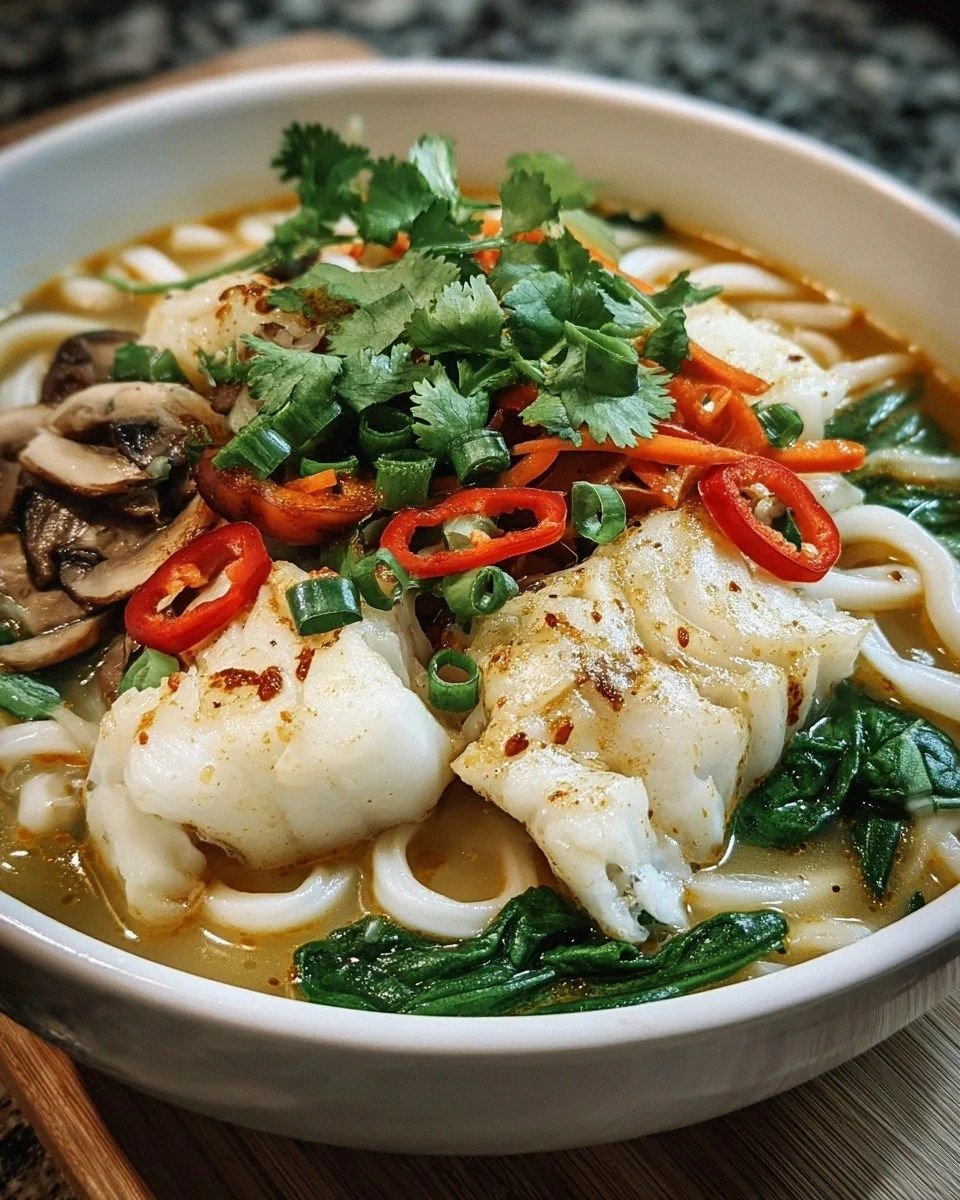
Picture this: the kitchen is a symphony of sizzling oil, the fragrant snap of ginger hitting the pan, and the low hum of a simmering broth that smells like a tropical rainstorm. The steam rises, curling around the copper pots, and the first bite delivers a wave of coconut‑infused broth that coats the udon like velvet, while the cod flakes apart with the tenderness of a cloud. The bright green of spinach, the orange crunch of carrot, and the earthy depth of shiitake mushrooms create a visual masterpiece that looks as good as it tastes. And that final squeeze of lime? It’s a burst of sunshine that cuts through the richness, balancing everything perfectly.
Most recipes get this completely wrong. They either drown the fish in a swamp of coconut milk or they skimp on the curry, leaving the dish flat and forgettable. I’ve tried a dozen versions that either over‑cooked the cod or left the noodles soggy. The secret here is timing, layering flavors, and respecting each ingredient’s personality. I’m about to reveal the technique that makes the broth silky without separating, and why using udon instead of rice noodles changes the entire texture game.
I dare you to taste this and not go back for seconds. By the end of this post, you’ll have a foolproof method that guarantees restaurant‑quality results at home, and you’ll understand why this version is hands down the best you’ll ever make. Let me walk you through every single step — by the end, you’ll wonder how you ever made it any other way.
What Makes This Version Stand Out
- Depth: The combination of red curry paste and fish sauce creates a broth that’s umami‑rich yet bright, delivering layers that unfold with each spoonful.
- Texture: Thick udon noodles soak up the coconut broth while retaining a pleasant chew, preventing the soggy disappointment you get with rice noodles.
- Freshness: Fresh lime juice added at the end lifts the whole bowl, cutting through the richness and keeping the palate refreshed.
- Simplicity: Despite its complex flavor profile, the recipe uses pantry staples and a handful of fresh veggies, making it doable on a weeknight.
- Versatility: You can swap cod for any firm white fish, or even go vegetarian with tofu, without losing the soul of the dish.
- Crowd‑pleaser: The visual contrast of green spinach, orange carrot, and deep‑brown broth makes it Instagram‑ready and universally appealing.
- Make‑ahead potential: The broth can be prepared ahead of time and reheated, while the noodles stay perfectly al dente when added at the last minute.
- Ingredient quality: Using fresh cod and high‑quality coconut milk ensures a buttery mouthfeel that cheap alternatives can’t match.
Inside the Ingredient List
The Flavor Base
The backbone of this bowl is the aromatic trio of onion, garlic, and ginger. Finely sliced onion releases a sweet, caramelized note as it softens, while minced garlic adds a deep, earthy aroma that instantly makes your kitchen feel like a Thai street market. Grated ginger introduces a warm, peppery zing that balances the coconut’s sweetness. If you skip any of these, you’ll lose the layered depth that makes the broth sing. As a swap, you can use shallots for a milder onion flavor or galangal for an even more authentic Thai twist.
The Heat & Spice Crew
Red chili and red curry paste are the dynamic duo that bring the heat without overwhelming the palate. The chili adds a fresh, sharp bite, while the curry paste delivers a complex blend of spices—lemongrass, kaffir lime, and galangal—that’s the heart of Thai cuisine. For those who shy away from heat, simply deseed the chili or reduce the paste by half. A fun alternative is to use a Thai green curry paste for a different flavor direction, but remember, it will change the color palette dramatically.
The Creamy Coconut Backbone
Coconut milk is the silky, luscious carrier that binds all the flavors together. It adds a subtle sweetness and a rich mouthfeel that makes each spoonful feel indulgent. However, not all coconut milks are created equal; opt for the full‑fat, canned variety for maximum creaminess. If you’re watching calories, you can thin it with a splash of low‑fat milk, but the broth will lose some of its luxurious texture. A good tip: shake the can vigorously before opening to ensure the cream and water are well‑combined.
The Protein & Noodle Powerhouses
Cod fillets bring a delicate, flaky texture that absorbs the broth without falling apart. Choose wild‑caught cod for a firmer bite; farmed cod can be a bit mushier. Neutral oil (like canola or sunflower) is used for sautéing because it won’t compete with the delicate flavors of the fish. Udon noodles, with their thick, chewy nature, are the perfect vehicle for soaking up the coconut‑curry broth while providing a satisfying bite. If you can’t find udon, try thick rice noodles, but expect a slightly different mouthfeel.
The Final Flourish
Fresh vegetables like baby spinach, carrot, and shiitake mushrooms add color, crunch, and earthy depth. Spinach wilts quickly, giving a vibrant green splash, while carrots provide a sweet snap that contrasts the creamy broth. Shiitake mushrooms bring an umami boost that complements the fish sauce and soy sauce. The garnish of spring onions and fresh coriander adds a bright, herbaceous finish that lifts the entire bowl. If you’re out of coriander, Thai basil works beautifully as a substitute.
Everything's prepped? Good. Let's get into the real action...
The Method — Step by Step
Heat 2 tablespoons of neutral oil in a large, deep skillet over medium‑high heat. When the oil shimmers, add the sliced onion and sauté for 3‑4 minutes until it turns translucent and starts to caramelize. You’ll hear a gentle sizzle that signals the aromatics are waking up.
Add the minced garlic, grated ginger, and sliced red chili. Cook for another 30 seconds, just until the garlic becomes fragrant but not browned. This is the moment of truth—if the garlic burns, the whole broth will taste bitter.
Stir in 2 tablespoons of red curry paste, letting it coat the aromatics for 1‑2 minutes. The paste should darken slightly and release a heady perfume that fills the kitchen. Power transition: Okay, ready for the game‑changer?
Pour in 400 ml of coconut milk and 2 cups of fish or vegetable stock, stirring to combine. Bring the mixture to a gentle boil, then reduce to a simmer. You’ll see tiny bubbles dancing along the surface—this is the broth reaching its perfect creamy consistency.
Season with 1 tablespoon each of fish sauce and soy sauce, then add the freshly squeezed lime juice. Taste and adjust: the broth should be a harmonious balance of salty, sweet, and tangy.
While the broth simmers, bring a separate pot of water to a boil and cook the udon noodles according to package instructions—usually 3‑4 minutes. Drain, rinse under cold water to stop cooking, and set aside.
In the same skillet, gently nestle the cod fillets into the simmering broth. Cook for 4‑5 minutes, flipping once, until the fish flakes easily with a fork. Watch Out: Overcooking the cod will make it tough, so keep a timer handy.
Add the sliced shiitake mushrooms, julienned carrot, and baby spinach to the broth. Stir gently; the spinach will wilt in seconds, and the mushrooms will soften, releasing an earthy aroma that deepens the broth.
Divide the cooked udon noodles among four deep bowls. Ladle the hot coconut‑curry broth over the noodles, ensuring each bowl gets generous pieces of cod and a good mix of veggies.
Finish each bowl with a sprinkle of sliced spring onions and fresh coriander leaves. The herbs add a pop of color and a fresh, peppery bite that contrasts the creamy broth.
Serve immediately, encouraging everyone to give the bowl a good stir before digging in. The broth will coat each noodle strand like silk, while the cod remains tender and flaky.
That’s it — you did it. But hold on, I've got a few more tricks that'll take this to another level...
Insider Tricks for Flawless Results
The Temperature Rule Nobody Follows
Never throw cold ingredients straight into a hot broth. Let the cod sit at room temperature for 10 minutes before cooking; this ensures even cooking and prevents the fish from tightening up. I once dropped frozen cod directly into the simmering liquid and ended up with a rubbery mess. The rule of thumb: the pan should be hot enough that a drop of water sizzles instantly, but the broth should stay at a gentle simmer, not a rolling boil.
Why Your Nose Knows Best
Your sense of smell is a more reliable indicator than a timer when it comes to aromatics. When the garlic turns golden and the ginger releases its perfume, you’ll know they’re ready. If you can’t smell the curry paste’s earthy notes after a minute, give it a little more time—this is the secret to unlocking deep flavor without burning.
The 5‑Minute Rest That Changes Everything
After the cod is cooked, remove the skillet from heat and let the broth sit, covered, for five minutes. This rest allows the flavors to meld, much like a good stew. The result is a broth that feels more cohesive, with the lime juice brightening the entire profile. Skipping this step leaves a disjointed taste, as if the components are still arguing for dominance.
Seasoning at the End Is Key
Adding the lime juice and a final splash of soy sauce just before serving preserves their bright, acidic punch. If you add them too early, the acidity can mellow out, and the broth may taste flat. I’ve seen cooks over‑season early, leading to a salty, over‑cooked flavor that never recovers.
The Secret of Layered Veggies
Add heartier vegetables like carrots and shiitake mushrooms earlier, but keep delicate greens like spinach for the last minute. This ensures each vegetable retains its optimal texture—crunchy where it should be, wilted where it should be. A friend once tossed all veggies at once and ended up with limp carrots; lesson learned.
Creative Twists and Variations
This recipe is a playground. Here are some of my favorite ways to switch things up:
Spicy Peanut Twist
Swap half of the coconut milk for creamy peanut butter and add a spoonful of sriracha. The result is a nutty, spicy broth that feels like a Thai‑style satay soup. Perfect for those who love a deeper, earthier heat.
Lemongrass Lift
Add a stalk of bruised lemongrass to the broth while it simmers, then remove before serving. This imparts a citrusy fragrance that pairs beautifully with the lime juice, giving the bowl an extra layer of brightness.
Veggie‑Only Version
Replace cod with firm tofu cubes, pressing them first to remove excess water. The tofu absorbs the broth like a sponge, delivering a protein‑rich, plant‑based alternative that still feels luxurious.
Coconut‑Free Curry
Use almond milk or oat milk in place of coconut milk, and add a teaspoon of coconut oil for flavor. The broth becomes lighter, but you still retain the creamy texture—ideal for those with coconut allergies.
Smoky Chipotle Kick
Introduce a teaspoon of chipotle paste alongside the red curry paste. The smoky undertones add depth and a subtle wood‑fire note that makes the bowl feel like it was cooked over an open flame.
Storing and Bringing It Back to Life
Fridge Storage
Separate the broth from the noodles and cod. Store the broth in an airtight container for up to 3 days, and keep the cooked noodles in a separate zip‑top bag with a drizzle of oil. This prevents the noodles from soaking up too much liquid and turning mushy.
Freezer Friendly
Freeze the broth alone in portion‑sized containers for up to 2 months. The cod can be frozen separately on a parchment sheet, then transferred to a freezer bag. Udon noodles freeze poorly, so keep them fresh or cook them fresh when reheating.
Best Reheating Method
When ready to serve, gently reheat the broth over low heat, adding a splash (about 2 tablespoons) of water or extra coconut milk to revive the silky texture. Toss in the pre‑cooked noodles and cod just until warmed through, then finish with fresh lime juice and herbs. This trick restores the broth’s original richness without over‑cooking the fish.