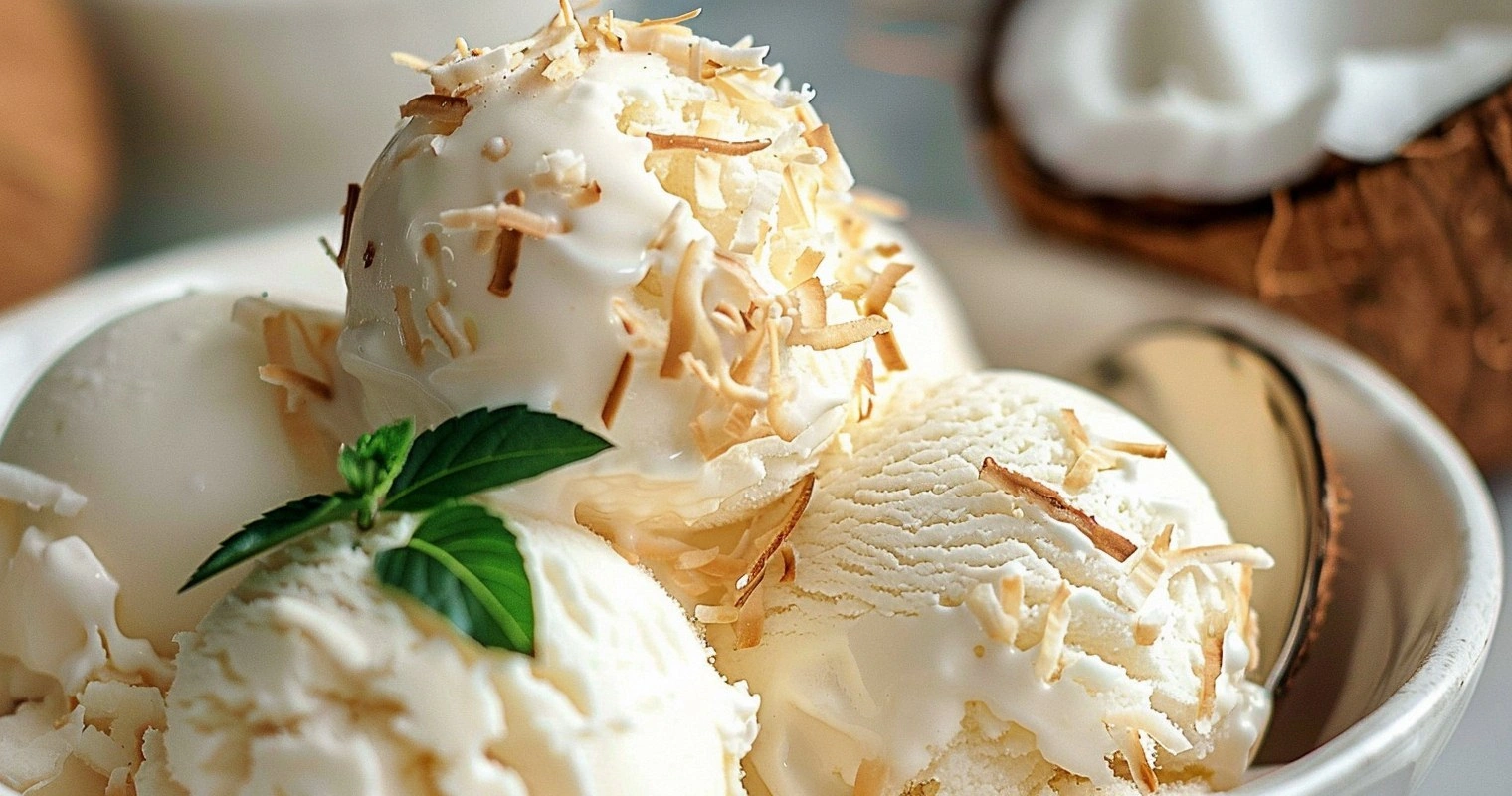
I still remember the sweltering afternoon when my air-conditioner gave up the ghost during a heatwave so brutal the sidewalk felt like a griddle. I was sweating through my shirt, the dog was panting like a broken accordion, and the only thing I wanted in the entire universe was something cold, creamy, and tropical enough to trick my brain into believing I was on an island instead of stuck in a fourth-floor walk-up. Ice cream sounded too heavy, popsicles felt boring, and then—like a scene from a dessert-themed telenovela—my hand brushed against a can of coconut milk that had been lurking behind the black beans. Ten minutes later I was whisking, chilling, and praying. What emerged from the freezer five hours later wasn’t just a makeshift refreshment; it was a silk-smooth, snow-white spoonful of paradise that made me forget the broken AC, the dripping ceiling, and the fact that I had eaten half the batch standing over the sink in blatant disregard of civilized bowls.
Fast-forward through three summers, seven broken blenders, and countless taste-tests on unsuspecting neighbors (sorry, Janice), and I’ve refined that frantic experiment into what I genuinely believe is the best coconut sorbet you can produce without a pastry degree or a tiki bar in your backyard. The texture is so supple it bends like fondant, the flavor is pure beach vacation without the sunscreen aftertaste, and the method is foolproof enough that my caffeine-deprived self can nail it before the coffee finishes dripping. If you’ve ever been underwhelmed by icy, one-note coconut water concoctions or cloying versions that coat your tongue like suntan lotion, stick around. This one balances fragrant fat, delicate sweetness, and just enough air to keep each bite feather-light.
Today I’m spilling every secret: why toasted coconut flakes matter more than vanilla, how a splash of booze keeps the crystals at baby-fine size, the temperature sweet spot that separates sherbet-like shards from luxurious gelato mouthfeel, and the ridiculously simple hack that prevents the dreaded freezer-burn halo. Picture yourself tonight, patio lights twinkling, spoon sliding through frosty white velvet, your friends convinced you secretly flew in a pastry chef. Ready? Let me walk you through every single step—by the end, you’ll wonder how you ever made it any other way.
What Makes This Version Stand Out
Ultra-creamy: We’re using both rich coconut milk and a spoon-stabilizing trick with a touch of corn syrup, so the final scoop flexes like gelato yet stays dairy-free—no rock-hard ice crystals shattering your dessert buzz.
3-ingredient base: Okay, four if you count the pinch of salt that amplifies sweetness, but the point is you’re not hunting down guar gum or liquid glucose at 9 p.m.—everything sits happily in the pantry waiting for a heatwave.
Built-in make-ahead magic: Mix the base tonight, churn tomorrow, or stash it frozen for a week. A quick five-minute counter thaw returns it to scoopable perfection, meaning spontaneous dessert cravings never go unanswered.
Layered flavor depth: We bloom toasted coconut in warm milk, then hit the chilled mixture with a whisper of lime to brighten the tropical notes—think Malibu meets Key West in a single spoonful.
Zero special equipment required: Got a fork and a baking dish? You can still pull off a granita-style version. Own an ice-cream maker? Even silkier results. I’ll show you both paths so nobody gets left on the hot sidewalk.
Crowd-adoring versatility: Serve it poolside in scoops, hollow out baby pineapples for Insta-worthy shells, or float a quenelle in chilled espresso for an afternoon affogato that makes grown adults giggle.
Alright, let’s break down exactly what goes into this masterpiece...
Inside the Ingredient List
The Flavor Base
Full-fat canned coconut milk is the soul of this sorbet, so skip the watered-down cartons marketed as beverages. You want the thick, luxurious layer that rattles like lava when you shake the can—usually that’s 60 % fat, which translates to creamy body instead of an icy granita. If you’re tempted to trim calories with light versions, I’ll be blunt: you’ll end up with a crunchy snow cone and a sad face. Seek brands with no additives beyond water and maybe guar gum; stabilizers are fine, but sulfites mute the floral aroma we’re chasing. And for heaven’s sake, shake the can hard before opening to redistribute the fat cap that rises during storage.
The Texture Crew
Granulated sugar sweetens, but it also interferes with ice-crystal formation; we’re using just enough to keep things smooth without turning into candy. Corn syrup enters stage left as the unsung hero, a modest glug that prevents rock-hard freeze without adulterating flavor—honey works if you dig its floral note, but expect a darker hue. A whisper of vodka or white rum is insurance you can taste (hah!) but won’t notice; alcohol lowers the freezing point, yielding that sensuous melt on contact with your tongue. Kosher salt is the final pinch that makes sweetness sing louder, the culinary equivalent of raising the volume on your favorite track without adding static.
The Unexpected Star
Toasted unsweetened coconut flakes might seem like garnish, but infusing warm milk with them layers in caramelized depth plain coconut can’t touch. As the shreds blush golden, they release nutty, buttery aromatics reminiscent of roasted macadamia. Strain them out later so the sorbet stays snow-white, yet their haunting flavor lingers like the last chord of a summer anthem. Can’t find flakes? Chips work, though they’re thicker; unsweetened is crucial—sweetened versions burn faster than a tourist in the noonday sun.
The Final Flourish
Fresh lime zest is optional but transformative, a micro-planed burst that slices through richness like a machete clearing jungle vines. Vanilla extract rounds rough edges, while a squeeze of lime juice amplifies the coconut’s natural sweetness through contrast. Use sparingly; we’re not aiming for key-lime pie, just a high-five of citrus. If you only have bottled juice, halve the quantity—fresh zest carries aromatic oils that bottled versions have long since lost to oxidation.
Everything’s prepped? Good. Let’s get into the real action...

The Method — Step by Step
- Toast the coconut flakes in a dry skillet over medium heat, stirring constantly until they turn honey-brown and smell like vacation. Do not multitask here; coconut goes from bronzed goddess to bitter charcoal faster than you can say tropical thunderstorm. Transfer to a plate immediately so residual heat doesn’t push them over the cliff.
- Pour one can of coconut milk into a small saucepan and warm over low heat until steamy but nowhere near boiling—think hot-tub temp, not jacuzzi. Stir in the toasted flakes, slap on a lid, and let the mixture steep off heat for 20 minutes so the flavors elope in delicious harmony.
- Strain the milk through a fine sieve into a bowl, pressing the soggy flakes with a spatula to wring out every drop of now-fragrant liquid. Discard the spent shreds or feed them to your compost; they’ve done their heroic duty. You should have roughly the same volume you started with, minus the few tablespoons the coconut absorbed.
- Whisk in the sugar, corn syrup, and salt until dissolved. The warmth should melt the grains, but if stubborn crystals linger, zap the bowl in the microwave for ten-second bursts, stirring between each until smooth. Resist the urge to boil; high heat cooks proteins and produces a grainy texture we’re trying to avoid.
- Stir in the remaining cold coconut milk, vodka, lime zest, and vanilla. Chill the mixture at least 4 hours or overnight; the colder it hits the churn, the smaller the ice crystals and the silkier the scoop. I park the bowl in the freezer for the last 30 minutes because patience isn’t my strong suit.
- Meanwhile, freeze the container you plan to store the finished sorbet in; a frosty pint or loaf pan prevents melty edges and encourages rapid, even hardening. I use a metal loaf pan wrapped in a plastic-shopping-bag burrito—ghetto but effective.
- Churn the base in your ice-cream maker according to the manufacturer’s instructions, usually 15–20 minutes until it thickens to soft-serve consistency. Listen for the motor straining slightly—that’s your cue. If you don’t own a machine, pour the mix into a shallow metal pan, freeze for 30 minutes, then rake with a fork every 30 minutes until fluffy granita crystals form; fold them together for a rustic but delightful texture.
- Pack the churned sorbet into the pre-chilled container, press plastic wrap directly onto the surface to keep errant ice at bay, and freeze at least 2 hours for scoopable firmness. I dare you to taste-test a spoonful at this point and not go back for seconds; I’ve failed that challenge every single batch.
That's it—you did it. But hold on, I've got a few more tricks that'll take this to another level...
Insider Tricks for Flawless Results
The Temperature Rule Nobody Follows
Your mixture should hover around 38 °F when it hits the dasher; any warmer and crystals grow like weeds, any colder and the machine stalls. Invest in a quick-read thermometer and thank me later when your sorbet rivals boutique pints selling for eight bucks a pop.
Why Your Nose Knows Best
If the base smells overly sweet before freezing, it will taste cloying when frozen—cold dulls sweetness, so trust your sniff test and adjust with a squeeze of lime or a tablespoon of water to dial it back. I once ignored this rule and wound up with a dessert only hummingbirds could love.
The 5-Minute Rest That Changes Everything
After churning, let the container sit on the counter for five minutes before the final freeze; this brief tempering relaxes proteins and prevents the surface from turning into a glacier that defies scoopers and relationships alike.
Alcohol Without the Burn
Can’t do booze? Swap the vodka for a tablespoon of invert sugar or a teaspoon of honey; both contain fructose, which lowers freezing point similarly without the adult-content label. Kids and teetotalers rejoice, texture stays dreamy.
Creative Twists and Variations
This recipe is a playground. Here are some of my favorite ways to switch things up:
Mango-Coconut Swirl
Fold in ribbon-thin layers of fresh mango purée before the final freeze for a sunset gradient and tangy counterpoint. The tropical duo sings like steel drums on a Caribbean night.
Spiced Rum Punch
Sub dark rum for vodka and add a pinch of ground nutmeg and clove; you’ll end up with a boozy homage to classic coquito without the eggy heaviness.
Chocolate-Coconut Fudge
Drizzle cooled melted bittersweet chocolate into the churn during the last minute; it shatters into stracciatella-like shards that contrast beautifully with snowy coconut.
Pandan Paradise
Steep a pandan leaf alongside the toasted coconut for a toasty, popcorn-like nuance popular across Southeast Asia. Remove before churning and watch guests guess the mysterious flavor.
Tropical Mojito
Muddle fresh mint into the warm milk and replace lime zest with a whisper of grated lime leaf; finish with white rum for a dessert version of the beloved cocktail.
Matcha Coco Fusion
Dissolve a teaspoon of culinary-grade matcha in a tablespoon of hot water, then whisk into the base for a green-hued, earthy twist that balances coconut’s sweetness with tea tannin snap.
Storing and Bringing It Back to Life
Fridge Storage
Keep the base covered in the coldest part of your refrigerator for up to 3 days before churning; stir well as coconut fat can rise and solidify into a top layer that needs reincorporation.
Freezer Friendly
Once hardened, sorbet stays prime for two weeks in an airtight container; beyond that, flavor fades like vacation memories. Press plastic wrap directly onto the surface to minimize icy exposure.
Best Reheating Method
Okay, you don’t reheat sorbet, but you can revive it: let the container sit on the counter for 5–7 minutes, then shave the edges with a fork to restore fluffy texture. A quick blitz in a food processor also aerates stubborn bricks back to spoonable bliss.