I remember the night of the great kitchen fiasco, the one that made me swear I’d never again attempt a dessert that involved both apples and cranberries. I had been rummaging through the pantry, eyes flicking between the last handful of frozen cranberries and the overripe apples that had been sitting in the fridge since last Christmas. My friend had dared me to whip up something festive, and I, ever the culinary daredevil, decided to combine the two in a way that would make even the most skeptical of taste buds swoon. The result? A bubbling, golden-topped cobbler that smelled like a winter forest and tasted like a warm hug.
Picture this: the kitchen lights dimmed to a soft amber glow, the scent of cinnamon and nutmeg drifting through the air as apples sizzle in a pan. The sound of the butter melting is a gentle, comforting hiss, and the first crackle of the sugar caramelizing feels like applause. Every bite is a symphony—crisp apple flesh, tart cranberries, and a sweet, buttery crust that crumbles like freshly fallen snow. It’s a dish that doesn’t just fill your belly; it fills your soul. And the best part? You can watch the batter rise, the edges browning, and the aroma spreading through the house, making everyone feel like they’re part of something special.
I’ll be honest—when I first tasted this cobbler, I almost swallowed the whole batch before anyone else could get a spoon. That was the moment I knew this recipe was something special. It’s the kind of dish that makes people line up at the kitchen table, eyes wide, mouths watering. And if you’re still skeptical, I dare you to taste this and not go back for seconds. Trust me, this is hands down the best version you’ll ever make at home. The combination of sweet and tart, the contrast between the crisp fruit and the soft, buttery crust, it’s a flavor explosion that lingers long after the last bite.
Most recipes get this completely wrong by either overcooking the fruit or under-seasoning the crust. They forget that the apple’s natural sugars need a gentle caramelization to bring out its depth, and that the cranberries need a touch of cornstarch to thicken the filling without turning it into a jelly. They also miss the subtle dance of spices—cinnamon and nutmeg—that adds warmth and depth. I’ve perfected the timing, the seasoning, and the crust texture to create a dish that’s as beautiful to look at as it is to eat. The crust is golden, flaky, and slightly buttery, with a hint of sweetness that balances the tartness of the cranberries. Picture yourself pulling this out of the oven, the whole kitchen smelling incredible, and the anticipation building as the steam rises from the top. Stay with me here—this is worth it.
What Makes This Version Stand Out
- Taste: The marriage of sweet apples and tart cranberries is amplified by a subtle hint of lemon juice, which brightens the fruit and prevents it from becoming too sweet. This creates a flavor profile that’s both comforting and refreshing.
- Texture: The crust is a flaky, buttery masterpiece that provides a satisfying contrast to the tender fruit filling. The cornstarch thickening gives the filling a silky, glossy consistency that clings to the spoon.
- Simplicity: With only thirteen ingredients, this recipe is straightforward yet sophisticated. The steps are clear, and you won’t need any exotic kitchen gadgets.
- Uniqueness: The addition of nutmeg and a splash of lemon juice sets this cobbler apart from the usual apple-only or cranberry-only desserts you’ll find online.
- Crowd Reaction: Friends and family rave about how the dish feels like a holiday classic, yet it’s modern and fresh. It’s the kind of dessert that sparks conversation and keeps the table lively.
- Ingredient Quality: Fresh, ripe apples and bright, fresh cranberries are the secret to a vibrant flavor. Choosing the right fruit elevates the entire dish.
- Cooking Method: The method balances stovetop simmering with oven baking, ensuring the fruit stays juicy while the crust turns golden.
- Make-Ahead Potential: The filling can be prepared a day in advance, and the crust can be assembled ahead of time, making it ideal for holiday gatherings.
Alright, let's break down exactly what goes into this masterpiece…
Inside the Ingredient List
The Flavor Base
The apples and cranberries form the core of this dish. Apples bring natural sweetness and a subtle tartness that pairs beautifully with the bright, tart cranberries. Fresh cranberries add a burst of color and a sharp, slightly bitter edge that cuts through the sweetness of the apples. Together, they create a dynamic flavor profile that’s both comforting and invigorating.
If you skip the cranberries, the dish loses its signature tartness and becomes a plain apple cobbler. If you omit the apples, you’ll end up with a cranberry dessert that’s too sweet and lacks depth. Both fruits are essential for balance. Swap in frozen cranberries if fresh aren’t available—just make sure to drain them well to avoid excess moisture.
The Sweetener and Thickener
Brown sugar is the sweetener that also adds a molasses undertone, giving the filling depth and warmth. The cornstarch thickener ensures the filling is silky and holds together, preventing it from turning into a watery mess. Together, they create a luscious, glossy surface that coats the fruit like velvet.
If you prefer a lighter dessert, you can reduce the brown sugar by a quarter cup and add a bit more lemon juice to maintain acidity. Alternatively, replace brown sugar with white sugar for a cleaner sweetness. Cornstarch is essential; substituting it with flour will alter the texture, making it thicker and doughier.
The Spice Symphony
Ground cinnamon and nutmeg are the spices that add warmth and depth. Cinnamon provides a sweet, woody aroma, while nutmeg offers a subtle, nutty note that rounds out the flavor. Together, they elevate the dish from simple to unforgettable.
If you’re allergic to nutmeg, omit it or replace it with a pinch of allspice for a similar warm flavor. For a spicier twist, add a pinch of cayenne pepper to create a subtle heat that balances the sweetness.
The Final Flourish
The crust is the crowning glory. All-purpose flour, granulated sugar, baking powder, and salt come together to create a tender, buttery base. Unsalted butter, cold and cubed, is folded into the dry mix, forming a crumbly texture that melts in your mouth. Milk brings the dough together, creating a cohesive yet flaky crust.
If you’re looking for a gluten-free version, replace the all-purpose flour with a 1:1 blend of rice flour and tapioca starch. For a richer crust, swap half the butter with cream cheese or add a tablespoon of honey to the dough.
Everything's prepped? Good. Let's get into the real action…
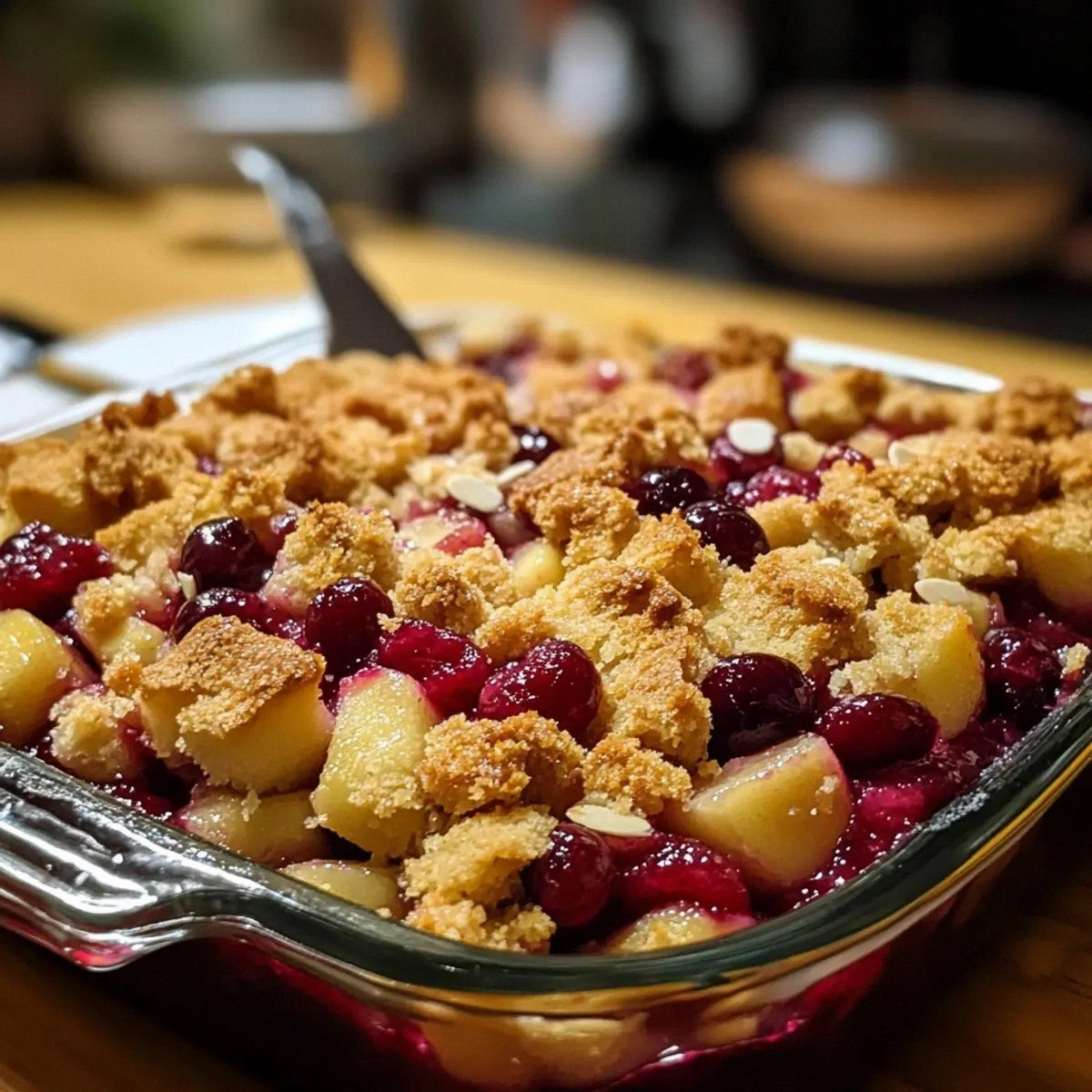
The Method — Step by Step
- Preheat your oven to 375°F (190°C). In a large mixing bowl, combine the diced apples, fresh cranberries, brown sugar, ground cinnamon, ground nutmeg, and lemon juice. Toss everything together until the fruit is evenly coated. This step is crucial because the sugar and spices need to be distributed evenly to develop a uniform flavor profile. As the fruit rests, the sugars start to dissolve, creating a fragrant, sticky mixture.
- While the fruit mixture is resting, prepare the filling thickener. In a small bowl, whisk together the cornstarch with 2 tablespoons of water until smooth. This slurry will prevent lumps and ensure the filling becomes silky and glossy. Add the cornstarch mixture to the fruit mixture and stir until the fruit is evenly coated. The cornstarch will absorb excess moisture as it cooks, giving the filling a beautiful, smooth finish.
- Transfer the fruit mixture to a 9-inch square baking dish. Spread it out in an even layer, making sure the fruit is not piled too high. This allows the fruit to cook evenly and prevents the top from becoming too dry. The dish should feel like a shallow, fruit-filled canvas, ready to receive the crust.
- In a separate bowl, whisk together the all-purpose flour, granulated sugar, baking powder, and salt. This dry mixture will form the base of your crust. The baking powder ensures the crust rises slightly, giving it a light, tender crumb. The salt balances the sweetness, enhancing the overall flavor.
- Add the cold, cubed butter to the dry mixture. Using a pastry cutter or your fingertips, cut the butter into the flour until the mixture resembles coarse crumbs. The cold butter is essential; it creates steam pockets during baking, resulting in a flaky crust. If you’re in a hurry, a food processor can do the job in seconds, but be careful not to over-process.
- Add the milk to the crumb mixture and stir until the dough comes together. It should be slightly sticky but manageable. If the dough feels too dry, add a tablespoon of milk at a time until it reaches the right consistency. The milk not only binds the dough but also adds a subtle richness.
- Drop spoonfuls of the dough onto the fruit layer, then gently press it down with the back of a spoon to create an even crust. The dough should be spread out enough to cover the fruit without forming a thick blanket. This technique ensures that every bite has a touch of crusty sweetness.
- Place the baking dish in the preheated oven and bake for 30 minutes, or until the crust is golden brown and the fruit filling is bubbling. The bubbling indicates that the fruit juices are caramelizing, creating a caramelized, slightly sticky glaze. Keep a close eye on the crust; if it starts to brown too quickly, tent it with foil to prevent burning.
- Remove the cobbler from the oven and let it cool for 10 minutes before serving. The cooling period allows the filling to set slightly, making it easier to scoop. The aroma during this time will be irresistible, filling the kitchen with warmth and holiday cheer.
- Serve warm with a scoop of vanilla ice cream or a dollop of whipped cream. The contrast between the hot, buttery crust and the cold, airy cream creates a delightful sensory experience. If you’re feeling adventurous, drizzle a little maple syrup or a sprinkle of chopped pecans for extra texture and flavor.
That's it — you did it. But hold on, I've got a few more tricks that'll take this to another level…
Insider Tricks for Flawless Results
The Temperature Rule Nobody Follows
Many bakers assume that a higher oven temperature always yields a crisper crust, but that’s not the case. Baking at 375°F (190°C) allows the crust to rise slowly, creating a tender crumb that’s not too hard. If you crank the heat up to 425°F, you risk burning the crust before the fruit is fully cooked. I’ve found that maintaining a steady temperature ensures the fruit caramelizes evenly and the crust develops a beautiful golden color.
Why Your Nose Knows Best
Trust your nose when it’s telling you the dish is ready. The aroma of caramelized sugar and baking bread is a reliable indicator that the filling is bubbling and the crust is golden. When the scent hits the sweet, buttery notes, it’s time to pull the cobbler out of the oven. Relying on your senses over the timer can prevent overbaking and preserve moisture.
The 5-Minute Rest That Changes Everything
Letting the cobbler rest for five minutes after baking is a game-changer. This brief pause allows the juices to redistribute, ensuring each spoonful is as moist and flavorful as possible. During this time, the crust will set further, making it easier to scoop without crushing the fruit. Skipping this step can leave you with a soggy center or a crust that’s still soft.
The Secret to a Flaky Crust
Cold butter is the secret to a flaky crust. When the butter melts during baking, it creates steam pockets that lift the dough into airy layers. If you use room-temperature butter, the crust will be dense and heavy. Keep the butter cold until the last moment to preserve those delicate, flaky layers.
The Right Amount of Lemon Juice
Lemon juice does more than add brightness; it also helps balance the sweetness of the brown sugar. Too much lemon can overpower the fruit, while too little will leave the dish cloyingly sweet. Aim for two tablespoons for a balanced flavor, and adjust based on the tartness of your cranberries.
The Perfect Serving Temperature
Serve the cobbler warm, right out of the oven. Warm desserts are more aromatic, and the contrast between hot crust and cold ice cream or whipped cream creates an unforgettable sensory experience. If you prefer a cooler dessert, let it cool completely before topping.
Creative Twists and Variations
This recipe is a playground. Here are some of my favorite ways to switch things up:
Spiced Orange Twist
Add a splash of orange zest and a dash of orange liqueur to the fruit mixture. The citrus brightens the flavor and adds a subtle floral note. This version is perfect for a holiday gathering where you want a festive, aromatic dessert.
Nutty Crunch Variation
Toss chopped pecans or walnuts into the fruit filling. The nuts add a satisfying crunch and a buttery undertone that complements the fruit. They also bring a touch of elegance to the dish.
Maple Syrup Infusion
Replace half the brown sugar with maple syrup for a deeper, richer sweetness. The syrup adds a subtle caramel flavor that pairs beautifully with the apples. This variation is ideal for those who love a hint of maple.
Almond Flour Crust
Swap the all-purpose flour for almond flour to create a gluten-free, nutty crust. The almond flour adds a slightly sweet, buttery flavor that pairs well with the fruit. This version is great for guests with gluten sensitivities.
Berry Explosion
Add a handful of fresh blueberries or raspberries to the fruit mixture for an extra burst of color and flavor. The berries add a tart contrast that brightens the dish. This variation is perfect for spring or summer holidays.
Caramelized Banana Addition
Slice a ripe banana and caramelize it in a skillet with a pinch of butter before adding it to the fruit mixture. The banana adds a creamy texture and a subtle sweetness that balances the tart cranberries. This variation is a crowd-pleaser for those who love a sweet, tropical twist.
Storing and Bringing It Back to Life
Fridge Storage
Cool the cobbler to room temperature, then cover it tightly with plastic wrap and store it in the refrigerator for up to 3 days. The crust may soften slightly, but it will regain its crispness when reheated. Keep it in an airtight container to prevent it from absorbing other odors.
Freezer Friendly
Wrap the cooled cobbler tightly in foil and place it in a freezer-safe container. It will keep well for up to 2 weeks. Thaw overnight in the refrigerator before reheating. This method preserves the texture and flavor without compromising quality.
Best Reheating Method
Preheat the oven to 350°F (175°C). Place the cobbler on a baking sheet and heat for 10–12 minutes, or until warmed through. Add a splash of water or milk before reheating to create steam that rehydrates the crust and prevents it from drying out. Serve immediately for the best experience.