Love this? Pin it for later! 📌
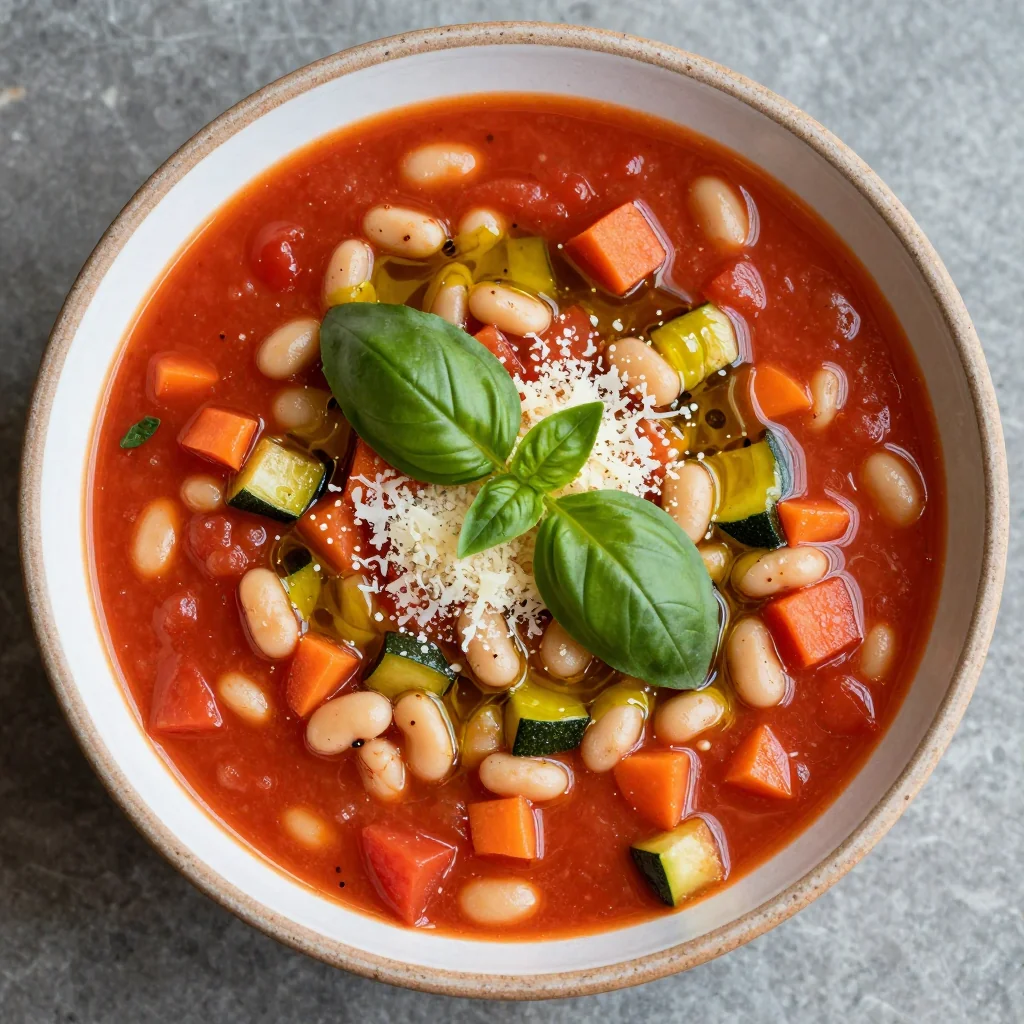
On the first truly blustery day of fall, when the wind rattles the maple leaves like dry bones and the sky turns that stubborn steel-gray, nothing pulls me back to childhood faster than the scent of a pot of minestrone bubbling on the stove. My Nonna would start hers at dawn, humming off-key as she chopped the last of the garden vegetables, her wooden spoon worn smooth from decades of stirring. I didn’t inherit her patience—or her pitch—but I did inherit her conviction that a bowl of soup can be both humble and heroic. This hearty minestrone with beans is my weekday answer to her slow-simmered masterpiece: still layered with vegetables, still fragrant with basil and bay, but ready in the time it takes to answer the afternoon emails and still sit down to a lunch that actually satisfies. It’s thick enough to stand a spoon in, bright enough to chase away the chill, and generous enough to feed you tomorrow, too. If you’ve got twenty minutes and a can of beans, you’ve got lunch handled.
Why This Recipe Works
- Two-Stage Bean Magic: Half the beans are mashed into the broth for silky body, while the rest stay whole for satisfying bites.
- Smoked Paprika Depth: Just a pinch gives the tomato base a gentle campfire note that tricks your brain into thinking the soup simmered all day.
- Quick-Cut Vegetables: Carrots and zucchini are ribboned on a vegetable peeler so they cook in under ten minutes yet still feel elegant.
- Parmesan Rind Economy: Save your rinds in the freezer; one melts into the pot and turns the broth velvety and rich without extra fat.
- Pasta on the Side: Cooking ditalini separately keeps leftovers from swelling into a starchy porridge by day two.
- One-Pot Lunchbox Hero: No blender, no fancy gear—just a Dutch oven and a fork for mashing.
Ingredients You'll Need
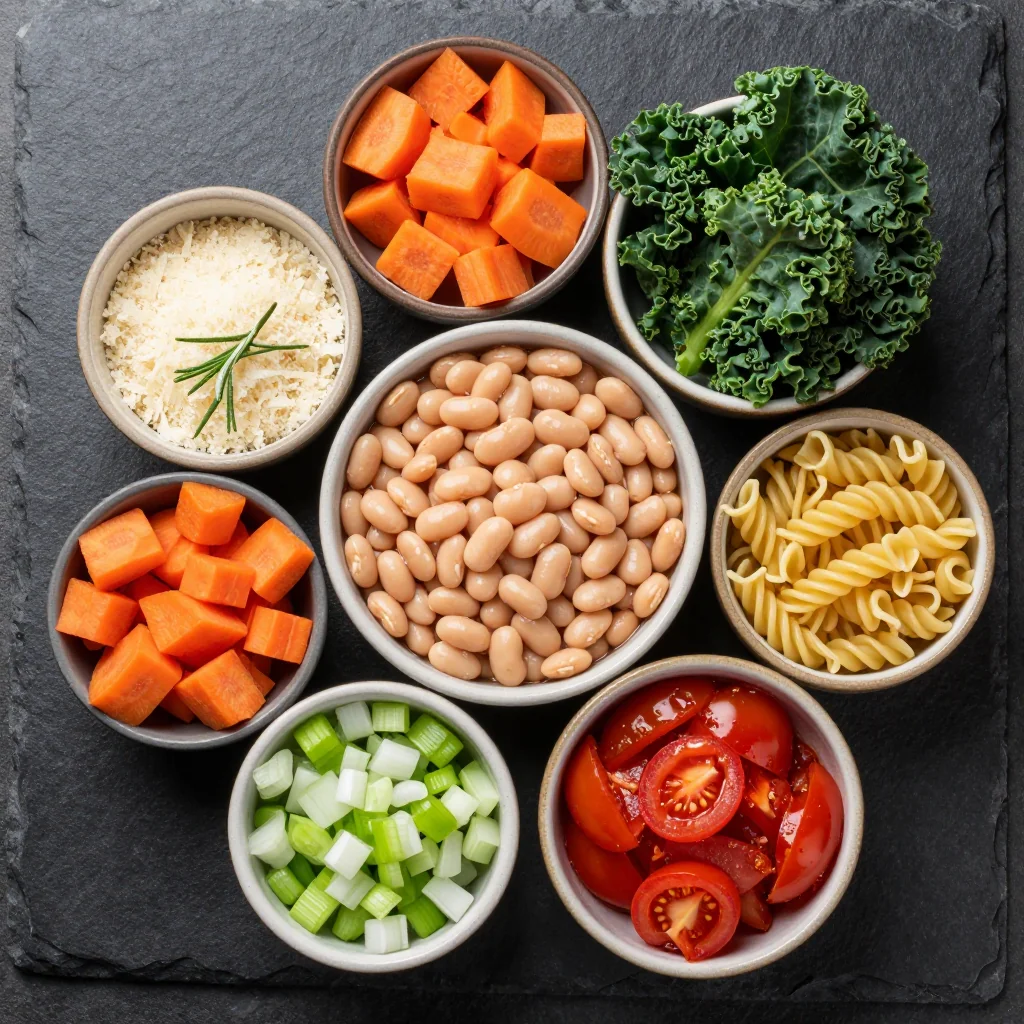
Great minestrone is less about strict obedience to a list and more about understanding the role each ingredient plays. You need a sweet note (carrot), a mineral note (zucchini), a nightshade base (tomato), a creamy pulse (beans), and a starchy comfort (pasta). Everything else is poetry.
Olive oil – Use a generous glug of everyday extra-virgin; save the grassy finishing oil for the table. If you’re out, a neutral avocado oil works, but you’ll miss the peppery bite that rounds the tomato acidity.
Yellow onion – The workhorse aromatic. Dice it small so it melts into the soup; nobody wants a crunchy surprise. In a pinch, a large shallot or two leeks (white and light green parts) will do.
Carrots – Look for bunches with perky tops; if the greens look like yesterday’s salad, the carrots will taste woody. Peel, then continue peeling long ribbons straight into the pot—faster than coins and more surface area to soak up flavor.
Celery – One rib, finely sliced, plus any leaves for garnish. Celery adds a gentle bitterness that keeps the soup from cloying. No celery? Fennel fronds or a pinch of celery seed will fake it.
Garlic – Three fat cloves, smashed and minced. I’ve made this with roasted garlic leftovers; the sweetness is sublime, but reduce the quantity by half.
Tomato paste – Buy the tube, not the can. You’ll use two tablespoons here and won’t waste the rest. Double-concentrated paste gives deeper color in less time.
Smoked paprika – The stealth MVP. Sweet paprika will color the broth, but smoked paprika gives the illusion of ham hocks without the meat.
Crushed tomatoes – One 28-ounce can of whole tomatoes that you crush by hand is texturally superior, but on a Tuesday? The pre-crushed stuff is fine. Fire-roasted adds extra swagger.
Vegetable broth – Low-sodium, please. If you’re a broth snob, simmer your own with onion skins, carrot tops, and a bay leaf. If you’re human, a good carton works. Chicken broth is a fine non-vegetarian swap.
Bay leaf & dried oregano – The classic Italian duo. Rub the oregano between your palms to wake up the oils. Fresh oregano is lovely but can overpower; use half the amount.
Parmesan rind – Collect them in a zip-top bag in the freezer. They look like beige leather, but after thirty minutes in hot soup they exhale umami. Vegans can sub a 1-inch strip of kombu plus a teaspoon of white miso.
Zucchini – One medium, quartered lengthwise and sliced thin. Summer squash yellows or even peeled broccoli stems are fair game.
Beans – Two 15-ounce cans of cannellini or great northern, drained and rinsed. Canned beans are pre-cooked, so we’re just warming them through. If you cook from dried, you’ll need 1½ cups cooked.
Pasta – Ditalini is traditional, but any short shape (elbow, small shell, orzo) works. Whole-wheat pasta holds up better in leftovers, while gluten-free chickpea pasta adds protein.
Fresh basil & baby spinach – Stirred in off-heat so the residual heat wilts the spinach and perfumes the basil. Kale or chard need longer cooking; add them with the zucchini.
Lemon & extra-virgin olive oil for finishing – Acidity and richness wake everything up. Don’t skip this; it’s the difference between good soup and restaurant soup.
How to Make Hearty Minestrone with Beans for a Filling Lunch
Warm the Aromatics
Set a heavy 4-quart Dutch oven over medium heat. Pour in 3 tablespoons olive oil and swirl to coat. Add the diced onion, carrot ribbons, and celery with a pinch of kosher salt. Sauté 5 minutes until the vegetables sweat and the edges of the onion turn translucent; reduce heat if any browning starts.
Bloom the Paste & Spices
Clear a hot spot in the center of the pot, add 2 tablespoons tomato paste and ½ teaspoon smoked paprika, and let sizzle for 60 seconds. The paste will darken from scarlet to brick red. Stir to coat the vegetables; the caramelized sugars add a quiet sweetness that balances the acid in the tomatoes.
Build the Broth
Pour in one 28-ounce can crushed tomatoes and 4 cups vegetable broth. Add 1 bay leaf, ½ teaspoon dried oregano, and the reserved Parmesan rind. Bring to a lively simmer, then drop the heat to low, partially cover, and let it burble 10 minutes while you prep the beans.
Create the Bean Cream
Drain and rinse two 15-ounce cans white beans. Transfer half to a bowl and mash with the back of a fork until they resemble chunky hummus. This starchy purée will thicken the soup naturally, sparing you floury lumps or long reductions.
Simmer with Zucchini
Stir both the mashed and whole beans into the pot along with the sliced zucchini. Simmer 6–7 minutes, just until the zucchini turns translucent and tender. Overcooking turns it to mush, and we want distinct bites.
Cook Pasta Separately
Meanwhile, bring a small saucepan of salted water to boil and cook 1 cup ditalini until just al dente (check the package minus 1 minute). Drain, toss with a drizzle of oil to prevent sticking, and keep warm. Keeping the pasta separate preserves its texture in leftovers.
Brighten & Serve
Fish out the bay leaf and Parmesan rind (it will be floppy and translucent). Stir in 2 cups baby spinach and a handful of torn basil. Squeeze in the juice of half a lemon, taste, and adjust salt and pepper. Ladle soup over warm pasta in deep bowls, drizzle with your best olive oil, and shower with freshly grated Parmesan and cracked black pepper.
Expert Tips
Low & Slow Flavor
If you have 30 extra minutes, keep the soup at the gentlest simmer; the flavors marry and the Parmesan rind melts further, giving a silky finish.
Deglaze with Wine
After the tomato paste browns, splash in ¼ cup dry white wine and let it evaporate before adding the tomatoes; the acidity amplifies brightness.
Cool Before Storing
Divide hot soup into shallow containers so it cools quickly; this prevents bacteria and keeps spinach from turning army-green.
Revive Leftovers
Soup thickens in the fridge; loosen with a splash of water or broth, then reheat gently so beans don’t burst.
Overnight Upgrade
Make the soup through Step 5, refrigerate overnight, and finish with spinach and basil the next day; the flavors deepen dramatically.
Salt in Stages
Season the aromatics, then again after tomatoes, and finally at the end. Taste after each addition; the Parmesan rind adds salt as it melts.
Variations to Try
- Minestrone alla Genovese: Stir in 2 tablespoons pesto at the end instead of basil leaves and drizzle with lemon zest.
- Sausage & Bean: Brown 8 ounces crumbled Italian sausage in the pot before the onions; drain excess fat and proceed.
- Green Minestrone: Swap spinach for chopped kale, add ½ cup pesto, and use white miso instead of Parmesan rind for a vegan version.
- Summer Garden: Replace zucchini with diced yellow squash and fresh corn kernels; add a handful of chopped tomatoes in the last 2 minutes for bursts of freshness.
- Spicy Calabrian: Stir in 1 teaspoon Calabrian chile paste with the tomato paste for a smoky, lingering heat.
Storage Tips
Refrigerator: Cool completely, transfer to airtight containers, and refrigerate up to 4 days. Store pasta separately so it doesn’t absorb all the broth.
Freezer: Freeze soup (without pasta or greens) in pint containers for up to 3 months. Leave ½ inch headspace; liquids expand. Thaw overnight in the fridge and reheat gently.
Make-Ahead Lunchboxes: Portion soup into 2-cup microwave-safe jars; pack pasta in a snack-size zip bag. At lunchtime, heat soup 90 seconds, stir in pasta, and let stand 1 minute to warm through.
Frequently Asked Questions
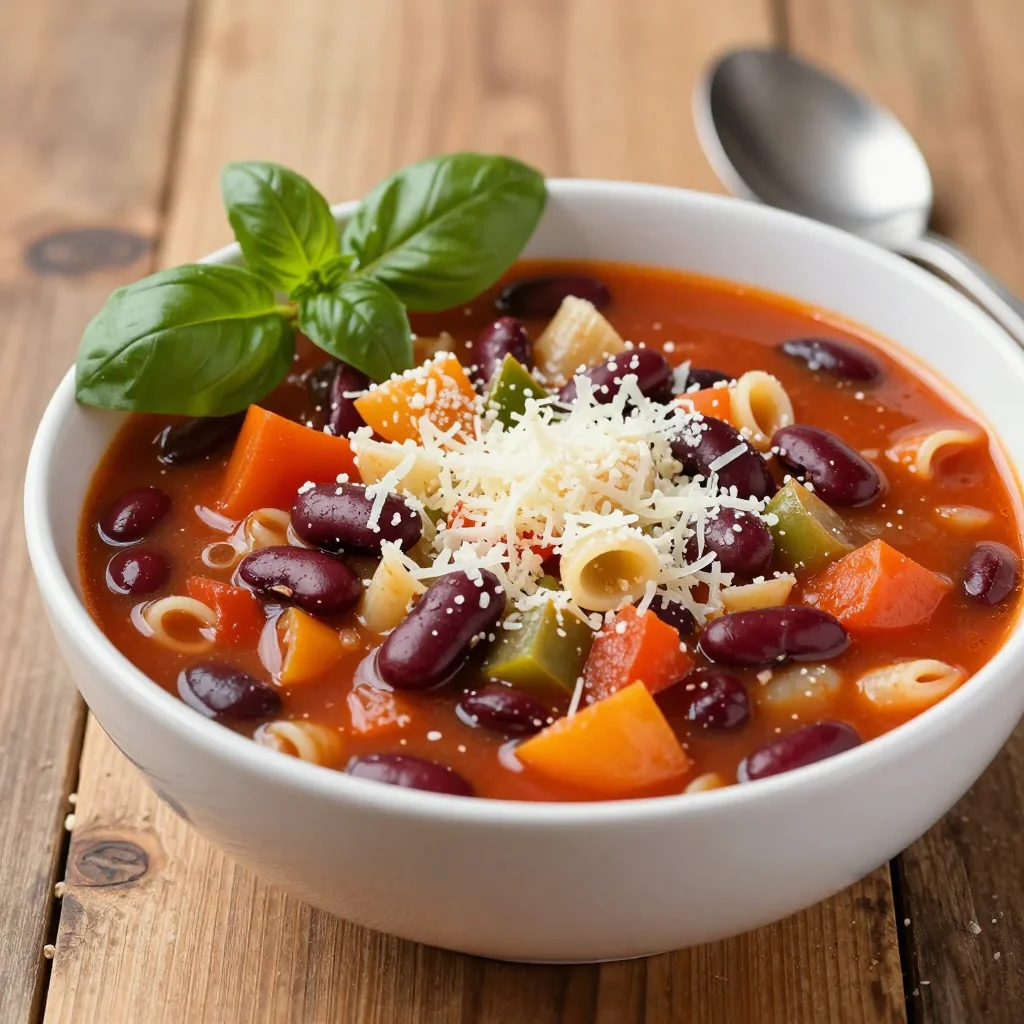
Hearty Minestrone with Beans for a Filling Lunch
Ingredients
Instructions
- Sauté aromatics: Heat olive oil in a Dutch oven over medium heat. Add onion, carrot, celery, and a pinch of salt; cook 5 minutes until translucent.
- Bloom tomato paste: Clear a space, add tomato paste and paprika, cook 1 minute. Stir to coat vegetables.
- Build broth: Stir in crushed tomatoes, broth, bay leaf, oregano, and Parmesan rind. Simmer 10 minutes.
- Mash half the beans: With a fork, mash one can of beans until creamy.
- Simmer vegetables: Add mashed and whole beans plus zucchini to the pot; simmer 6–7 minutes.
- Cook pasta separately: Boil ditalini in salted water until al dente; drain and set aside.
- Finish & serve: Remove bay leaf and rind. Stir in spinach, basil, and lemon juice. Ladle over warm pasta, drizzle with oil, and top with Parmesan.
Recipe Notes
For vegan version, omit Parmesan rind and finish with 1 teaspoon white miso dissolved in a ladle of hot broth.