Love this? Pin it for later! 📌
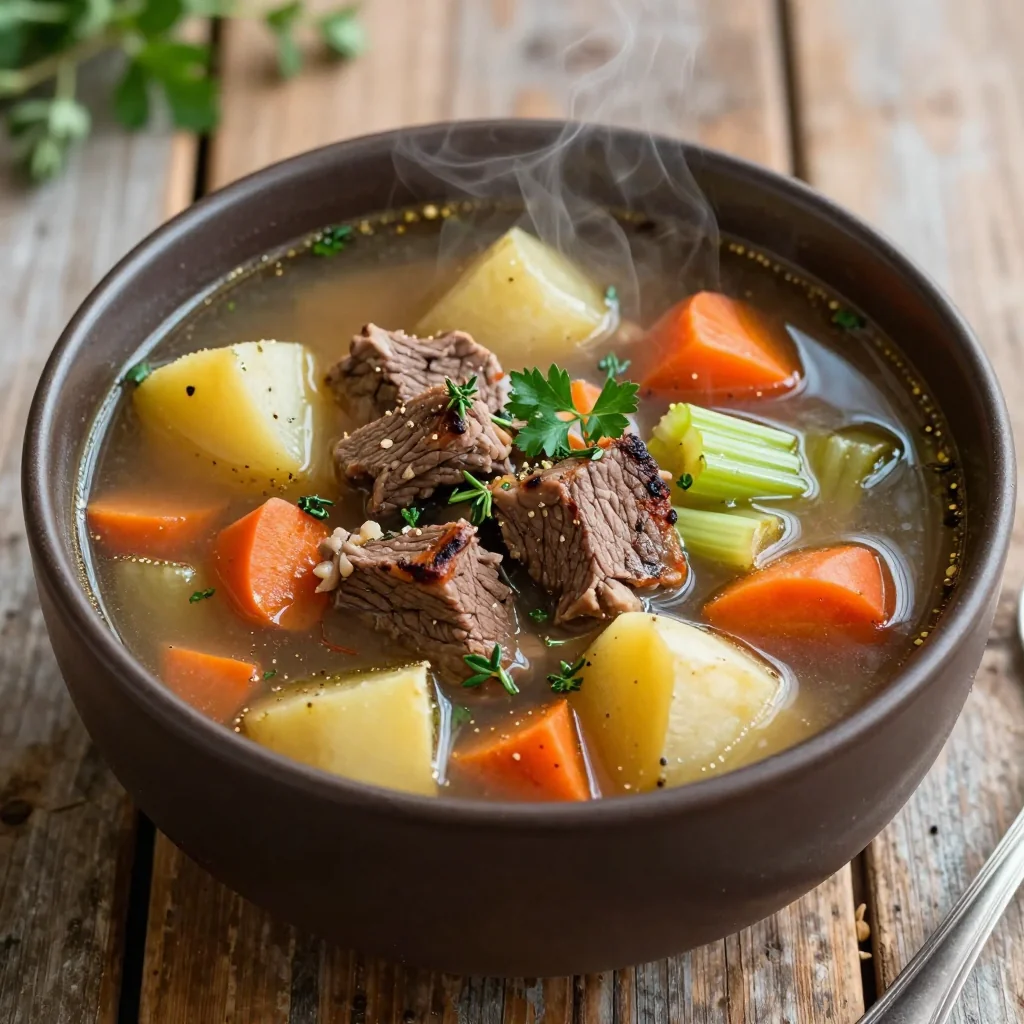
There's something magical about January—the way the frost clings to the windows, the crisp bite in the air, and the quiet promise of a new year ahead. But after the holiday whirlwind, my soul craves comfort without fuss, and my family craves something nourishing after weeks of rich indulgence. This Hearty Vegetable Beef Soup has become our January ritual, simmering away on snowy afternoons while we curl up with books and board games, letting the aroma of tender beef and root vegetables weave through our home like a warm embrace.
I developed this recipe last winter when my garden was buried under a foot of snow and my pantry felt bare. What started as a "clean out the crisper drawer" experiment transformed into the most requested soup in our household. The secret lies in layering flavors—searing the beef until it develops a deep caramelized crust, then using those browned bits to create a rich base that tastes like it's been simmering for hours. Even my pickiest eater asks for seconds, and I've caught my husband sneaking bowls straight from the fridge at midnight.
But beyond the incredible flavor, this soup represents something deeper. It's a promise that even in the coldest, darkest days of winter, we can create warmth and comfort from simple ingredients. It's teaching my children that food doesn't need to be fancy to be extraordinary—it just needs to be made with intention and love. Every January, as the snow falls and the temperatures plummet, we gather around our worn wooden table, steam rising from our bowls, and remember that this is what sustains us: simple food, shared together.
Why This Recipe Works
- Layered Flavor Development: We start by searing the beef until deeply browned, creating fond that infuses the entire soup with incredible depth and richness.
- Perfect Vegetable Texture: Each vegetable is added at precisely the right moment, ensuring tender potatoes, perfectly cooked carrots, and green beans with just the right bite.
- Flexible & Forgiving: This recipe welcomes substitutions based on what's in your crisper drawer—turnips for potatoes, parsnips for carrots, or whatever winter vegetables you've got on hand.
- Meal Prep Champion: The flavors actually improve overnight, making this the perfect Sunday soup that keeps giving all week long.
- Freezer-Friendly: Double the batch and freeze half for those emergency "I need comfort food NOW" moments that January brings.
- Complete Nutrition: Packed with protein, fiber, and essential vitamins—everything your body craves during cold and flu season.
- Budget-Conscious: Uses economical beef chuck roast and humble vegetables to create something that tastes far more expensive than it costs.
Ingredients You'll Need
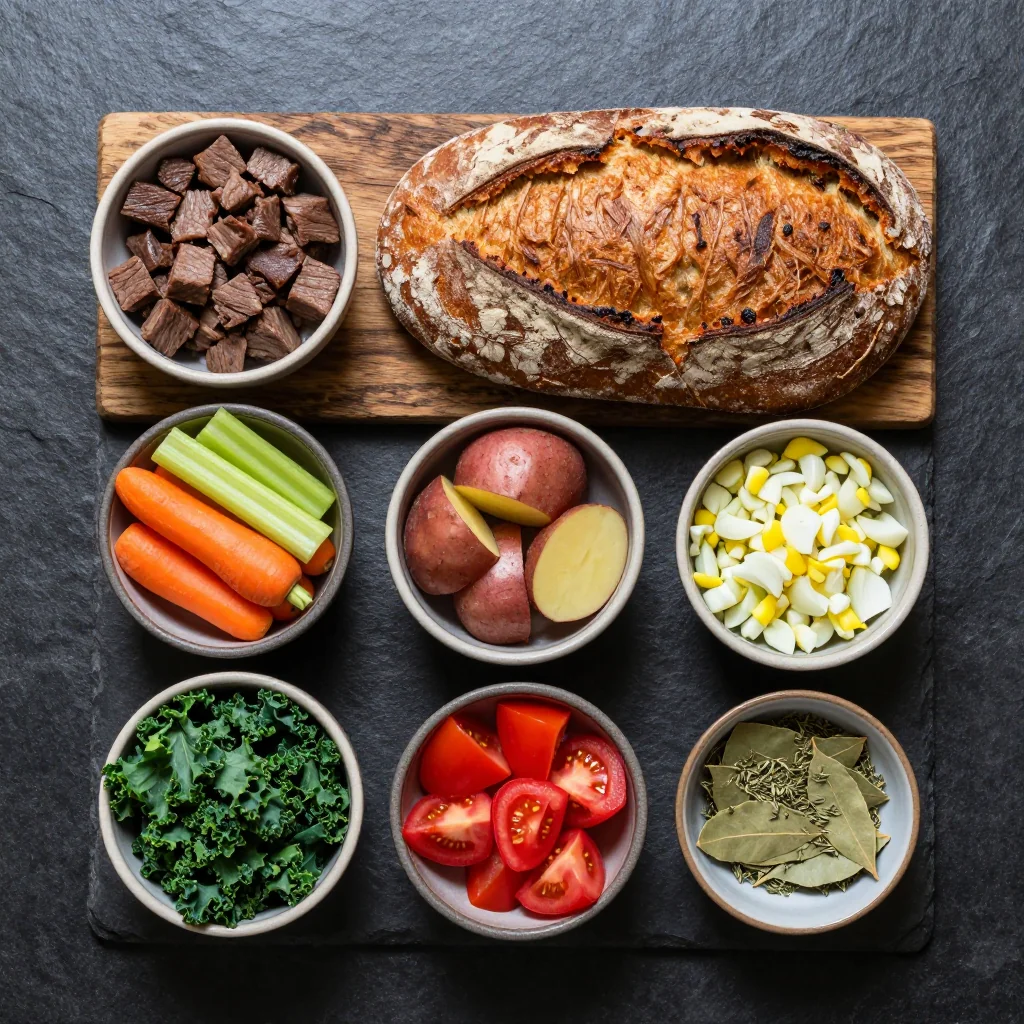
The beauty of this soup lies in its humble ingredients, each chosen for maximum flavor and nutrition. You'll need just over two pounds of beef chuck roast—look for well-marbled cuts with bright red color and white fat. The marbling ensures tender, flavorful meat that becomes melt-in-your-mouth tender. If chuck roast isn't available, you can substitute bottom round or even sirloin tip, but avoid lean cuts like sirloin steak, which can become tough and stringy.
For the vegetables, I use a classic mirepoix of onions, carrots, and celery as the aromatic base. Choose firm, bright carrots without any soft spots, and celery with crisp, pale green stalks. The onions should feel heavy for their size with dry, papery skins. Baby potatoes are my preference because they hold their shape beautifully and don't require peeling—just a good scrub. If you only have larger potatoes, cut them into uniform pieces no larger than one-inch chunks.
Green beans add color and texture, and fresh beans are worth seeking out during winter months. Look for beans that snap cleanly when bent, with vibrant green color and no brown spots. If fresh beans are unavailable, frozen cut green beans work well—just add them during the last 10 minutes of cooking. The tomato paste is crucial for depth; buy a good quality paste in a tube if possible, as it stays fresh longer than canned varieties.
Beef stock forms the backbone of this soup, and quality matters enormously. Homemade stock is ideal, but a good quality boxed stock works well. I always choose low-sodium versions to control the salt level, and I recommend avoiding bouillon cubes or powder—they can make the soup taste artificial. The herbs—thyme, rosemary, and bay leaves—are classic companions to beef. Fresh herbs are wonderful, but dried work beautifully in this long-simmered soup.
How to Make Hearty Vegetable Beef Soup for Cold January Days
Prep and Season the Beef
Pat the beef chuck roast completely dry with paper towels—this is crucial for proper browning. Cut into 1½-inch cubes, keeping them as uniform as possible for even cooking. Season generously with 1 teaspoon salt, ½ teaspoon black pepper, and ½ teaspoon paprika. Toss to coat evenly and let rest at room temperature for 20-30 minutes while you prep the vegetables. This allows the meat to cook more evenly and the seasoning to penetrate.
Sear the Beef for Maximum Flavor
Heat 2 tablespoons olive oil in a large Dutch oven over medium-high heat until shimmering. Working in batches to avoid crowding (this is essential!), sear the beef cubes until deeply browned on at least two sides, about 3-4 minutes per side. Don't rush this step—those brown bits on the bottom of the pot are liquid gold. Transfer seared beef to a plate. Deglaze the pot with ½ cup of the beef stock, scraping up all the fond with a wooden spoon. Pour this liquid gold over the reserved beef.
Build the Aromatic Base
Add another tablespoon of oil to the pot if needed, then sauté the diced onion until translucent and beginning to brown, about 5 minutes. Add the carrots and celery, cooking until the vegetables are softened and the onions are golden, about 8 more minutes. Stir in the tomato paste and cook for 2 minutes, stirring constantly—the paste should darken and begin to stick to the bottom of the pot. Add the minced garlic and cook for 30 seconds until fragrant.
Add Liquid and Bring to Simmer
Return the seared beef and any accumulated juices to the pot. Pour in the remaining beef stock and water, stirring to combine. Add the bay leaves, thyme, rosemary, and Worcestershire sauce. Bring to a boil over high heat, then reduce to a gentle simmer. Skim off any foam that rises to the surface during the first 10 minutes of simmering—this removes impurities and ensures a clear, clean-tasting broth.
Simmer and Build Flavor
Cover partially and simmer gently for 1 hour, stirring occasionally. The liquid should barely bubble—too vigorous a boil will make the meat tough. After an hour, add the potatoes and continue simmering for another 30 minutes. This gradual addition ensures the potatoes don't overcook and become mushy while the beef becomes tender.
Add Final Vegetables
Stir in the green beans and continue simmering for 10-15 minutes until all vegetables are tender but still hold their shape. Test the beef by pressing a piece with a fork—it should yield easily but not fall apart. If the beef isn't tender enough, continue simmering in 15-minute increments, adding more stock if needed to keep ingredients submerged.
Season and Serve
Remove bay leaves and herb stems. Taste and adjust seasoning with salt and pepper as needed—the soup may need more salt than you expect, especially if using low-sodium stock. Let rest off heat for 10 minutes to allow flavors to meld. Serve hot, garnished with fresh parsley if desired. The soup will thicken slightly as it stands.
Expert Tips
Make-Ahead Magic
This soup tastes even better the next day! Make it on Sunday and enjoy it throughout the week. The flavors meld beautifully, and the beef becomes even more tender. Store in an airtight container in the refrigerator for up to 4 days.
Freezer Success
Freeze individual portions for up to 3 months. Cool completely before freezing, and leave 1 inch of space in containers for expansion. Thaw overnight in the refrigerator and reheat gently on the stovetop.
Browning is Everything
Don't rush the searing process! Those brown bits (fond) on the bottom of the pot contain concentrated flavor compounds that will transform your soup from good to extraordinary. Work in batches and be patient.
Temperature Control
Maintain a gentle simmer—just occasional bubbles breaking the surface. Too vigorous a boil will make the meat tough and can break down the vegetables. If it's boiling too hard, reduce heat immediately.
Uniform Cuts Matter
Cut your vegetables into uniform sizes so they cook evenly. The beef cubes should also be roughly the same size, about 1½ inches, to ensure they become tender at the same rate.
Season in Layers
Season the beef before searing, the vegetables while they sauté, and taste and adjust the final soup. This layered seasoning creates depth and complexity that tasting at the end alone can't achieve.
Variations to Try
Italian Wedding Style
Add a can of white beans and some small pasta during the last 15 minutes of cooking. Stir in a handful of chopped escarole or spinach at the end, and finish with a sprinkle of Parmesan cheese.
Southwestern Twist
Replace the herbs with cumin, oregano, and a pinch of chipotle powder. Add corn and black beans, and finish with a squeeze of lime and fresh cilantro. Serve with warm tortillas.
Red Wine Version
Deglaze the pot with ½ cup red wine after searing the beef. Let it reduce by half before adding the stock. This adds incredible depth and richness perfect for special occasions.
Vegetable-Packed
Double the vegetables and reduce the beef by half for a lighter version. Add mushrooms, turnips, and parsnips for extra nutrition. This is perfect for using up any vegetables in your fridge.
Storage Tips
Refrigerator Storage
Cool the soup completely before storing in airtight containers. It will keep for up to 4 days in the refrigerator. The flavors actually improve after 24 hours, making this perfect for meal prep. Store in individual portions for easy grab-and-go lunches.
Freezer Instructions
This soup freezes beautifully for up to 3 months. Cool completely, then ladle into freezer-safe containers, leaving 1 inch of space for expansion. Label with the date and contents. For best results, thaw overnight in the refrigerator rather than using the microwave.
Reheating
Reheat gently on the stovetop over medium heat, stirring occasionally. Add a splash of stock or water if the soup has thickened too much during storage. Avoid boiling, as this can make the beef tough. Microwave reheating works for individual portions—heat for 2-3 minutes, stirring halfway through.
Frequently Asked Questions
Yes! While chuck roast is ideal for its marbling and tenderness after long cooking, you can substitute bottom round, brisket, or even beef stew meat. Avoid lean cuts like sirloin or tenderloin, which become tough and dry. If using pre-cut stew meat, look for pieces with good marbling and trim any large pieces of fat.
For soup that's too thin, remove 1 cup of liquid and whisk with 2 tablespoons flour or cornstarch, then stir back into the soup and simmer for 5 minutes. For soup that's too thick, simply add more stock or water until you reach your desired consistency. The soup will thicken as it stands, so adjust accordingly.
Absolutely! Sear the beef and sauté the vegetables as directed, then transfer everything to your slow cooker. Cook on low for 7-8 hours or high for 4-5 hours. Add the green beans during the last 30 minutes of cooking. The flavors won't be quite as developed as stovetop, but it's incredibly convenient for busy days.
The beef is done when a fork or the edge of a spoon can easily pierce through a cube with minimal resistance. It should feel tender but not falling apart. If it's still tough, continue simmering and check every 15 minutes. Different cuts and sizes will vary in cooking time, so trust the texture test over the clock.
Yes! Dried herbs work beautifully in this long-cooked soup. Use ½ teaspoon dried thyme and ½ teaspoon dried rosemary instead of fresh. The bay leaves should still be whole. Add dried herbs when you add the stock—they need time to rehydrate and release their flavors. You can also substitute Italian seasoning blend for the individual herbs.
Crusty bread is essential for sopping up every last drop! Try warm sourdough, crusty baguette, or homemade dinner rolls. A simple green salad with vinaigrette provides a bright contrast. For extra indulgence, serve with grilled cheese or top the soup with a dollop of sour cream and some crusty croutons.
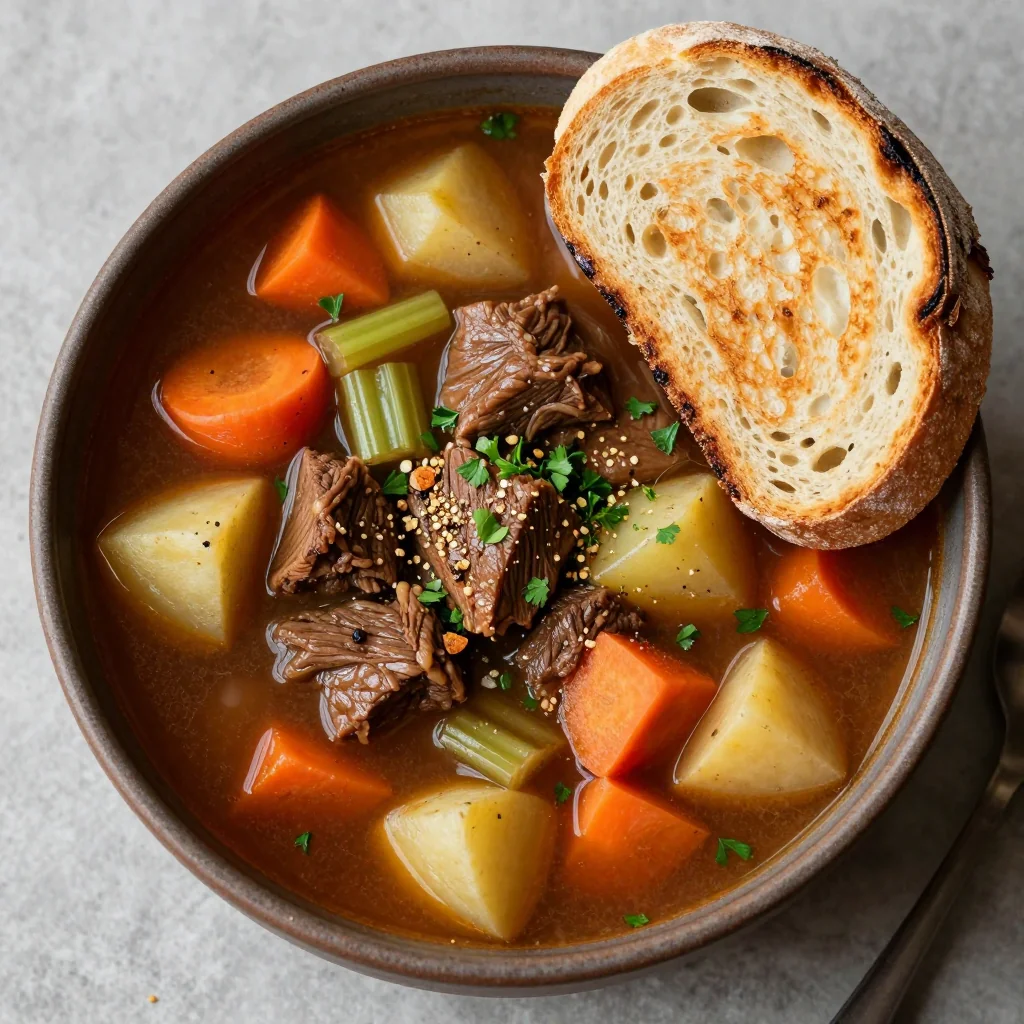
Hearty Vegetable Beef Soup for Cold January Days
Ingredients
Instructions
- Prepare the beef: Pat beef cubes dry, season with 1 tsp salt, ½ tsp pepper, and paprika. Let rest 20-30 minutes.
- Sear the beef: Heat 2 tbsp oil in Dutch oven over medium-high heat. Sear beef in batches until deeply browned. Transfer to plate.
- Build the base: Sauté onion until translucent, add carrots and celery, cook 8 minutes. Stir in tomato paste and garlic.
- Add liquids: Return beef and juices to pot. Add stock, water, herbs, Worcestershire. Bring to simmer, skim foam.
- Simmer: Cover partially, simmer 1 hour. Add potatoes, simmer 30 minutes more.
- Finish vegetables: Add green beans, simmer 10-15 minutes until all vegetables are tender.
- Season and serve: Remove bay leaves, adjust seasoning, rest 10 minutes. Serve hot with crusty bread.
Recipe Notes
For best results, don't skip the searing step—it creates incredible depth of flavor. The soup tastes even better the next day and freezes beautifully for up to 3 months. Serve with warm crusty bread for the ultimate comfort meal.