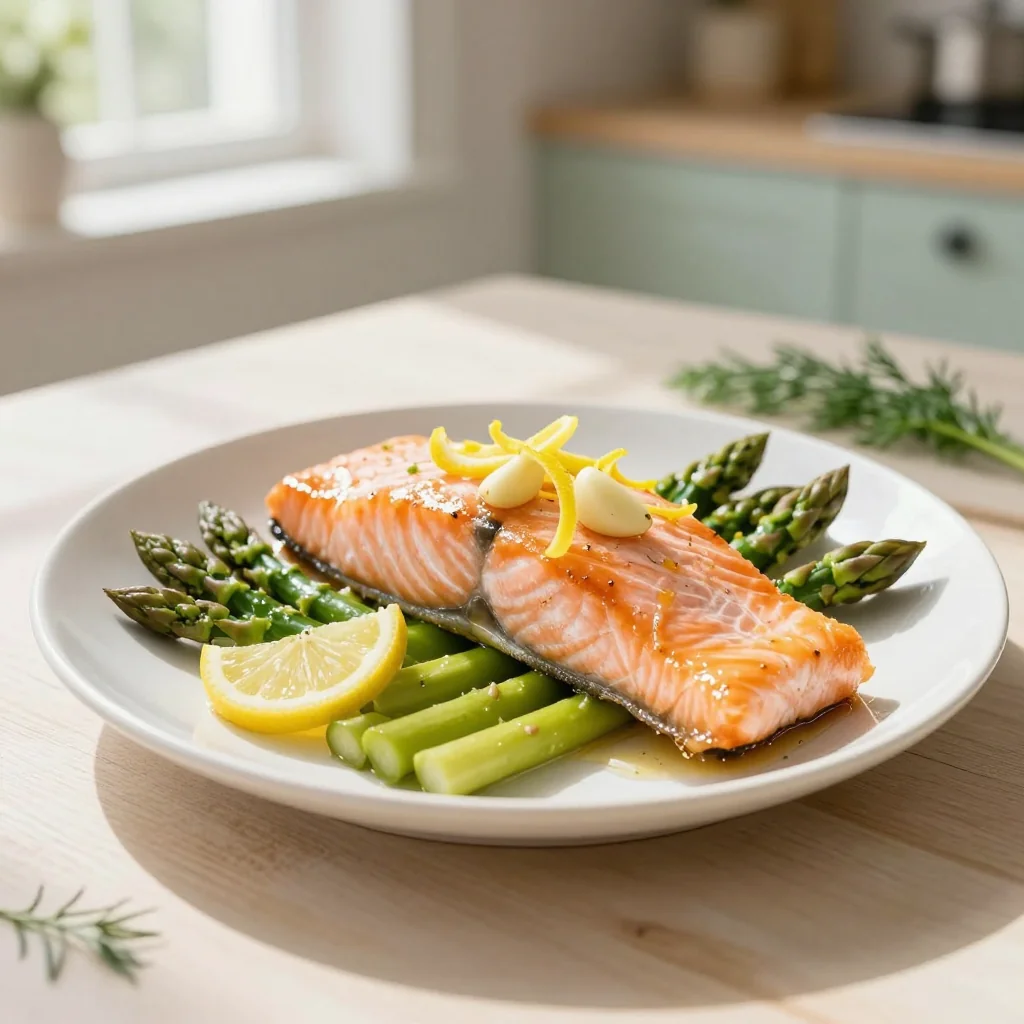
When I was a teenager, summer evenings in my grandparents’ coastal cottage were filled with the scent of the sea and the sizzle of fresh fish on a modest grill. One particular night, my grandmother handed me a whole salmon, a handful of asparagus, and a bright lemon, urging me to “let the flavors speak for themselves.” The simple act of drizzling lemon juice and garlic over the fish, then watching it turn pink and flaky, created a memory that has lingered for decades.
This dish hails from the Mediterranean coast, where citrus and olive oil are staples, and fish is celebrated for its delicate texture. The combination of lemon, garlic, and fresh herbs is a classic that brings out the natural richness of salmon while keeping the meal light and vibrant—perfect for any season.
In this guide, you’ll discover how to balance acidity with butter, how to achieve perfectly crisp asparagus, and why a quick sear followed by a gentle oven finish guarantees juicy salmon every time. I’ll share the exact timing, temperature, and technique that have turned my family’s “quick dinner” into a show‑stopper.
Ready to bring a splash of sunshine to your kitchen? Let’s dive in and create a plate that feels both elegant and effortless.
🌟 Why This Recipe Will Win Your Heart
This salmon dish isn’t just another fish recipe; it’s a celebration of flavor, nutrition, and simplicity that fits any lifestyle.
- ✨ Speed without Sacrifice: Ready in under 35 minutes, it delivers restaurant‑quality taste without the hassle of complex prep.
- ✨ Nutrient Powerhouse: Salmon provides omega‑3 fatty acids, while asparagus adds fiber, vitamins A, C, and K.
- ✨ Versatile Pairings: Works beautifully with a crisp white wine, a light quinoa salad, or simply a slice of crusty bread.
- ✨ Minimal Cleanup: One pan, one skillet, and a few simple tools mean you spend more time eating and less time washing.
- ✨ Crowd‑Pleaser: The bright lemon aroma draws guests in, and the buttery finish satisfies even picky eaters.
- ✨ Seasonal Flexibility: Fresh in summer, frozen in winter—this recipe adapts to whatever salmon you have on hand.
🥗 Ingredients
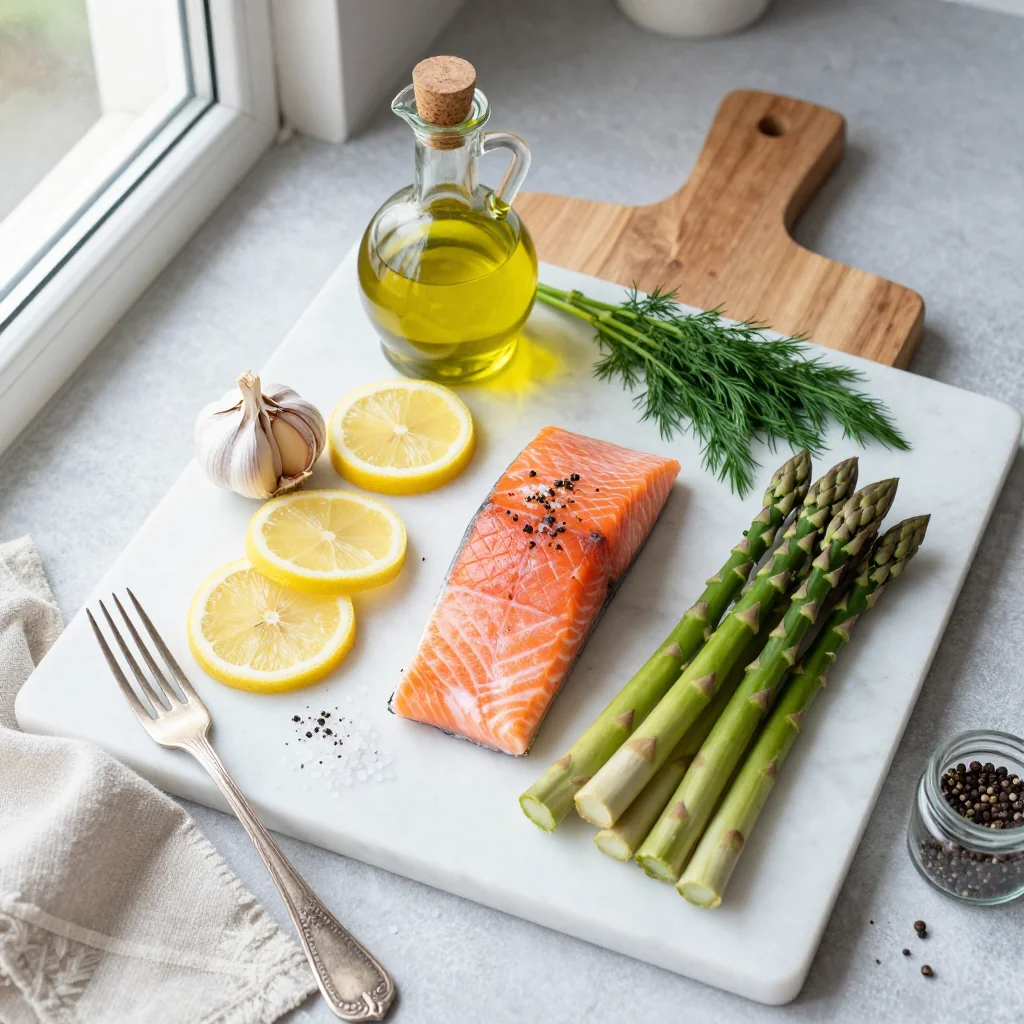
📝 Complete Ingredient List
For the Salmon:
For the Asparagus:
For the Lemon‑Garlic Sauce:
🔍 Focus on Key Ingredients
Salmon Fillets
Salmon is prized for its buttery texture and high omega‑3 fatty acids, which support heart health and reduce inflammation. When selecting fillets, look for firm flesh that springs back when pressed and a bright, pink hue. Wild‑caught varieties typically have a richer flavor than farmed, though both work well if you prefer a milder taste.
Fresh Asparagus
Asparagus adds a crisp, slightly grassy contrast to the richness of salmon. The spears should be firm, with tips that are tightly closed—if they open easily, the asparagus is past its prime. Trim the woody ends (about 1‑2 inches) before cooking to ensure even tenderness.
Lemon
Lemon provides acidity that cuts through the buttery sauce, brightening the overall palate. Use organic lemons when possible; the zest contains essential oils that amplify aroma. Freshly squeezed juice is essential—bottled lemon juice lacks the vibrant zing needed for this dish.
🔄 Quick Substitutions
| If you don’t have... | Use instead... |
|---|---|
| Fresh dill | Dried dill (½ tsp) |
| Olive oil | Avocado oil |
| Salmon fillets | Trout or cod fillets |
👨🍳 Step‑by‑Step Instructions
Follow these detailed steps to achieve perfectly cooked salmon with crisp‑tender asparagus, all glazed in a fragrant lemon‑garlic sauce.
📋 Phase 1: Preparation & Mise en Place
Gather, measure, and prep all components before you start cooking.
Pat the salmon dry and season
Using paper towels, gently pat each salmon fillet dry to remove excess moisture. This ensures a nice sear. Sprinkle sea salt and freshly ground black pepper evenly on both sides. Let the seasoned fillets rest for 5 minutes while you prep the asparagus.
Trim and season the asparagus
Snap off the woody ends of the asparagus by gently bending each spear; it will break at its natural point. Place the trimmed spears on a baking sheet, drizzle with 1 tbsp olive oil, sprinkle with a pinch of salt, and toss to coat evenly. Set aside.
🔥 Phase 2: Cooking & Assembly
Sear the salmon, roast the asparagus, and finish with a lemon‑garlic glaze.
Sear the salmon skin‑side down
Heat a large oven‑safe skillet over medium‑high heat. Add 2 tbsp olive oil. When shimmering, lay the salmon fillets skin‑side down, pressing gently for 30 seconds to ensure full contact. Cook for 4‑5 minutes until the skin is crisp and the flesh turns opaque about three‑quarters of the way up.
Add butter, garlic, and lemon juice
Reduce heat to medium. Add the melted butter, minced garlic, and lemon juice to the pan. Swirl the pan gently; the butter will foam, and the garlic will become fragrant within 30 seconds. Spoon the aromatic sauce over the salmon repeatedly for an even coating.
Roast the asparagus
While the salmon cooks, slide the baking sheet with asparagus into a preheated oven at 200 °C (400 °F). Roast for 10‑12 minutes, turning halfway, until bright green and just tender. If you like a bit of heat, sprinkle the red pepper flakes during the last 2 minutes.
Finish salmon in the oven
Transfer the skillet with the salmon (ensure the handle is oven‑safe) into the same oven. Bake for an additional 4‑6 minutes, or until the internal temperature reaches 57 °C (135 °F). The sauce should thicken slightly, clinging to the fillets.
✨ Phase 3: Finishing & Plating
Bring everything together, garnish, and serve.
Check doneness
Insert a thin probe into the thickest part of the salmon; it should feel firm but still give slightly. The flesh should flake easily with a fork. If you prefer a more well‑done piece, add another minute or two.
Plate and garnish
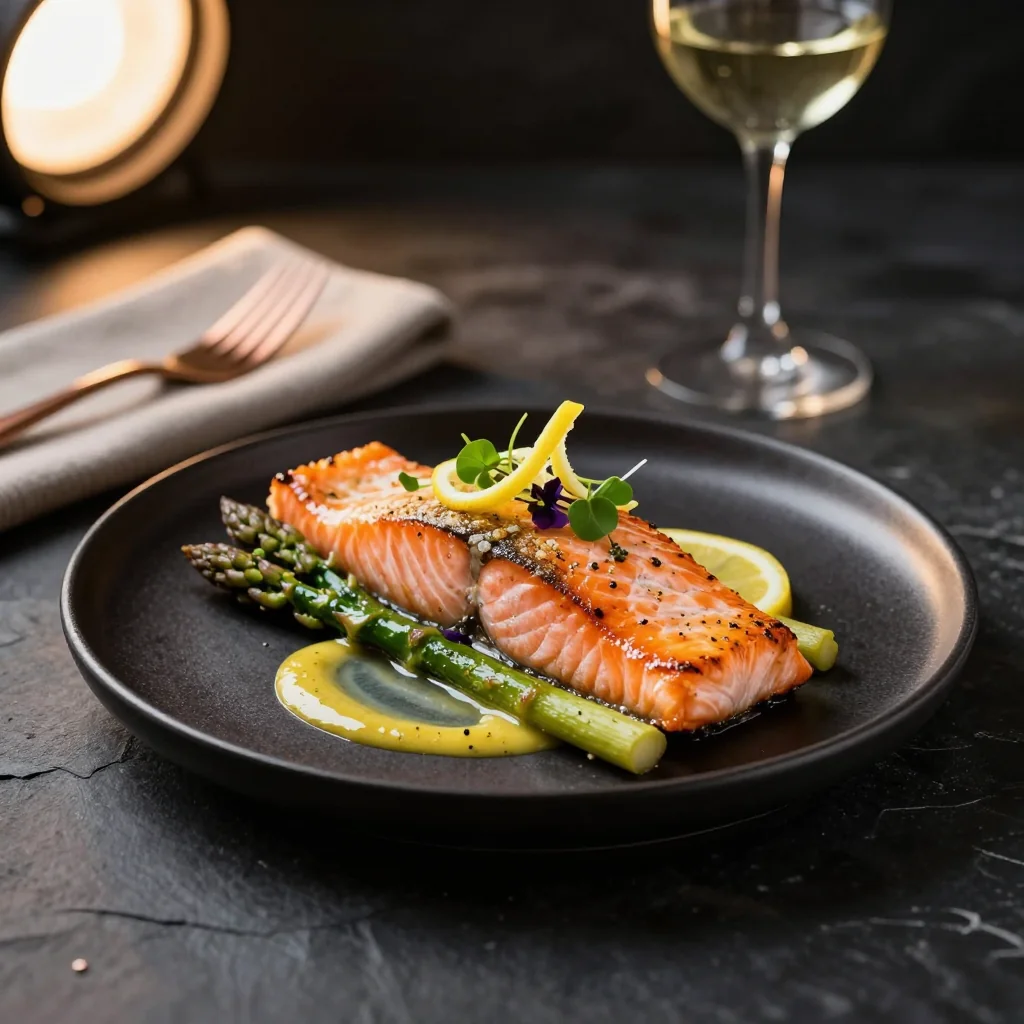
Arrange three asparagus spears alongside each salmon fillet on a warm plate. Drizzle any remaining pan sauce over the fish and asparagus. Sprinkle chopped fresh dill for a burst of herbaceous aroma and a pop of green color.
Serve immediately
Serve the dish hot, accompanied by a wedge of lemon for extra brightness. Pair with a chilled glass of Sauvignon Blanc or a sparkling water infused with citrus for a balanced meal.
💡 Expert Tips & Tricks
🛒 Choosing the Best Ingredients
When selecting salmon, prioritize fillets with a deep pink hue and a firm texture. Wild‑caught salmon usually has a richer flavor profile and higher omega‑3 content than farmed. For asparagus, opt for spears that snap easily when bent; this indicates freshness. Finally, choose lemons that feel heavy for their size and have a glossy, smooth skin—signs of juiciness.
🔪 Preparation Techniques
Pat the salmon dry thoroughly; moisture is the enemy of a good sear. Use a sharp knife to trim the asparagus ends cleanly—no ragged cuts. Mince garlic finely to release its oils quickly, and zest the lemon before juicing to capture the aromatic oils that sit in the zest.
🌡️ Mastering the Cooking Process
Maintain a hot skillet for the initial sear; a medium‑high heat creates that coveted crispy skin. After searing, lower the temperature before adding butter and garlic to prevent burning. Finish in a preheated oven for even heat distribution, ensuring the salmon stays moist while the asparagus reaches perfect tenderness.
🍽️ Presentation & Service
Plate the salmon skin side up to showcase the golden crust. Add a drizzle of the lemon‑garlic sauce in a thin line across the plate for visual drama. Finish with a sprinkle of fresh dill and a lemon wedge on the side. Serve on a warm plate to keep the dish at optimal temperature.
🏆 Pro Tips
Professional chefs focus on precision, flavor layering, and texture contrast to elevate a simple dish into something unforgettable.
- 🎯 Temperature Control: Use an infrared thermometer to verify the skillet’s surface is around 190 °C (375 °F) before adding the salmon. This guarantees an instant sizzle and prevents the fish from steaming.
- 🎯 Butter Basting: While the salmon cooks, continuously spoon the melted butter and pan juices over the fillet. This technique, known as “basting,” infuses the flesh with flavor and keeps it moist.
- 🎯 Citrus Timing: Add lemon juice just before the final oven step. Acid added too early can “cook” the garlic, resulting in a bitter taste.
- 🎯 Asparagus Uniformity: Cut the spears to a uniform length (about 4‑5 inches). Uniform pieces roast evenly, preventing some from becoming mushy while others stay raw.
- 🎯 Salt Balance: Finish the dish with a pinch of flaky sea salt just before serving. The coarse crystals add a delicate crunch and enhance the lemon‑garlic brightness.
- 🎯 Plate Temperature: Warm your plates in the oven at low heat (about 60 °C) for 5 minutes before plating. Warm plates keep the fish from cooling too quickly, preserving the buttery glaze.
“A great plate is built on balance—acid, fat, and texture must dance together.” — Thomas Keller
🔄 Variations & Adaptations
This recipe’s foundation is flexible, allowing you to tailor it to dietary preferences, flavor cravings, and seasonal produce.
🥬 Vegetarian/Vegan Version
Replace salmon with thick‑cut tofu or tempeh marinated in soy sauce, lemon juice, and garlic. Use the same asparagus and sauce, swapping butter for a plant‑based alternative like vegan margarine. Grill the tofu for a smoky char before finishing in the oven.
- Tofu: Press for 30 minutes, slice into ½‑inch slabs, marinate 15 minutes.
- Tempeh: Slice, steam 5 minutes, then marinate.
🌶️ Flavor Variations
Explore different taste profiles by tweaking the aromatics and accompaniments.
Spicy Version
Add ½ tsp cayenne pepper to the garlic butter and finish with a drizzle of sriracha for a heat‑laden twist.
Mediterranean Version
Incorporate chopped sun‑dried tomatoes and a sprinkle of feta cheese just before serving. Use extra‑virgin olive oil and a handful of kalamata olives for depth.
Asian‑Inspired Version
Swap lemon for yuzu juice, add 1 tbsp soy sauce to the butter mixture, and garnish with toasted sesame seeds and sliced scallions.
⚠️ Dietary Adaptations
Gluten‑Free
This recipe is naturally gluten‑free. Ensure any soy sauce used in variations is certified gluten‑free.
Lactose‑Free
Replace butter with a lactose‑free margarine or coconut oil; the flavor remains rich while eliminating dairy.
Low‑Calorie
Reduce butter to 1 tbsp, increase the amount of lemon juice, and add a splash of low‑sodium chicken broth to the pan for moisture without extra calories.
👶 Family/Kid‑Friendly Version
Kids often prefer milder flavors. Omit red pepper flakes, use a smaller amount of garlic (2 cloves), and serve with a side of creamy mashed potatoes or rice. Cut the salmon into bite‑size pieces to make it easier for little hands.
📦 Storage & Reheating
🧊 Conservation
Refrigerator:
- Duration: 2 days
- Container: Airtight glass or BPA‑free plastic container
- Tip: Store sauce separately to keep asparagus crisp.
Freezer:
- Duration: 1 month
- Method: Portion into freezer‑safe bags, remove excess air, label with date.
- Defrost: Thaw overnight in the refrigerator before reheating.
💡 For best texture, reheat only the salmon and asparagus; the sauce can be refreshed with a splash of fresh lemon juice.
♨️ Reheating
🔥 Oven (Recommended):
- Preheat to 175 °C (350 °F).
- Cover the dish with foil to retain moisture.
- Heat for 10‑12 minutes.
- Remove foil, drizzle a little extra butter, and bake another 3 minutes for crispness.
⚡ Microwave (Quick):
- Cover with a microwave‑safe lid.
- Heat on medium power for 1 minute, stir, then continue in 30‑second increments.
🍳 Stovetop:
Place salmon and asparagus in a skillet with a splash of water or broth, cover, and warm over low heat for 5 minutes, turning gently.
🍷 Perfect Pairings
🥗 Side Dishes
- Quinoa Salad with Herbs: Light, fluffy quinoa tossed with parsley, mint, and a lemon vinaigrette complements the citrus notes.
- Garlic Mashed Cauliflower: A low‑carb alternative that adds creaminess without overpowering the fish.
- Roasted Baby Potatoes: Crispy potatoes seasoned with rosemary provide a hearty contrast.
🍷 Wine & Drink Pairings
- Sauvignon Blanc: Its crisp acidity mirrors the lemon, while subtle herbaceous notes echo the dill.
- Pinot Grigio: Light and clean, it won’t mask the delicate salmon flavor.
- Non‑Alcoholic: Sparkling water with a splash of grapefruit juice adds a refreshing fizz.
🍰 To Complete the Meal
Begin with a light arugula and citrus salad, follow with the salmon main, and finish with a simple lemon sorbet or a vanilla panna cotta topped with fresh berries for a sweet, palate‑cleansing finale.
❓ Frequently Asked Questions
Q: Can I use frozen salmon instead of fresh?
A: Absolutely. Thaw frozen fillets in the refrigerator overnight, pat dry, and treat them the same as fresh. Frozen salmon may release a bit more moisture, so ensure it’s thoroughly patted before searing to achieve a crisp skin.
Q: What if I don’t have fresh dill?
A: Dried dill works well—use half the amount (about 1 tsp). Add it toward the end of cooking to preserve its flavor, as dried herbs can become bitter if cooked too long.
Q: How do I prevent the asparagus from becoming soggy?
A: Roast the asparagus on a single layer, ensuring the spears aren’t crowded. High heat (200 °C) quickly caramelizes the tips, preserving a slight crunch. If you prefer extra crispness, finish with a quick broil for 1‑2 minutes.
Q: My salmon turned out dry—what went wrong?
A: Overcooking is the most common culprit. Use a meat thermometer to check for 57 °C (135 °F) internal temperature. Also, starting with a hot pan and searing the skin quickly locks in juices. Avoid moving the fillet before the skin is fully crisp.
Q: Can I add a different herb besides dill?
A: Yes! Fresh tarragon, parsley, or cilantro each bring a unique twist. Tarragon adds a subtle anise note, while cilantro gives a bright, citrusy lift. Adjust the amount to taste—usually 2‑3 tbsp of fresh herb.
Q: Is it possible to prepare this recipe ahead of time?
A: You can pre‑season the salmon and trim the asparagus up to 12 hours in advance, storing them covered in the refrigerator. Keep the lemon‑garlic sauce separate and combine just before serving to maintain freshness.
🎉 Let’s Get Cooking!
From the first sizzle of the salmon skin to the final drizzle of lemon‑garlic sauce, this recipe delivers a harmonious blend of flavor, texture, and nutrition. It’s quick enough for a busy weekday yet elegant enough to impress guests at a dinner party. By mastering the simple techniques outlined here, you’ll gain confidence in handling fish and vegetables with finesse.
If you try this dish, share your experience in the comments below, ask any lingering questions, and don’t forget to rate the recipe. Your feedback helps the community grow and inspires new variations.
Have you tried this recipe?
Leave a comment and rating below! Share your photos on Instagram with #LemonGarlicSalmon for a chance to be featured.
Lemon Garlic Salmon with Asparagus
Crispy salmon with a bright lemon‑garlic glaze, paired with perfectly roasted asparagus.
📝 Ingredients
Salmon
Asparagus
Lemon‑Garlic Sauce
👨🍳 Instructions
- 1 Pat salmon dry, season with salt and pepper, and let rest 5 min.
- 2 Trim asparagus, toss with olive oil and optional red pepper flakes.
- 3 Heat skillet, add oil, and sear salmon skin‑side down 4‑5 min.
- 4 Add butter, garlic, and lemon juice; baste salmon for 2 min.
- 5 Roast asparagus in oven 200 °C for 10‑12 min.
- 6 Transfer skillet to oven; bake salmon 4‑6 min until 57 °C internal.
- 7 Check doneness, then remove from heat.
- 8 Plate salmon with asparagus, drizzle sauce, garnish dill.
- 9 Serve with lemon wedge and optional side.
- 10 Enjoy and share your creation!
🥗 Nutrition (per serving)
*Values are estimates based on standard ingredient sizes.
📚 You Might Also Like
Garlic Butter Shrimp with Zucchini Noodles
Pan‑Seared Sea Bass with Tomato Salsa
Lemon Herb Quinoa Salad



💬 Comments & Reviews
Leave a Comment
Comments will appear here once readers start sharing.