Okay, picture this: a frantic Tuesday night, the pantry looking like a war zone after a midnight snack raid, and a sudden craving for something that hits the sweet‑savory spot without blowing up my carb count. I grabbed the last few ounces of ground beef, a head of cabbage that had been waiting patiently in the fridge, and a bottle of soy sauce that was practically begging to be used. The kitchen was a symphony of clattering pans, the sizzle of meat hitting a hot pan, and the faint, comforting hum of the fridge door opening and closing. I could already smell the caramelized beef mingling with the earthy cabbage, and my stomach was doing a little happy dance.
Now, most Mongolian beef recipes I’ve tried either drown the meat in sugary glaze or rely on a mountain of noodles that instantly turn the dish into a carb‑laden nightmare. I’ve been there—watching the sauce caramelize into a sticky, sweet mess that sticks to the pan like a stubborn child refusing to leave the playground. That’s why I decided to reinvent the classic, stripping away the sugar, swapping the noodles for crunchy cabbage, and adding a few low‑carb tricks that make the flavors sing louder than a choir of angels. I dared myself to create a version that would make even the most die‑hard noodle lovers ask for seconds, and guess what? I nailed it.
The secret? It’s all about layering flavors like a master painter adds shades to a canvas. First, the beef gets a quick sear that locks in juices, then a fragrant base of garlic, ginger, and a splash of sesame oil builds an aromatic foundation. Next comes the magic sauce—soy sauce, a whisper of fish sauce, a dash of rice vinegar, and just enough heat from Sriracha to make your taste buds tingle without setting off the smoke alarm. Finally, the cabbage is tossed in at the perfect moment, staying crisp yet soaking up the sauce like a sponge that knows exactly how much to absorb.
I’m about to walk you through every single step—by the end, you’ll wonder how you ever made Mongolian beef any other way. I’ll even spill the beans on a technique most recipes get completely wrong (hint: it involves a tiny amount of xanthan gum that turns the sauce into a glossy, low‑carb glaze). Ready for the game‑changer? Let’s dive in.
What Makes This Version Stand Out
- Flavor Explosion: The combination of soy, fish sauce, and rice vinegar creates a depth that mimics the umami punch of traditional Mongolian sauces without the sugar overload.
- Texture Harmony: Crispy cabbage meets tender, caramelized beef, giving you that satisfying crunch‑and‑soft bite in every forkful.
- Simplicity: Only nine pantry staples plus the cabbage, so you can throw this together on a weeknight without a grocery run.
- Low‑Carb Hero: Swapping noodles for cabbage slashes the carbs by over 70%, making it perfect for keto, paleo, or anyone watching their macros.
- Crowd‑Pleaser: Even the kids who usually turn their noses up at “healthy” meals will chase after the sweet‑savory glaze and the buttery crunch.
- Ingredient Quality: Using 80% lean ground beef and fresh cabbage ensures a lean protein punch and a vibrant, garden‑fresh bite.
- Cooking Method: A quick high‑heat sear locks in juices, while the final toss finishes the dish in under five minutes—no simmering for hours.
- Make‑Ahead Potential: The sauce can be pre‑made and stored, and the cabbage can be pre‑shredded, shaving minutes off the final assembly.
Inside the Ingredient List
The Flavor Base
Ground beef is the heart of this dish, providing that rich, meaty backbone. I use 80% lean beef because it offers enough fat to stay juicy without drowning the sauce in grease. If you swap in 90% lean, you’ll need a splash more oil to keep the texture right. The garlic and ginger are the aromatic duo that awakens the palate—minced garlic gives a sharp bite, while grated ginger adds a warm, citrusy zing that cuts through the richness.
Soy sauce (or coconut aminos for strict keto) is the salty, umami‑rich component that brings everything together. Fish sauce adds a subtle depth that most people miss if they skip it; think of it as the secret sauce that makes a good dish great. Rice vinegar introduces a bright acidity that balances the salty notes, preventing the dish from feeling heavy.
The Texture Crew
Cabbage is the low‑carb hero that replaces noodles. Green cabbage offers a mild, slightly sweet crunch, while red cabbage adds a pop of color and a hint of earthiness. Shredding the cabbage yourself (instead of buying pre‑shredded) gives you control over thickness, ensuring each bite has a satisfying snap. If you’re worried about sogginess, the earlier kitchen hack (salt‑dry) is your best friend.
Sesame oil and avocado oil (or any high‑smoke‑point oil) are used in tandem. Sesame oil brings that unmistakable nutty aroma, while avocado oil handles the high heat without smoking. The toasted sesame seeds sprinkled at the end add a delicate crunch and a toasty finish that elevates the dish from everyday to restaurant‑level.
The Unexpected Star
Xanthan gum is the unsung hero of low‑carb sauces. Just a half‑teaspoon can transform a thin, watery mixture into a glossy, cling‑on glaze that coats each cabbage strand like velvet. If you don’t have xanthan gum, a teaspoon of almond flour can work as a thickener, though the texture will be slightly grainier. This tiny addition is what makes the sauce feel luxurious without any hidden carbs.
Sriracha (optional) adds a controlled heat that awakens the taste buds without overwhelming the subtle sweetness of the cabbage. If you love spice, feel free to double the amount, but remember: the sauce will thicken faster with more liquid, so you may need a pinch more xanthan gum.
The Final Flourish
Green onions are the bright, fresh garnish that adds a mild onion bite and a pop of color. Slice them thinly and sprinkle them just before serving to keep their crunch. Black pepper adds a gentle heat and a hint of earthiness, while a pinch of salt (if needed) fine‑tunes the overall seasoning. Finally, a drizzle of extra sesame oil right before plating adds a glossy finish that makes the dish look as good as it tastes.
When you’re shopping, look for cabbage that feels firm and heavy for its size—those are the freshest. For the ground beef, ask the butcher for a fresh grind if possible; pre‑packaged meat can sometimes be a day or two old, which affects flavor. And always keep your soy sauce or coconut aminos within arm’s reach; you’ll be reaching for it constantly as the aroma builds.
Everything's prepped? Good. Let's get into the real action...
The Method — Step by Step
Heat a large wok or deep skillet over medium‑high heat until you can feel the heat radiating from the surface. Add 1 tablespoon of avocado oil and let it shimmer—this is the moment where the pan whispers “ready.” Toss in the ground beef, breaking it apart with a wooden spoon. Let it sear without stirring for about 2 minutes; you’ll hear a satisfying sizzle that tells you the Maillard reaction is happening. After the meat starts to brown, stir in the minced garlic and grated ginger, cooking for another 30 seconds until fragrant. The kitchen should now smell like a street‑food stall in Seoul.
Now, drizzle in the soy sauce, fish sauce, and rice vinegar. Stir quickly to coat every crumb of beef. If you’re using coconut aminos, you’ll notice a slightly sweeter profile, which is why I add a pinch of black pepper to balance it out. Let the mixture bubble for 1‑2 minutes, allowing the alcohol in the vinegar to evaporate and the flavors to meld. At this point, the sauce should look glossy and slightly thickened, but not yet clinging to the meat—that’s where the next step shines.
Add the remaining 1 tablespoon of avocado oil and the sesame oil. The sesame oil should be added last because it burns quickly; it’s the aromatic finishing oil that gives the dish its signature nutty aroma. Toss the beef mixture to ensure every morsel is coated in the fragrant oil blend. That sizzle when it hits the pan? Absolute perfection. Now, sprinkle the xanthan gum evenly over the sauce while whisking continuously to avoid clumps. The sauce will instantly thicken, turning into a silky veil that clings to the meat like a second skin.
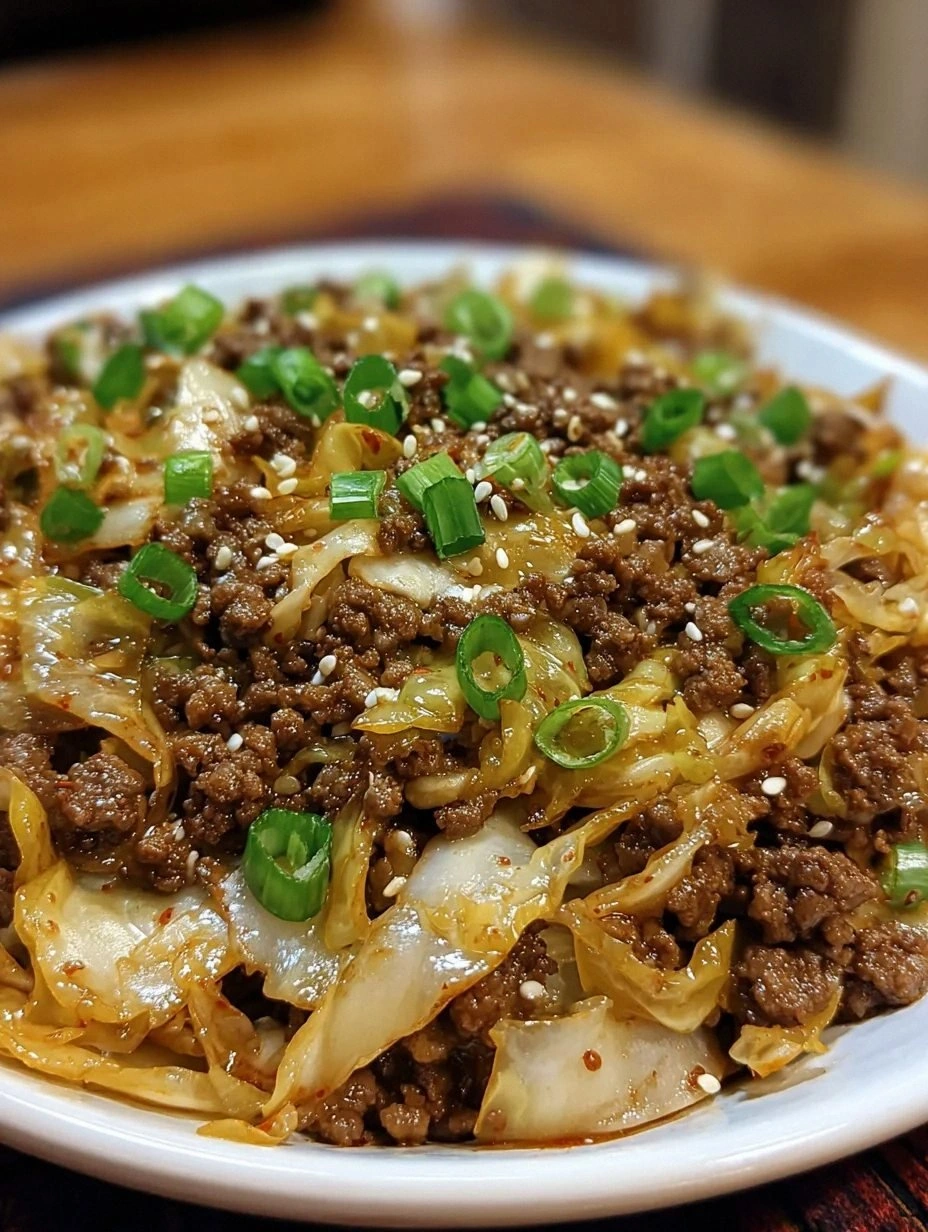
Watch Out: This is the trickiest step. If you add the cabbage too early, it will release water and dilute the sauce, resulting in a soggy dish. Add the shredded cabbage now, spreading it evenly over the meat. Toss gently—use a spatula to lift and fold rather than stirring aggressively, so the cabbage retains its crunch. The sauce should immediately start to coat the cabbage strands, creating a glossy, low‑carb “noodle” look.
Add the sliced green onions, toasted sesame seeds, and optional Sriracha. Toss everything together for another minute, just enough for the green onions to soften slightly but still retain their bright color. The dish should now look vibrant—deep brown beef speckled with bright green and red cabbage, all glistening under a thin, glossy sauce. Taste and adjust seasoning with a pinch more salt or pepper if needed; remember, the sauce will thicken a bit as it cools, so err on the side of slightly under‑seasoned.
Turn off the heat and let the dish rest for two minutes. This resting period allows the flavors to meld further and the sauce to settle into a perfect coating. While it rests, wipe down your workspace and set the table—because you’ll be too excited to wait for anyone else to sit down. This is the moment of truth: the aroma should be intoxicating, the cabbage still crisp, and the beef juicy.
Serve the Low‑Carb Mongolian Ground Beef and Cabbage hot, directly from the pan or transferred to a shallow bowl. Garnish with an extra sprinkle of sesame seeds and a few extra green onion slivers for that restaurant‑style presentation. Picture yourself pulling this out of the wok, the whole kitchen smelling incredible, and everyone at the table reaching for seconds before you even finish your own plate. I dare you to taste this and not go back for seconds.
That's it — you did it. But hold on, I've got a few more tricks that'll take this to another level...
Insider Tricks for Flawless Results
The Temperature Rule Nobody Follows
Never cook the beef on low heat; high heat creates a caramelized crust that locks in juices. If your pan isn’t hot enough, the meat will release water and steam instead of sear, resulting in a soggy texture. I once tried a “gentle” approach and ended up with a mushy mess that tasted more like a stew than a stir‑fry. The trick is to pre‑heat the wok until a drop of water dances and evaporates instantly—then add the oil and beef. This ensures every bite has that coveted “seared” flavor.
Why Your Nose Knows Best
Your sense of smell is the ultimate timer. When the garlic and ginger hit the oil, they should turn golden and release a fragrant, slightly sweet aroma within 30 seconds. If you wait too long, they’ll burn and become bitter, ruining the entire sauce. Trust your nose more than a clock; when you smell that “toasted ginger” note, you know it’s time to add the liquid components.
The 5‑Minute Rest That Changes Everything
After the final toss, let the dish sit off the heat for exactly five minutes. This short rest allows the xanthan gum to fully hydrate, giving the sauce a silkier mouthfeel. It also lets the cabbage absorb a touch more flavor without becoming limp. I used to skip this step, and the dish felt a bit “unfinished.” Now, it’s a buttery‑smooth finish that makes the whole plate feel cohesive.
Sear First, Sauce Later
Many home cooks add the sauce too early, causing the beef to steam rather than sear. The secret is to get that beautiful brown crust first, then introduce the sauce. This two‑step method preserves the beef’s texture and prevents the cabbage from becoming soggy. If you’re in a hurry, you can pre‑mix the sauce in a separate bowl while the beef is searing, then pour it in once the meat is browned.
The “Finish With Acid” Finale
A splash of lime or a drizzle of rice vinegar at the very end brightens the entire dish. The acidity cuts through the richness of the beef and oil, making each bite feel lighter. I’ve found that a teaspoon of lime juice just before serving lifts the flavor profile to a whole new level—like adding a high note to a song that’s already catchy.
Creative Twists and Variations
This recipe is a playground. Here are some of my favorite ways to switch things up:
Spicy Kimchi Kick
Swap half of the green cabbage for fermented kimchi. The tangy, probiotic punch adds depth and a pleasant heat that pairs beautifully with the savory sauce. Top with extra kimchi at serving for an extra zing.
Turkey “Lite” Version
Use ground turkey (preferably 93% lean) instead of beef for an even lower‑fat option. Add a tablespoon of olive oil to compensate for the leaner meat, and consider a pinch of smoked paprika to bring back some of the beefy flavor.
Asian‑Inspired Peanut Drizzle
Stir in a tablespoon of natural peanut butter and a splash of tamari at the end. This creates a creamy, nutty coating that transforms the dish into a Thai‑style peanut beef bowl. Garnish with crushed peanuts for crunch.
Veggie‑Boosted Version
Add sliced bell peppers, snap peas, or shredded carrots alongside the cabbage for extra color and nutrients. These vegetables cook quickly, so toss them in after the beef is browned, before adding the sauce.
Herbaceous Twist
Finish the dish with a handful of fresh cilantro and a drizzle of sesame oil infused with a touch of chili oil. The herbaceous freshness brightens the heavy flavors and adds a fragrant finish.
Storing and Bringing It Back to Life
Fridge Storage
Allow the dish to cool to room temperature (no more than two hours), then transfer to an airtight container. It will keep fresh for up to three days. When reheating, add a splash of water or broth to revive the sauce’s glossy texture.
Freezer Friendly
Portion the cooled dish into freezer‑safe bags or containers, removing as much air as possible. It freezes well for up to two months. Thaw overnight in the fridge, then reheat in a skillet over medium heat, adding a tablespoon of oil and a dash of water to prevent drying out.
Best Reheating Method
The stovetop is king. Heat a non‑stick pan over medium heat, add a teaspoon of oil, and toss the frozen or refrigerated portion for 3‑5 minutes, stirring occasionally. The added water or broth will steam the cabbage back to crispness while the sauce clings perfectly.