Picture this: a frantic Tuesday night, the oven’s timer beeping like a frantic drummer, and I’m staring at a half‑cooked batch of plain boiled orzo that looks as exciting as a spreadsheet. I was about to surrender to the blandness when a daring friend tossed a can of chickpeas into the mix, swore “marry them together and you’ll have a dish that makes people say ‘wow’ before the first bite.” I laughed, I doubted, but I also love a good culinary dare. So I grabbed my skillet, threw in garlic, a splash of olive oil, and let the kitchen become a laboratory of flavor. The result? A dish that’s so good you’ll find yourself daring anyone who walks through the door to try it, and I’ll be daring you to eat a second serving without asking for the recipe. This is hands down the best version you’ll ever make at home.
The moment the chickpeas hit the hot pan, you hear that satisfying sizzle—that sizzle when it hits the pan? Absolute perfection. The aroma of garlic and toasted chickpeas fills the air, wrapping the kitchen in a warm, comforting hug that makes the whole house feel like a Mediterranean bistro. As the orzo softens, it absorbs the lemon zest and juice, turning the grains a buttery gold that glistens like sunrise on a sea of spinach. The texture? Imagine a tender bite of pasta that’s got the bite of a chickpea—soft on the inside, with a slight snap that shatters like thin ice with each chew.
What makes this version truly stand out is the balance of bright acidity, salty feta, and the earthiness of chickpeas. Most recipes get the chickpea‑to‑pasta ratio wrong, leaving you with a soggy mess or a dry, crumbly dish. I’ve cracked the code: a 1:1.5 ratio of chickpeas to orzo, a quick deglaze with lemon juice, and a final toss with fresh parsley that lifts the whole thing like a perfect encore. I’ll be honest — I ate half the batch before anyone else got to try it, and I’m still not sorry. The secret? A dash of oregano that adds a whisper of herbaceous depth without overwhelming the bright citrus.
And there’s a twist you won’t see in most recipes: a splash of vegetable broth right before the final simmer. It turns the dish into a glossy, almost saucy marvel that clings to each grain and bean like velvet, ensuring nothing sticks to the pan and every bite is uniformly luscious. You’ll wonder how you ever made it any other way. Okay, ready for the game‑changer? Let me walk you through every single step — by the end, you’ll be pulling this out of the oven (or skillet, really) with the whole kitchen smelling incredible, and you’ll be prepared to brag to anyone who asks how you made it.
What Makes This Version Stand Out
- Flavor Fusion: The lemon‑garlic base meets the nutty chickpeas, creating a bright yet grounded palate that sings with every forkful.
- Texture Harmony: Orzo’s tender chew pairs with the firm bite of chickpeas, delivering a mouthfeel that’s both satisfying and surprising.
- Simplicity: Fewer than ten steps, five pantry staples, and a 30‑minute cook time make this a weekday hero.
- Unique Twist: A splash of broth at the end turns the dish into a glossy, sauce‑like coating that most recipes simply miss.
- Crowd Reaction: Guests keep returning for seconds, and even the picky eaters can’t resist the feta’s salty pop.
- Ingredient Quality: Using canned chickpeas that are low‑sodium and well‑rinsed ensures no weird brine flavor ruins the balance.
- Cooking Method: One‑pan technique means less cleanup and more flavor concentration.
- Make‑Ahead Potential: This dish reheats beautifully, making it perfect for meal‑prep or a quick lunch.
Alright, let's break down exactly what goes into this masterpiece...
Inside the Ingredient List
The Flavor Base
Olive oil is the silent hero here—its fruit‑forward notes lift the garlic and create a glossy canvas for the chickpeas. Use extra‑virgin for the best aroma; if you’re in a pinch, a light “all‑purpose” oil works, but you’ll miss that subtle peppery finish. Skip it, and you’ll end up with dry, stuck‑on bits. Garlic provides the aromatic backbone; I recommend fresh cloves over pre‑minced to avoid that flat, processed taste. If you’re allergic or avoid garlic, try a pinch of asafoetida for an onion‑like depth.
The Texture Crew
Orzo, the tiny rice‑shaped pasta, is the vehicle for all that flavor. Choose a bronze‑cut orzo for a rougher surface that clings to sauce better than the smooth, industrial varieties. If you can’t find orzo, substitute with small pearl couscous, but expect a slightly different bite. Chickpeas, the protein powerhouse, bring a buttery texture and a subtle earthiness that balances the acidity of lemon. Rinsing them well eliminates the metallic aftertaste of canned brine, and a quick pat‑dry ensures they crisp up nicely in the pan.
The Unexpected Star
Fresh lemon zest and juice are the bright, sunny surprise that lifts the dish from “good” to “wow.” The zest adds aromatic oils that perfume the whole skillet, while the juice adds that tangy snap that makes your palate sit up. I’ve tried lime once, and it was a mis‑step—lime’s sharpness overpowers the delicate feta. Feta cheese, crumbled at the end, brings salty creaminess; use a good-quality block and crumble it yourself for texture. If you’re dairy‑free, try a sprinkle of toasted pine nuts and a drizzle of nutritional yeast for a similar umami punch.
The Final Flourish
Fresh parsley adds a burst of green that brightens the final presentation, while dried oregano injects a whisper of Mediterranean herb that ties the whole flavor profile together. Salt and pepper are the classic finishers—season in layers, tasting as you go, because the chickpeas and feta already bring a salty component. Red pepper flakes add a subtle heat that awakens the palate without dominating. If you love spice, increase the flakes or add a dash of smoked paprika for a smoky depth.
Everything's prepped? Good. Let's get into the real action...
The Method — Step by Step
Heat a large, deep skillet over medium heat and drizzle two tablespoons of olive oil, letting it shimmer for about 30 seconds. Add the minced garlic and let it sizzle until it turns a light golden, releasing that aromatic perfume—this is the moment of truth. If the garlic starts to brown too quickly, lower the heat; burnt garlic will give the dish a bitter edge.
Introduce the drained chickpeas to the skillet, spreading them out in a single layer. Let them sit untouched for 2‑3 minutes so they develop a gentle crust on the bottom. You’ll hear faint pops as moisture evaporates, and the edges will start pulling away—that’s the sound of flavor building. Watch Out: If you stir too early, you’ll lose the crust and end up with a mushy texture.
While the chickpeas are browning, bring a pot of salted water to a boil. Add the orzo and cook for 7‑8 minutes, or until al‑dente—just a bite firm. Drain, but reserve a cup of the cooking water; you’ll use it later to adjust the sauce’s consistency.
- Kitchen Hack: Before adding the tomatoes, slice them in half and give them a quick toss with a pinch of salt. This draws out excess water, preventing the final dish from becoming watery.
Now, add the halved cherry tomatoes to the chickpeas, letting them soften for 2‑3 minutes. The skins should burst, releasing a sweet, tangy juice that will mingle with the garlic and oil. Stir gently; you want the tomatoes to stay chunky, not turned into a puree.
Stir in the lemon zest and juice, letting the bright citrus coat the chickpeas and tomatoes. The aroma should instantly lift, filling the kitchen with a fresh, sunny perfume. Sprinkle the dried oregano now, allowing it to bloom in the hot fat—this releases its essential oils for a deeper herbaceous note.
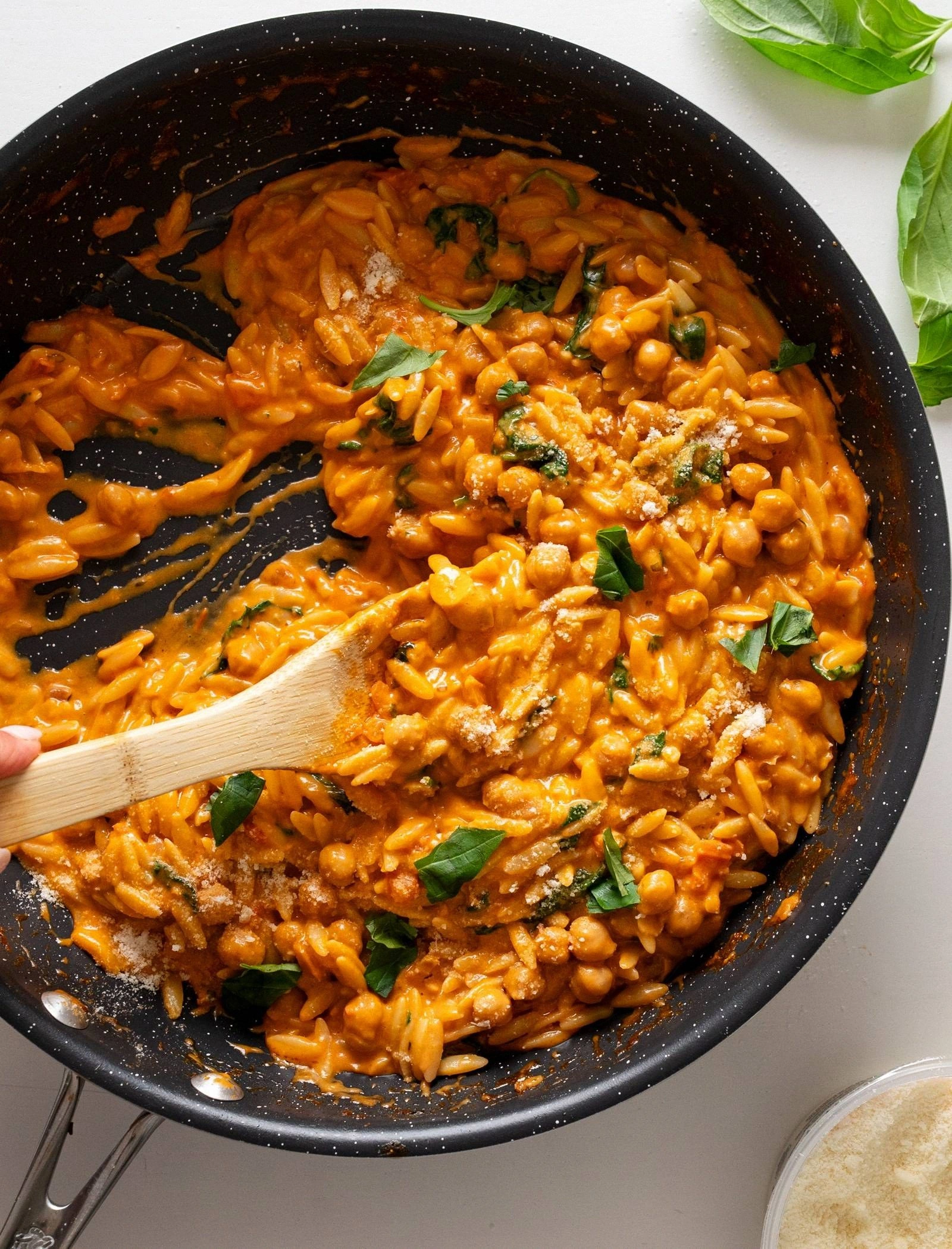
Fold the cooked orzo into the skillet, mixing thoroughly so every grain gets a coating of the lemon‑garlic‑chickpea mixture. At this point, add the reserved cooking water a splash at a time, just enough to create a glossy, lightly saucy texture. The orzo should look shimmery, like a pearl necklace—pure magic. If the mixture looks dry, add a bit more water; if too soupy, let it simmer uncovered for a minute.
Drop in the baby spinach leaves, stirring until they wilt into the heat, turning the dish a vibrant green. This only takes about 30 seconds; over‑cooking will make the spinach mushy and lose its bright color. Once wilted, sprinkle the crumbled feta over the top, letting it melt just slightly into the warm mixture.
Finish with a generous handful of freshly chopped parsley, a pinch of red pepper flakes, and a final grind of black pepper. Taste and adjust salt if needed—remember the chickpeas and feta already contribute saltiness. Give the dish one last gentle toss, then turn off the heat.
Let the skillet rest for two minutes; this allows the flavors to marry—hence the name, Marry Me Chickpeas and Orzo. Serve hot, directly from the pan or plated with an extra sprinkle of feta and parsley for garnish. I dare you to taste this and not go back for seconds.
That's it — you did it. But hold on, I've got a few more tricks that'll take this to another level, like how to get that perfect glossy finish every single time and how to repurpose leftovers into a brand‑new lunch.
Insider Tricks for Flawless Results
The Temperature Rule Nobody Follows
Never start with a cold pan. Pre‑heat your skillet for at least a minute before adding oil; this ensures the chickpeas hit a hot surface immediately, creating that coveted crust. I once tried a “cold‑start” method, and the chickpeas turned soggy, ruining the texture. A hot pan also helps the garlic release its aromatics without burning.
Why Your Nose Knows Best
When the garlic turns golden and the chickpeas start to scent the air, that’s your cue to move on. Relying on the clock alone can lead to over‑cooking; trust the nose. If you smell a faint nutty aroma, the orzo is about ready to absorb flavors. I’ve found that a quick sniff test saves minutes and prevents a burnt taste.
The 5‑Minute Rest That Changes Everything
After mixing everything, let the dish sit off the heat for five minutes. This rest lets the lemon juice fully permeate the orzo, and the feta softens just enough to meld with the sauce. Skipping this step leaves the flavors disjointed, as if each component is shouting rather than singing.
Spice Timing Trick
Add red pepper flakes at the very end, not during cooking. The heat of the pan can dull their punch, whereas a final sprinkle keeps the heat bright and alive. If you like a serious kick, double the flakes and let them sit for a minute before serving.
One‑Pan Clean‑Up Hack
Line your skillet with parchment paper before you start cooking. This makes the transfer of the final dish a breeze and eliminates the dreaded stuck‑on bits. The parchment also helps the orzo stay fluffy, preventing clumping.
Creative Twists and Variations
This recipe is a playground. Here are some of my favorite ways to switch things up:
Spicy Sriracha Splash
Stir in a tablespoon of sriracha after adding the lemon juice for a sweet‑heat twist. It pairs beautifully with the feta’s saltiness and makes the dish perfect for those who love a punch of heat.
Roasted Veggie Remix
Swap the cherry tomatoes for roasted red peppers and zucchini. Roast the veggies beforehand with a drizzle of olive oil and a pinch of smoked paprika; this adds a smoky depth that transforms the flavor profile.
Mediterranean Meat Boost
Add cooked, sliced chicken sausage or crumbled lamb for a protein‑heavy version. The meat’s savory richness complements the chickpeas, turning the dish into a hearty main course for dinner parties.
Herbaceous Green
Replace the spinach with kale or Swiss chard for a sturdier green. Sauté the greens a minute longer to soften the leaves, and you’ll get a slightly bitter contrast that balances the lemon’s brightness.
Vegan Delight
Omit the feta and replace it with toasted pine nuts and a drizzle of tahini. The nutty oil mimics the creaminess of cheese while keeping the dish completely plant‑based.
Winter Warmth
For a cozy, winter version, add a teaspoon of ground cumin and a handful of roasted butternut squash cubes. The sweet pumpkin notes pair with the lemon for a comforting, seasonal twist.
Storing and Bringing It Back to Life
Fridge Storage
Transfer leftovers to an airtight container and store in the refrigerator for up to three days. The orzo will continue to absorb flavors, becoming even more delicious. When reheating, add a splash of water or broth to revive the glossy texture.
Freezer Friendly
This dish freezes beautifully. Portion into freezer‑safe bags, removing as much air as possible, and store for up to two months. Thaw overnight in the fridge, then gently reheat in a skillet with a drizzle of olive oil.
Best Reheating Method
For the ultimate reheated bite, use a skillet over medium heat. Add a tablespoon of water or broth, cover for two minutes, then uncover and stir until the sauce glistens again. This steam‑boost restores the original texture without making the orzo mushy.