Love this? Pin it for later! 📌
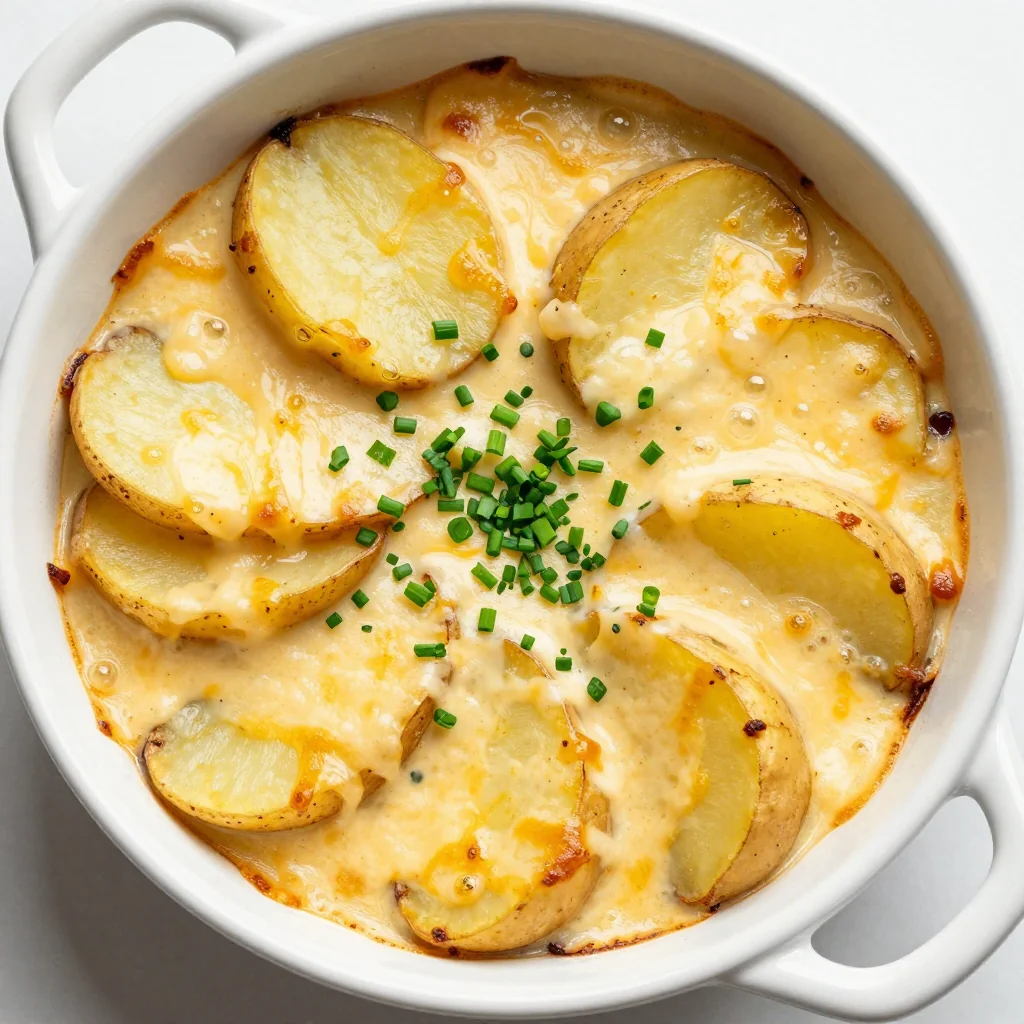
There are certain dishes that whisper home louder than others—dishes that arrive at the table in a cloud of buttery steam, bubbling at the edges, perfuming the air with the promise of something indulgent. For me, that dish is cheesy scalloped potatoes. Not the watery, floury versions that sometimes show up at potlucks, but the silky, fork-tender, cheese-laden casserole that my grandmother could pull from her avocado-green oven with the confidence of someone who knew every starch granule would dissolve like a dream on your tongue.
I still remember the first time I attempted to replicate her recipe in my tiny college-apartment kitchen. I had invited friends over for a “Sunday Supper” because it sounded sophisticated, but mostly I wanted an excuse to use the vintage Pyrex I’d scored at a thrift store. I layered russet potatoes with reckless abandon, grated a mountain of sharp cheddar, and—because I was feeling fancy—whisked a splash of white wine into the béchamel. Forty minutes later, the sauce had broken, the potatoes were still crunchy, and my roommates politely picked at the top layer while the dog hovered underneath the table like a furry vacuum. It was a culinary face-plant, but it lit a fire in me. Over the next decade I tested, tweaked, and tortured countless batches until I landed on the formula I’m sharing today: potatoes so soft they submit to a fork’s gentle pressure, a sauce so creamy it clings like silk, and cheese that stretches into Instagram-worthy strings without ever turning grainy.
This is the recipe I bring to new parents when they need comfort more than kale. It’s the side dish that steals the spotlight from prime rib at Christmas, and—when I bake it in a smaller dish and tuck in some ham cubes—it becomes a Monday-night main course that has my teenagers fighting over the corner piece (you know, the one with the crispy caramelized edges). If you’ve been searching for the definitive scalloped potatoes, the kind that converts potato-skeptics and inspires involuntary sighs of happiness, you just found it.
Why This Recipe Works
- Mandoline-Consistent Slices: Even ⅛-inch slices ensure every potato cooks at the same rate—no more lottery-style bites of under-done spuds.
- Two-Cheese Strategy: Aged Gruyère for nutty depth and low-moisture mozzarella for that Instagram-pull, both pre-shredded by hand to avoid cellulose coatings that dull meltability.
- Velouté + Cream Hybrid: A light roux cooked to blonde, then loosened with chicken stock before cream is added, preventing the heavy floury pastiness that plagues many recipes.
- Low-and-Slow Bake: Covered at 325 °F for 75 minutes allows natural potato starches to thicken the sauce; a final uncovered blast under broiler creates the crave-worthy bronzed top.
- Nutmeg & White Pepper: Nearly imperceptible yet essential, they amplify dairy sweetness without turning the dish into dessert.
- Rest Before Serving: A 15-minute nap out of the oven lets the sauce tighten so your first spoonful is creamy, not soupy.
Ingredients You'll Need
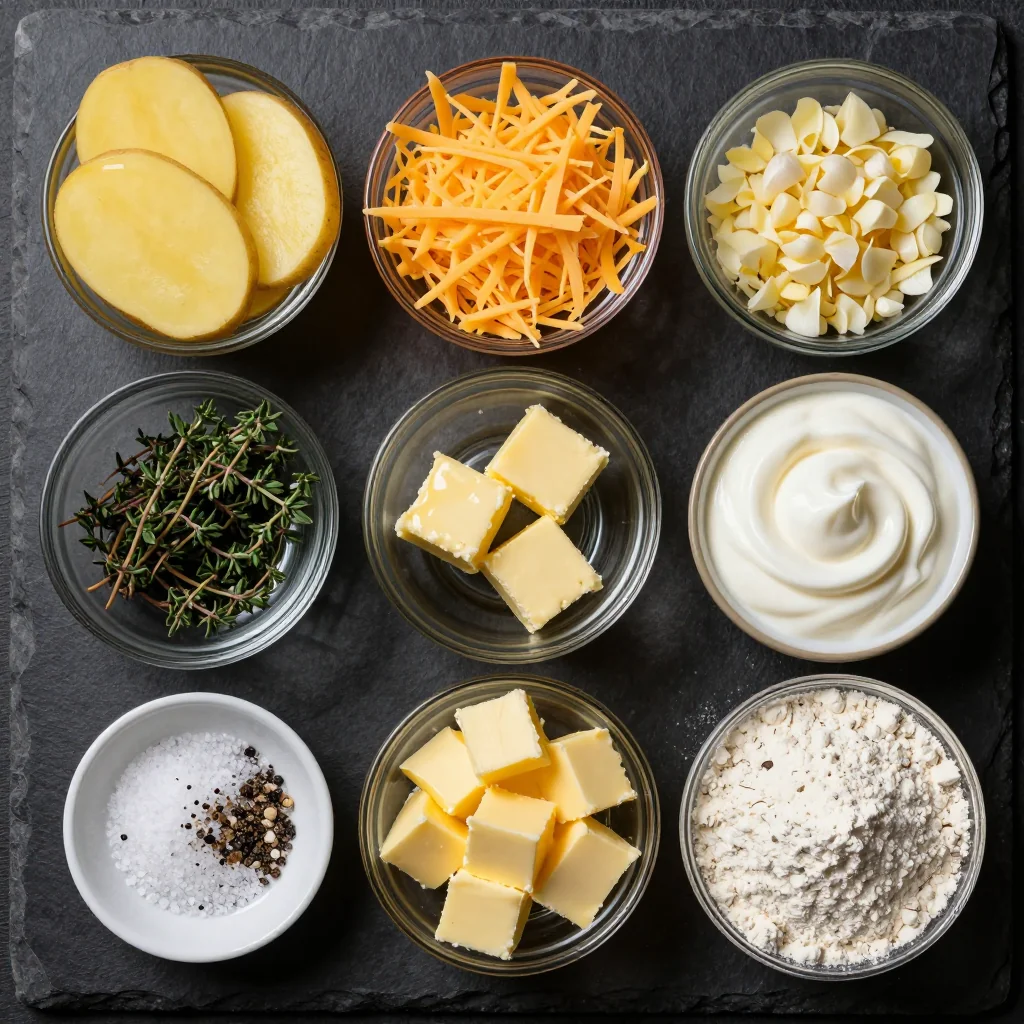
Russet potatoes are the undisputed champion here. Their high starch content breaks down just enough to naturally thicken the sauce, and their earthy flavor balances the richness of the dairy. Look for large, uniformly shaped tubers so your mandoline work is quick and safe. If you can only find Yukon Golds, they’ll work, but expect a slightly waxier texture and a buttery sweetness that will shift the flavor profile.
Unsalted European-style butter (82% fat) gives you control over salt and contributes a higher milk-solid ratio for a silkier roux. Don’t substitute margarine or coconut oil; the sauce relies on dairy solids for flavor.
Whole milk and heavy cream are a tag-team. Milk prevents the sauce from becoming too cloying, while cream provides the luxurious body that makes these potatoes special. If you’re in a pinch, you can use half-and-half, but the sauce will be thinner.
Chicken stock—preferably low-sodium and homemade if you’ve got it—adds umami depth. Vegetable stock works for a vegetarian version, but avoid beef stock; its metallic undertone fights the cheese.
Gruyère aged 6–9 months delivers complexity: nutty, slightly sweet, with a faint whiff of hay. If Gruyère’s price makes you wince, Swiss Emmental or Comté are excellent understudies. Pre-shredded bag cheese is convenient, but anti-caking agents inhibit smooth melting, so buy a block and use the large holes of a box grater.
Low-moisture mozzarella is your melt insurance. It’s the stringy pull that makes everyone at the table momentarily revert to childhood. Avoid fresh buffalo mozzarella; its high water content will weep into the sauce.
Fresh garlic, micro-planed, distributes evenly and cooks almost instantly in the warm roux. Garlic powder can taste acrid when it hits liquid fat.
Fresh thyme leaves (strip the stems by pulling backward against the growth) echo the grassy notes in the Gruyère. Dried thyme is acceptable—use one-third the amount.
Freshly grated nutmeg is non-negotiable. Buy whole nuts, store them in the freezer, and grate with a fine rasp just before using. The difference between pre-ground and freshly grated is the difference between a dusty attic and Christmas morning.
A whisper of white pepper adds gentle heat without black specks that muddy the pale sauce. If you don’t keep it on hand, substitute a pinch of cayenne—just a pinch—to achieve the same subtle warmth.
How to Make Melt-in-Your-Mouth Cheesy Scalloped Potatoes
Prep & Preheat
Position rack in center of oven; preheat to 325 °F (163 °C). Butter a 2-quart (11 × 7-inch) ceramic or enameled cast-iron baking dish. The low temperature prevents curdling and gives potatoes time to surrender their starch. If your oven runs hot, confirm with an oven thermometer—anything above 340 °F risks a grainy sauce.
Slice Potatoes
Peel russets and immediately plunge into ice water to prevent oxidation. Using a mandoline set to ⅛-inch (3 mm), slice potatoes directly into a bowl of cold water. Rinse until water runs clear to remove excess surface starch; this keeps the sauce silky. Drain and lay slices on kitchen towels; pat dry—excess water dilutes flavor.
Build the Roux
In a heavy 3-quart saucepan, melt 4 Tbsp butter over medium-low heat. When foam subsides, whisk in ¼ cup all-purpose flour; cook 2 minutes, stirring constantly, until blonde and nutty. You’re aiming for a color like toasted almonds—any darker and it will fight the delicate cheese.
Create the Velouté
Whisk in 1 cup warm chicken stock in a slow stream; maintain a gentle bubble. Once incorporated, whisk in 1 cup whole milk and ½ cup heavy cream. Add 1 tsp kosher salt, ½ tsp fresh thyme, ¼ tsp white pepper, and 2 gratings of nutmeg. Simmer 3 minutes, stirring, until thick enough to coat the back of a spoon.
Cheese Strategy
Off heat, stir in 1 cup shredded Gruyère until melted and glossy. Reserve remaining ½ cup Gruyère and 1 cup mozzarella for layering. Adding cheese off-heat prevents the proteins from seizing and turning gritty.
Layer & Nestle
Spread a thin blanket of sauce on the dish bottom. Arrange potato slices in overlapping rows like fish scales. Sprinkle with a modest handful of mozzarella and a pinch of reserved Gruyère. Repeat layers, finishing with sauce on top. Press potatoes gently with spatula to expel air pockets.
Bake Low & Slow
Cover tightly with foil, crimping edges to trap steam. Bake 75 minutes. Resist the urge to peek; escaping steam drops the temperature and extends cook time. Potatoes are done when a paring knife slides through the center without resistance.
Broil to Glory
Remove foil, sprinkle remaining cheeses evenly. Switch oven to broil on high; place dish 6 inches from element. Broil 3–4 minutes, rotating once, until top is mottled golden brown. Watch like a hawk—cheese goes from bronze to bitter in seconds.
The Golden Rest
Transfer dish to a wire rack; let rest 15 minutes. During this window the sauce thickens to the perfect nappe consistency and the molten cheese settles, preventing tongue-scalding disappointment. Serve with a sprinkle of fresh chives for color and a whisper of onion.
Expert Tips
Temperature is Theology
An instant-read probe inserted through foil should read 205 °F when potatoes are tender. Any lower and starch hasn’t fully gelatinized; higher and dairy proteins tighten.
Prevent Gray Spuds
Add 1 tsp white vinegar to the soaking water; acidulation slows oxidation without affecting flavor or texture.
Make-Ahead Magic
Assemble completely, cover with buttered foil, refrigerate up to 24 hours. Add 15 minutes to covered bake time; broil as directed.
Freezer-Friendly Portions
Bake, cool, cut into squares, wrap individually in foil, freeze up to 2 months. Reheat from frozen at 300 °F for 30 minutes.
Truffle Upgrade
Swap 1 tsp white truffle oil into the finished sauce, or shave black truffle between layers for date-night decadence.
Budget Gruyère
Blend ⅔ young Gouda with ⅓ Parmesan for a more affordable yet still complex flavor profile.
Variations to Try
- Smoky Bacon: Stir ½ cup crisp lardons into the sauce and sprinkle extra on top for crunch.
- Spring Garden: Add a layer of thin asparagus spears and fresh peas for color contrast and vegetal sweetness.
- Spicy Southwest: Sub pepper-jack for mozzarella, add 1 roasted poblano, and finish with cotija & cilantro.
- Seafood Indulgence: Fold in 8 oz poached lobster or crab meat during the final cheese stir for an elegant brunch main.
- Vegan Wonder: Use oat milk, olive-oil roux, and a blend of cashew cream + nutritional yeast; top with vegan mozzarella.
Storage Tips
Refrigerate: Cool completely, cover with plastic wrap pressed to surface, then foil. Store up to 4 days. Reheat single portions in microwave at 70% power for 90 seconds; for larger portions, cover with foil and warm at 300 °F for 20 minutes.
Freeze: Because of the high dairy content, freezing can cause slight graininess, but flavor remains stellar. Wrap entire cooled dish (or individual squares) in a double layer of plastic wrap plus foil. Freeze up to 2 months. Thaw 24 hours in refrigerator, then reheat as above, adding a splash of cream to loosen.
Make-Ahead Partial Bake: For holidays, you can bake the casserole (minus final cheese topping) for 60 minutes, cool, and refrigerate. Day of, bring to room temp, add cheese, broil. This halves your day-of workload without sacrificing texture.
Frequently Asked Questions
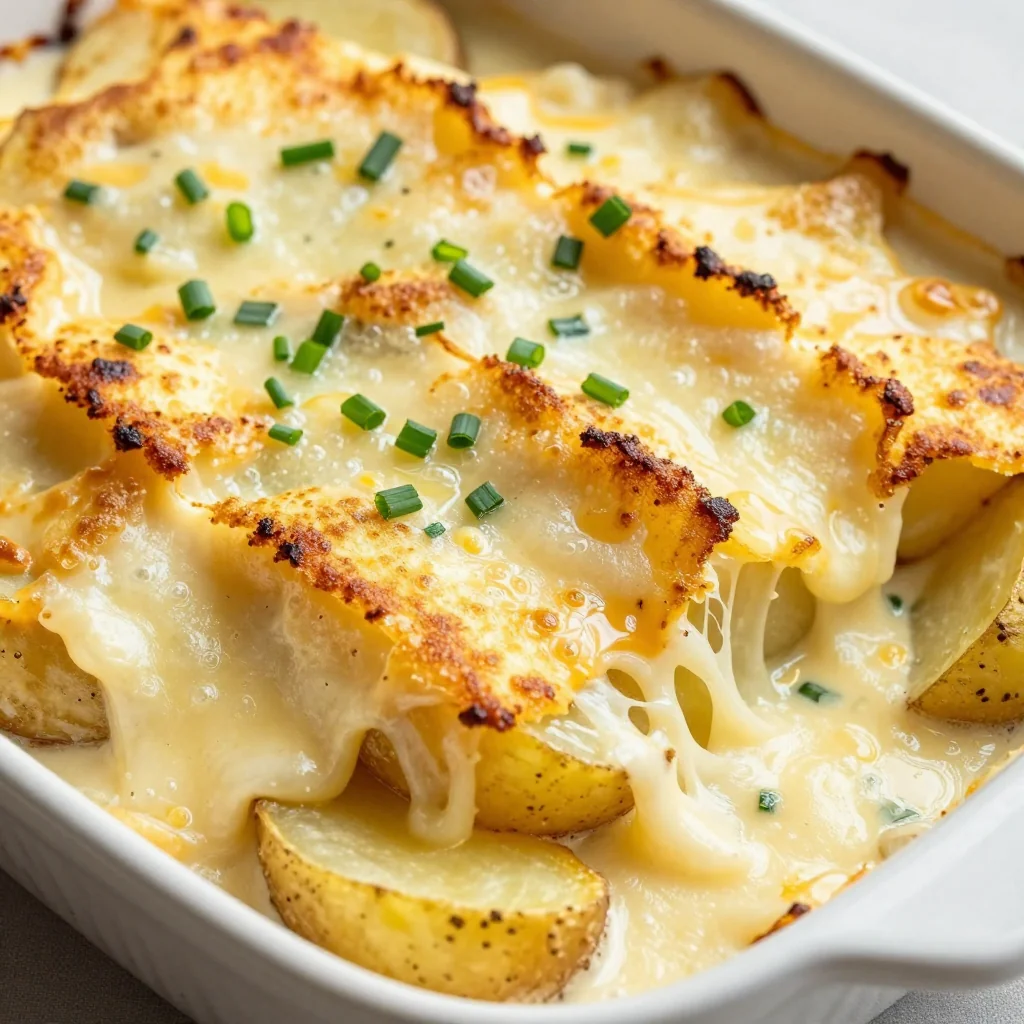
Melt-in-Your-Mouth Cheesy Scalloped Potatoes
Ingredients
Instructions
- Preheat & Prep: Butter a 2-quart baking dish. Preheat oven to 325 °F.
- Slice Potatoes: Use a mandoline to cut ⅛-inch slices; soak in cold water 5 minutes, drain and pat dry.
- Make Roux: Melt butter in saucepan over medium-low heat. Whisk in flour; cook 2 minutes.
- Build Sauce: Whisk in warm stock, then milk and cream. Add salt, thyme, pepper, nutmeg, garlic; simmer 3 minutes until thick.
- Add Cheese: Off heat, whisk in 1 cup Gruyère until smooth.
- Layer: Spread thin sauce layer on dish bottom. Arrange potatoes in overlapping rows, top with cheeses and sauce. Repeat, finishing with sauce.
- Bake: Cover tightly with foil; bake 75 minutes until potatoes are tender.
- Broil: Uncover, sprinkle remaining cheeses; broil 3–4 minutes until golden.
- Rest: Let stand 15 minutes before serving; garnish with chives.
Recipe Notes
For ultra-clean squares, chill leftovers, then cut with a warm knife. Reheat portions in a 300 °F oven for best texture; microwave works but won’t restore crisp edges.