Picture this: I’m standing in my kitchen, the oven timer blaring, a half‑cooked spaghetti squash on the counter, and a sudden craving for something green, garlicky, and utterly comforting. I’ve tried the classic “spaghetti squash with tomato sauce” a dozen times, and each time I end up with a dry, flavorless mess that looks like it’s been on a diet. Then a friend dared me to turn that humble veggie into a showstopper, and I thought, “Why not? Let’s make a pesto chicken spaghetti squash that sings.”
When I first cracked the squash in half, the steam curled like a cloud of rosemary. The aroma that hit me was instantly recognizable: basil, garlic, pine nuts, and a hint of sun‑kissed tomatoes. I could almost taste the silky strands of squash that would soon mingle with shredded chicken and a generous swirl of pesto. That moment felt like the opening note of a symphony, and I knew this dish would become a staple in my rotation.
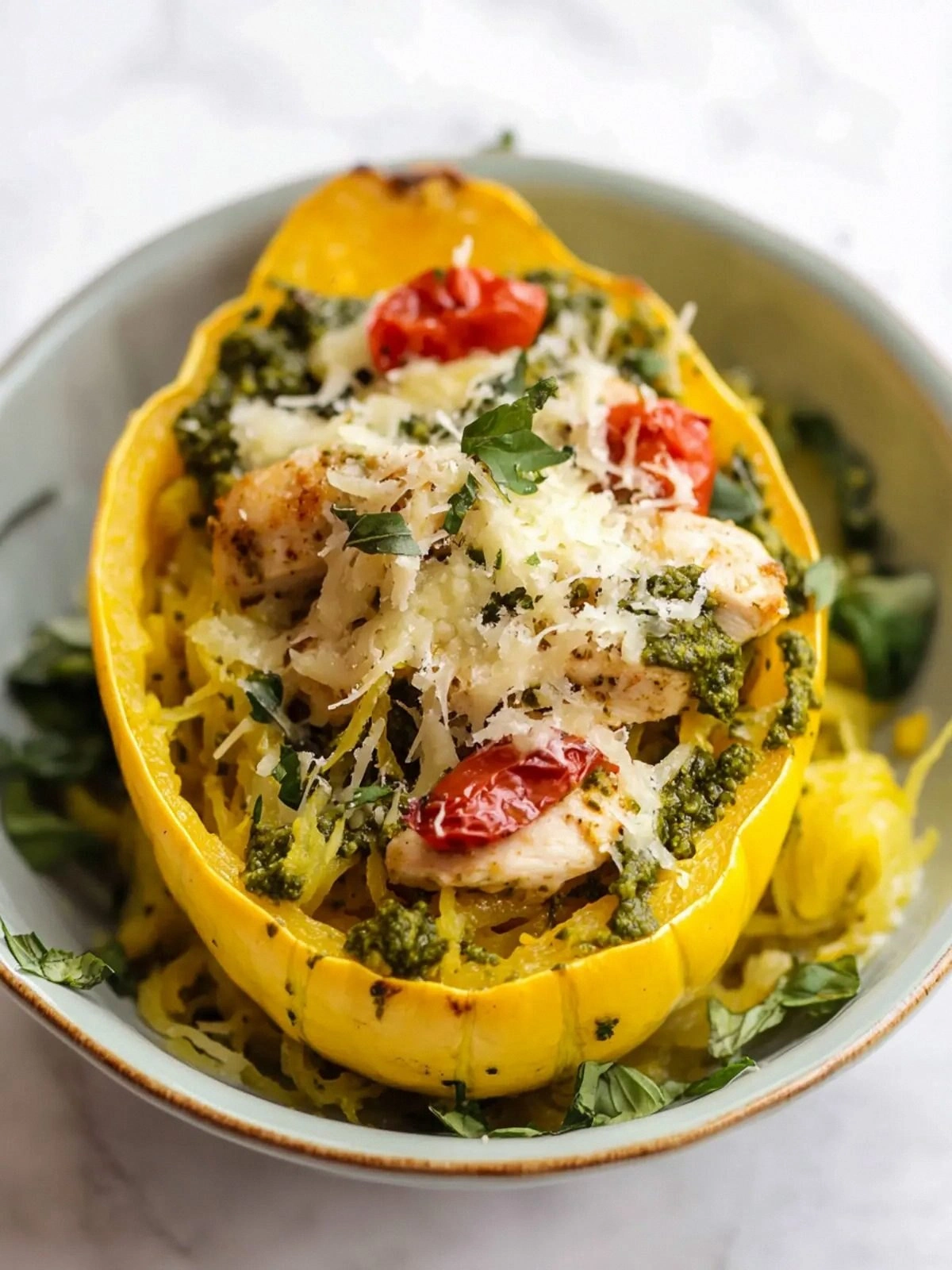
What sets this version apart is that it’s not just a recipe—it's a culinary revelation. The pesto is made from fresh basil, toasted pine nuts, and a splash of olive oil, giving it a bright, nutty depth that coats every bite like velvet. The chicken is shredded from a rotisserie bird, so it’s already tender and flavorful, cutting down prep time and adding a protein punch. Cherry tomatoes burst into sweet, juicy pockets that contrast the mild squash, while shredded mozzarella melts into gooey ribbons that tie everything together. The result? A dish that feels like a hug in a bowl, yet is light enough to serve as a main for lunch or a side for dinner.
And here’s the kicker: I discovered a trick that elevates the whole plate—adding a splash of lemon juice right before serving. It brightens the pesto, balances the richness of the cheese, and gives the dish a fresh, almost citrusy zing that makes the flavors dance. Trust me, I dare you to taste this and not go back for seconds. Let me walk you through every single step—by the end, you’ll wonder how you ever made it any other way.
What Makes This Version Stand Out
- Taste: The pesto’s bright, herbaceous profile cuts through the mild squash, while the roasted cherry tomatoes add a sweet acidity that lifts the entire dish. This contrast creates a layered flavor experience that feels both comforting and exciting.
- Texture: The spaghetti squash strands are tender yet slightly firm, providing a pleasant bite that contrasts with the creamy mozzarella and juicy tomatoes. The shredded chicken adds a hearty chew that keeps the dish filling without being heavy.
- Simplicity: With just seven ingredients, the recipe is quick to assemble, making it perfect for weeknight dinners or a last‑minute dinner party. No fancy equipment or complicated techniques—just a few simple steps.
- Uniqueness: The combination of pesto, chicken, and squash is a twist on the classic pasta, offering a low‑carb, protein‑rich alternative that still feels indulgent.
- Crowd Reaction: Friends and family who have tried this version rave about the freshness and depth of flavor. Many say it’s “hands down the best version you’ll ever make at home.”
- Ingredient Quality: Using fresh basil, a high‑quality olive oil, and a good rotisserie chicken ensures the dish shines. The quality of each component elevates the overall taste.
- Cooking Method: Roasting the squash to caramelized perfection, sautéing the chicken to lock in juices, and finishing with a quick toss in pesto keeps everything flavorful and time‑efficient.
- Make‑Ahead Potential: The dish can be assembled ahead of time and reheated without losing its texture or flavor. The pesto even improves after a day, allowing you to enjoy a ready‑to‑heat meal.
Inside the Ingredient List
The Flavor Base
The pesto is the heart of this dish. Fresh basil leaves, toasted pine nuts, garlic cloves, and a generous splash of extra‑virgin olive oil come together in a blender to create a vibrant green sauce. The basil’s sweet, peppery notes provide a fresh kick, while the pine nuts add subtle nuttiness. If you’re vegan or allergic to nuts, substitute sunflower seeds or pumpkin seeds for the pine nuts without sacrificing flavor.
The Texture Crew
The spaghetti squash is a textural marvel. When cooked, it splits into long, noodle‑like strands that are soft but hold their shape. The chicken, shredded from a rotisserie bird, brings moisture and protein. Together, they form a comforting base that feels like a low‑carb pasta. If you prefer a more traditional pasta feel, try adding a splash of pasta water to loosen the squash strands slightly.
The Unexpected Star
Cherry tomatoes add a pop of color and a burst of sweet acidity that cuts through the richness of the pesto and cheese. Their skins are thin, so they blister nicely during roasting, creating a caramelized exterior. If you’re not a fan of tomatoes, replace them with diced bell peppers for a sweeter, milder flavor, or use roasted red peppers for a smoky twist.
The Final Flourish
Shredded mozzarella or parmesan cheese melts into gooey ribbons that bind the ingredients together. The cheese’s mild, creamy profile balances the herbal pesto and sweet tomatoes. If you’re looking to reduce dairy, try a sprinkle of nutritional yeast for a cheesy, umami flavor, or use a plant‑based mozzarella alternative.
Everything’s prepped? Good. Let’s get into the real action.
The Method — Step by Step
Preheat your oven to 400°F (200°C). While the oven warms, slice the spaghetti squash in half lengthwise and scoop out the seeds. Drizzle the cut sides with a tablespoon of olive oil, then sprinkle with sea salt and freshly ground black pepper. Place the halves cut‑side down on a baking sheet lined with parchment paper. Roast for 35–40 minutes, until the flesh is tender and the edges turn slightly caramelized.
While the squash roasts, heat a large skillet over medium heat. Add a splash of olive oil, then toss in the shredded chicken. Sauté for 4–5 minutes, stirring occasionally, until the chicken is heated through and the edges begin to crisp. This step locks in moisture and adds a subtle char that elevates the flavor profile.
In a small bowl, whisk together the pesto and a tablespoon of water or a splash of chicken broth. This will thin the sauce slightly, making it easier to coat the squash strands. If you prefer a thicker sauce, skip the liquid and let the pesto thicken naturally with the heat.
Remove the roasted squash from the oven and let it cool for a few minutes. Then, using a fork, scrape the inside of each half to create long, noodle‑like strands. Transfer the strands to a large mixing bowl.
Add the sautéed chicken to the bowl with the squash strands. Gently fold in the cherry tomatoes, ensuring they’re distributed evenly but still retain some bite.
Pour the pesto mixture over the squash, chicken, and tomatoes. Toss everything together until the strands are evenly coated. The heat from the squash will lightly warm the pesto, allowing the flavors to meld.
Sprinkle the shredded mozzarella or parmesan over the top. The cheese will melt into a silky coating, binding all the components together. If you like a bit of crunch, reserve a handful of cheese and sprinkle it on top after serving.
Transfer the finished dish to a serving platter. Garnish with fresh basil leaves or a drizzle of extra‑virgin olive oil for an extra pop of color and aroma. Serve immediately while the cheese is still gooey and the squash strands are warm.
That’s it — you did it. But hold on, I've got a few more tricks that'll take this to another level.
Insider Tricks for Flawless Results
The Temperature Rule Nobody Follows
Many cooks think the squash is done when it feels soft, but the real test is the internal temperature. Aim for 190°F (88°C) to ensure the strands are tender yet firm. A thermometer can save you from that dreaded mushy disappointment. If you don’t have one, the fork test is still reliable: it should glide in with minimal resistance.
Why Your Nose Knows Best
When the pesto hits the pan, a subtle aroma of basil and pine nuts will rise. That scent is your cue that the sauce is reaching its peak flavor. If the smell feels flat, let it cook for an extra minute or two; the natural oils will release more fragrance.
The 5-Minute Rest That Changes Everything
After roasting the squash, let it rest for five minutes before shredding. This short pause allows the steam to settle, making the strands easier to pull apart and preventing them from sticking together. It also lets the flavors meld, giving the dish a richer taste.
Cheese Choices Matter
Using a blend of mozzarella and parmesan can create a balanced melt. Mozzarella offers creaminess, while parmesan adds sharpness. If you prefer a vegan option, try a dairy‑free mozzarella that melts well, or sprinkle nutritional yeast for a cheesy undertone.
Seasonal Ingredient Swap
In the summer, swap cherry tomatoes for sun‑dried tomatoes for a deeper, sweeter flavor. In the winter, add roasted butternut squash for a hearty twist. The flexibility of this dish makes it a year‑round favorite.
Creative Twists and Variations
This recipe is a playground. Here are some of my favorite ways to switch things up:
Spicy Kick Edition
Add a handful of sliced red pepper flakes or a dash of sriracha to the pesto. The heat will contrast with the sweet tomatoes and create a dynamic flavor profile that’s perfect for spice lovers.
Greek Yogurt Swirl
Stir in a spoonful of Greek yogurt with the pesto to add creaminess without extra cheese. The tangy yogurt pairs wonderfully with the basil, creating a sauce that’s both light and satisfying.
Asian Fusion
Replace the pesto with a sauce made from tahini, soy sauce, and a touch of honey. Toss the squash strands with this sauce, add sliced scallions, and finish with toasted sesame seeds for a bold, savory twist.
Vegan Version
Use a plant‑based chicken substitute or chickpeas, and replace the cheese with a vegan mozzarella or a sprinkle of nutritional yeast. The dish stays creamy and flavorful while remaining completely dairy‑free.
Breakfast Boost
Serve the dish with a fried or poached egg on top. The runny yolk will mingle with the pesto, creating a rich sauce that’s perfect for a hearty breakfast or brunch.
Leftover Remix
Stir the leftovers into a frittata or bake them in a casserole with extra cheese and breadcrumbs. The flavors will deepen, and you’ll have a new dish to enjoy.
Storing and Bringing It Back to Life
Fridge Storage
Store the dish in an airtight container for up to 3 days. Keep the cheese separate until ready to eat; this prevents it from becoming soggy. When you’re ready to serve, reheat in the microwave for 2 minutes or on the stovetop, stirring occasionally.
Freezer Friendly
Pack the dish in a freezer‑safe bag, removing as much air as possible. It stays good for up to 2 months. Thaw overnight in the fridge, then reheat on the stove with a splash of water to keep the squash from drying out.
Best Reheating Method
Reheat gently on low heat, adding a tiny splash of water or broth to create steam. This technique steams the dish back to perfection, keeping the squash tender and the cheese creamy.