I swear the first time I tried to make a French onion soup, I ended up with a kitchen that smelled like burnt sugar and a pot that was practically a volcano. I was in the middle of a midnight craving, and my pantry was a jumble of onions, cheese, and a bag of elbow macaroni that I’d forgotten about. I tossed everything into a pot, hoping the onions would caramelize and the pasta would soak up the broth, but what came out was a soggy, flavorless mess that made me question my cooking sanity. The moment I tasted that first bite, I knew I’d just stumbled on a disaster that could be turned into a masterpiece if I had a few extra tricks up my sleeve. That night, I made a promise to myself: I would reinvent this humble dish into something that would make my friends swoon and my taste buds sing.
Picture the kitchen: a golden hue from the onions slowly browning, the faint scent of butter and thyme drifting through the air, the gentle hiss of garlic sautéing like a secret whisper. As the onions reach that deep amber, their fragrance turns from sharp to sweet, like a caramelized lullaby that pulls you in. The sound of the pot clinking against the stove is a steady drumbeat that sets the rhythm for the rest of the dish. When you finally lift the ladle, the broth glistens with a glossy sheen, and the steam rises in a cloud that smells like comfort and home. The first spoonful is a symphony: the onions melt into the broth, the pasta is perfectly al dente, and the cheese melts into a silky, velvety sauce that coats every noodle like a warm hug.
What makes this version stand out is that it marries the classic French onion soup with the comforting heartiness of macaroni and cheese. The onions are caramelized to a depth that brings out a natural sweetness that no sauce can match. The cheese blend—Gruyère, sharp cheddar, and mozzarella—creates a layered flavor profile that feels both indulgent and balanced. The breadcrumbs and Parmesan topping add a crunch that contrasts beautifully with the creamy interior, giving the dish a satisfying textural pop. The technique of adding flour to create a roux before the broth is introduced gives the sauce body and a silky mouthfeel that elevates the entire bowl. And the final touch of fresh thyme and a splash of whole milk gives it that subtle herbal brightness that keeps the dish from feeling too heavy.
I dare you to taste this and not go back for seconds. The way the sauce coats the pasta like velvet, the caramelized onions that linger on the palate, and the crispy breadcrumb crust that shatters like thin ice—every bite is a revelation. Most recipes get this completely wrong by either overcooking the onions or under-seasoning the broth. Here’s what actually works: let the onions slowly caramelize over low heat, stir often, and add a pinch of salt to draw out sweetness. The result is a broth that’s rich, complex, and utterly comforting. And the best part? This dish is hands down the best version you'll ever make at home.
I'll be honest—I ate half the batch before anyone else got to try it. The second plate was so good that I almost forgot to take a break. I kept adding more cheese, more onions, more love. The kitchen was a mess, but the aroma was pure bliss. Picture yourself pulling this out of the oven, the whole kitchen smelling incredible, and everyone lining up for a bowl. If you've ever struggled with this, you're not alone—and I've got the fix. Stay with me here—this is worth it.
Alright, let's break down exactly what goes into this masterpiece. The list below is organized so you can see the roles each component plays and why each one matters. Read through carefully, and you'll notice that every ingredient has a purpose beyond just flavor. If you skip or substitute something, the balance will shift, and the dish may lose that signature depth. But fear not—there are swaps and tips to keep it working, no matter what pantry you’re working with.
What Makes This Version Stand Out
- Flavor: The caramelization of onions brings a natural sweetness that pairs beautifully with the sharpness of Gruyère and the creaminess of mozzarella.
- Texture: The roux-based sauce gives a silky mouthfeel while the breadcrumb topping delivers a satisfying crunch that contrasts the soft pasta.
- Balance: The mix of cheeses creates layers of flavor—Gruyère for depth, cheddar for bite, and mozzarella for melt.
- Heat Management: Slow, low heat caramelizes onions without burning, preserving their sweet notes.
- Make‑ahead Potential: The dish can be assembled a day ahead and reheated without losing quality.
- Audience: This version is a crowd-pleaser, perfect for family dinners, potlucks, or a cozy night in.
Inside the Ingredient List
The Flavor Base
The onions are the heart of this dish; they provide the sweet, savory foundation that carries the entire flavor profile. Cutting them into uniform, thin slices ensures even caramelization, preventing some pieces from burning while others remain raw. If you prefer a slightly less sweet onion flavor, use a mix of yellow and white onions for a balanced bite. Skipping the onions would strip the dish of its depth, leaving the broth bland and the pasta underwhelming.
The Texture Crew
Elbow macaroni is chosen for its shape, which holds sauce and cheese beautifully. The pasta’s ridges catch the creamy sauce, making each bite rich and satisfying. If you’re looking for a gluten-free alternative, try a small-batch of pasta made from chickpea or lentil flour. Removing the pasta entirely would change the dish from a comforting bowl to a simple soup, losing the heartiness that makes it a main course.
The Unexpected Star
The roux—made from flour, butter, and olive oil—acts as the sauce’s backbone, giving it body and a silky texture. Adding the roux early ensures the flour cooks through, eliminating that raw, floury taste. If you forget the roux, the sauce will be thin and watery, failing to cling to the noodles. The choice of whole milk and heavy cream gives the sauce a luscious, velvety finish that elevates the dish from ordinary to extraordinary.
The Final Flourish
The breadcrumb and Parmesan topping adds a golden, crispy finish that provides contrast to the creamy interior. The crumbs are toasted until they turn a deep amber, creating a crunchy texture that bursts with flavor. If you prefer a lighter crunch, sprinkle the breadcrumbs with a pinch of paprika or cayenne for a subtle heat. Skipping the topping would make the dish less visually appealing and reduce the textural complexity that makes each bite memorable.
Everything's prepped? Good. Let's get into the real action.
The Method — Step by Step
- Heat the olive oil and butter in a heavy-bottomed pot over medium heat until the butter foams. Add the sliced onions and a pinch of salt, stirring constantly to coat each slice. Let the onions cook slowly, stirring every 3–4 minutes, until they reach a deep amber color. This process takes about 25–30 minutes, but the slow caramelization is worth the wait. The aroma will fill the kitchen, signaling that you’re on the right track.
- Add the minced garlic and fresh thyme to the onions, letting the flavors mingle for 1–2 minutes until fragrant. The garlic will soften, releasing its sharpness, while the thyme adds a subtle herbal note. Be careful not to burn the garlic; if it starts to brown too quickly, lower the heat. The mixture should smell like a warm, comforting hug, not like burnt plastic.
- Whisk in the flour to create a roux, stirring continuously for 2–3 minutes to cook off the raw flour taste. This thickening agent will give the sauce a silky body and help it cling to the pasta. The roux should be a light golden brown, not dark. If the mixture starts to look dry, add a splash of water to keep it smooth. This step is crucial for achieving the creamy texture that defines the dish.
- Slowly pour in the vegetable broth, whisking vigorously to maintain a smooth consistency. The broth should be added gradually to avoid lumps. Once the mixture is smooth, bring it to a gentle simmer and let it thicken for 5 minutes. The sauce will start to coat the back of a spoon, indicating readiness. This step ensures the broth is fully integrated with the roux, creating a cohesive base.
- Add the elbow macaroni and stir to combine. Cook for 8–10 minutes, or until the pasta is al dente. Stir occasionally to prevent sticking. If you prefer a softer bite, cook for an additional 2 minutes. The pasta should be tender but still retain a slight bite, complementing the rich sauce.
- Fold in the whole milk and heavy cream, stirring until the mixture is smooth and creamy. The dairy will enrich the sauce and balance the savory onion flavor. Let the soup simmer for another 3–4 minutes, allowing the flavors to meld. The sauce should be glossy and thick enough to coat the noodles.
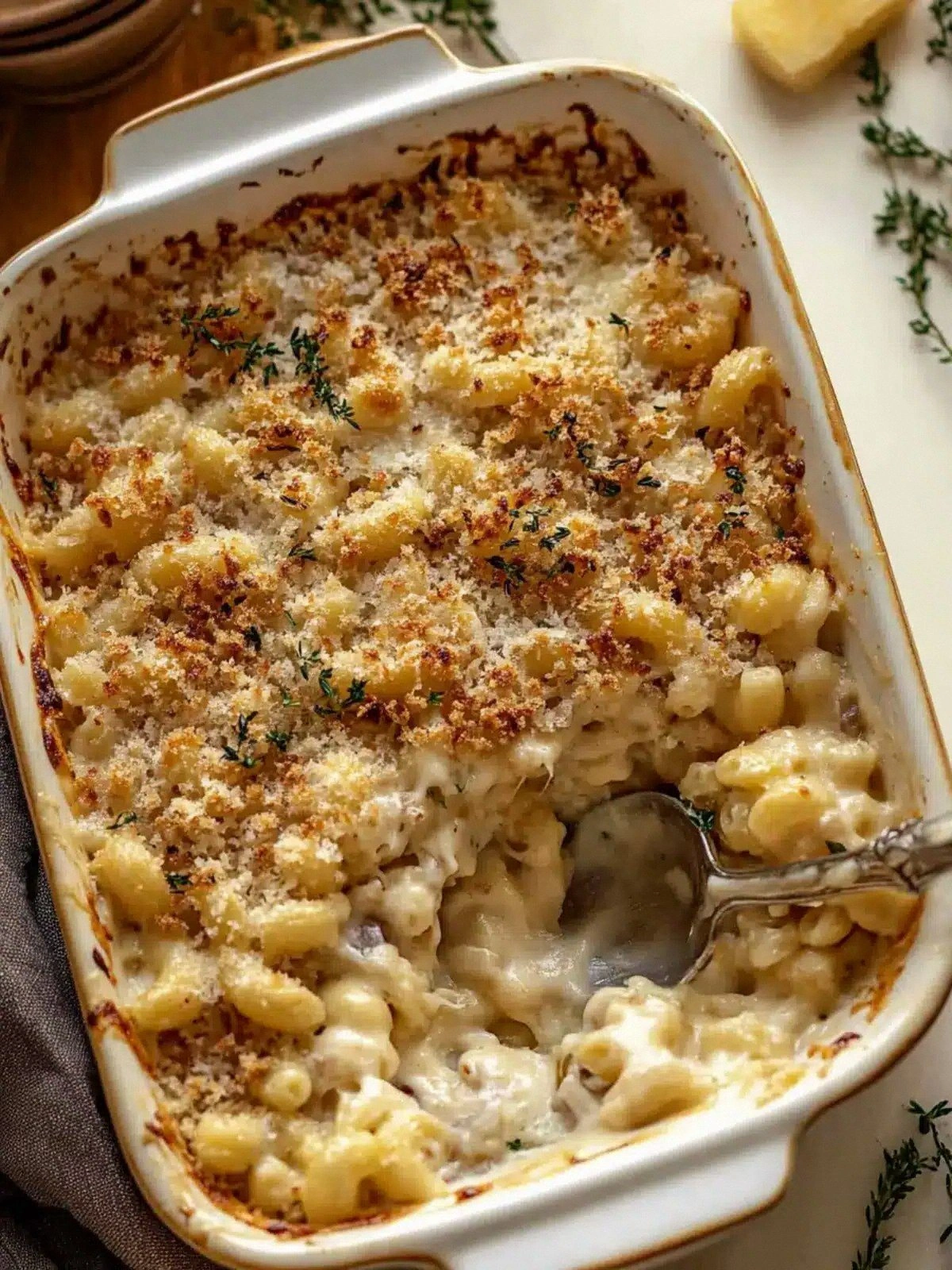
- Transfer the mixture to a baking dish, top with a generous layer of Gruyère, cheddar, and mozzarella. Sprinkle breadcrumbs and grated Parmesan over the cheese. Bake at 375°F (190°C) for 15–20 minutes, or until the top is golden brown and the cheese is bubbly. The crust should be crisp, with a slight crunch that contrasts the creamy interior. Let it rest for 5 minutes before serving to allow the flavors to settle.
- Serve hot, spooning the bubbling, cheesy sauce over the pasta. Garnish with a few fresh thyme leaves if desired. The dish is best enjoyed immediately while the cheese is still molten and the breadcrumb crust remains crunchy. The first bite will transport you to a cozy French bistro, but with a comforting, homey twist.
That's it—you did it. But hold on, I've got a few more tricks that'll take this to another level. These small adjustments will elevate your dish from great to unforgettable.
Insider Tricks for Flawless Results
The Temperature Rule Nobody Follows
Many cooks think that high heat is the key to a quick, flavorful soup. In reality, low and slow caramelizes the onions and develops a deeper sweetness. Keep the heat at medium or lower and stir frequently. This method prevents scorching and ensures a uniform color. The result is a richer, more complex flavor profile that stands out in every bite.
Why Your Nose Knows Best
Smell is the most powerful guide in cooking. As soon as the onions hit the golden stage, their scent should be sweet and inviting. If the aroma is sharp or metallic, the onions are overcooked or burnt. Trust your nose to tell you when the onions are ready. A good rule of thumb: when the onions release a sweet, nutty fragrance, they’re perfectly caramelized.
The 5-Minute Rest That Changes Everything
After removing the dish from the oven, let it rest for exactly five minutes. This brief pause allows the cheese to set, preventing a runny mess when you scoop. It also lets the flavors meld and the breadcrumb crust firm up. I’ve seen people rush to serve right away, only to find the cheese sliding off. This simple step ensures a clean, satisfying bite.
Cheese Ratio That Rocks
The combination of Gruyère, cheddar, and mozzarella is key to a balanced flavor. Gruyère adds depth, cheddar provides a sharp bite, and mozzarella offers a gooey melt. If you only have one type of cheese, use a 2:1 ratio of that cheese to milk or cream. Skipping the mozzarella will make the sauce less stretchy and less indulgent.
The Secret to Crispy Breadcrumbs
To achieve a crunchy topping, toast the breadcrumbs separately in a dry skillet until golden. Add a splash of melted butter before baking for extra crispness. If you’re using fresh breadcrumbs, dry them in the oven at 300°F (150°C) for 5 minutes before adding. The result is a crisp, golden crust that contrasts beautifully with the creamy interior.
The Final Finish
Just before serving, drizzle a little heavy cream over the top and sprinkle fresh thyme. This final flourish adds a silky sheen and a burst of herbal aroma. If you prefer a bit of heat, a pinch of red pepper flakes can be added at this stage. The final touch transforms a great dish into a memorable experience.
Creative Twists and Variations
This recipe is a playground. Here are some of my favorite ways to switch things up:
Bacon Bliss
Add crispy bacon bits to the caramelized onions for a smoky depth. The bacon fat also enriches the broth, giving it a savory richness. Bacon pairs especially well with the sharp cheddar, creating a layered flavor that feels indulgent. This variation is perfect for a brunch or a hearty dinner.
Spicy Kick
Stir in a teaspoon of cayenne pepper or a pinch of smoked paprika while sautéing the onions. The heat adds a subtle warmth that balances the sweetness. The spice also brightens the overall profile, making it a great option for those who like a little bite. This version is ideal for a winter meal with a cozy, spicy vibe.
Herb Garden
Replace the thyme with a mix of fresh rosemary, sage, and oregano. The herbs bring a fragrant, earthy note that complements the caramelized onions. This variation feels like a garden in a bowl, with each herb contributing its own personality. It’s a great way to use up fresh herbs you have on hand.
Vegan Version
Swap the dairy for plant-based milk and coconut cream, and use vegan cheese. Use a vegan butter substitute for the roux. The result is a creamy, comforting dish that satisfies without dairy. This version is perfect for guests who avoid animal products.
Mushroom Medley
Add sliced mushrooms to the onions halfway through caramelization. The mushrooms absorb the onion sweetness and add an earthy depth. This variation feels like a forest floor, with the mushrooms providing a natural umami boost. It’s a great way to incorporate more veggies into the dish.
Cheese Swap
Replace the Gruyère with aged cheddar and the mozzarella with provolone for a sharper, more complex flavor. The provolone adds a subtle peppery note that cuts through the richness. This variation is ideal for cheese lovers who enjoy a more pronounced taste profile.
Lemon Zest Finish
Add a tablespoon of lemon zest to the broth for a bright, citrusy lift. The lemon brightens the dish, cutting through the richness of the cheese. It also adds a subtle freshness that makes the dish feel lighter. This variation is great for a summer dinner when you want something a bit more refreshing.
Pesto Power
Stir in a couple of tablespoons of basil pesto just before baking. The pesto brings a herbal, nutty flavor that complements the onions and cheese. It also adds a pop of color, making the dish visually appealing. This variation is a fun way to incorporate fresh basil and a burst of flavor.
Storing and Bringing It Back to Life
Fridge Storage
Cool the soup completely before transferring it to an airtight container. Store in the refrigerator for up to three days. When reheating, add a splash of milk or cream to restore creaminess. Gently reheat on the stove over low heat, stirring frequently to prevent separation. The dish will maintain its texture and flavor when properly stored.
Freezer Friendly
Divide the soup into individual portions and place them in freezer-safe containers. Freeze for up to two months. When ready to eat, thaw overnight in the refrigerator. Reheat on the stove, adding a little water or broth to loosen the sauce. The flavor will stay robust, and the texture remains creamy.
Best Reheating Method
The stovetop is the safest way to reheat the soup without compromising texture. Use low heat and stir constantly to avoid scorching. If you prefer a quicker method, microwave on medium power, stirring every 30 seconds. Add a splash of water or milk to keep the sauce from drying out. Reheat until hot and bubbly for the best experience.
Reheat in the Oven
For a crispy topping, place the soup in a shallow baking dish and bake at 350°F (175°C) for 10–12 minutes. The oven will re-crisp the breadcrumb crust while warming the sauce. Keep an eye on the cheese to prevent it from burning. This method is ideal if you want a fresh, oven-baked finish.
If you’re a fan of leftovers, this dish is perfect for a quick weeknight dinner. The flavors deepen overnight, making each bite even richer. When reheated, it’s almost as good as the first time, if not better. The combination of caramelized onions and creamy cheese makes it a comforting, satisfying meal that never feels stale.
Now that you know every nuance, you’re ready to create a bowl that will make your taste buds dance. Don’t forget to share your version on social media and tag me—I’ll be checking for the most creative twists. Happy cooking!