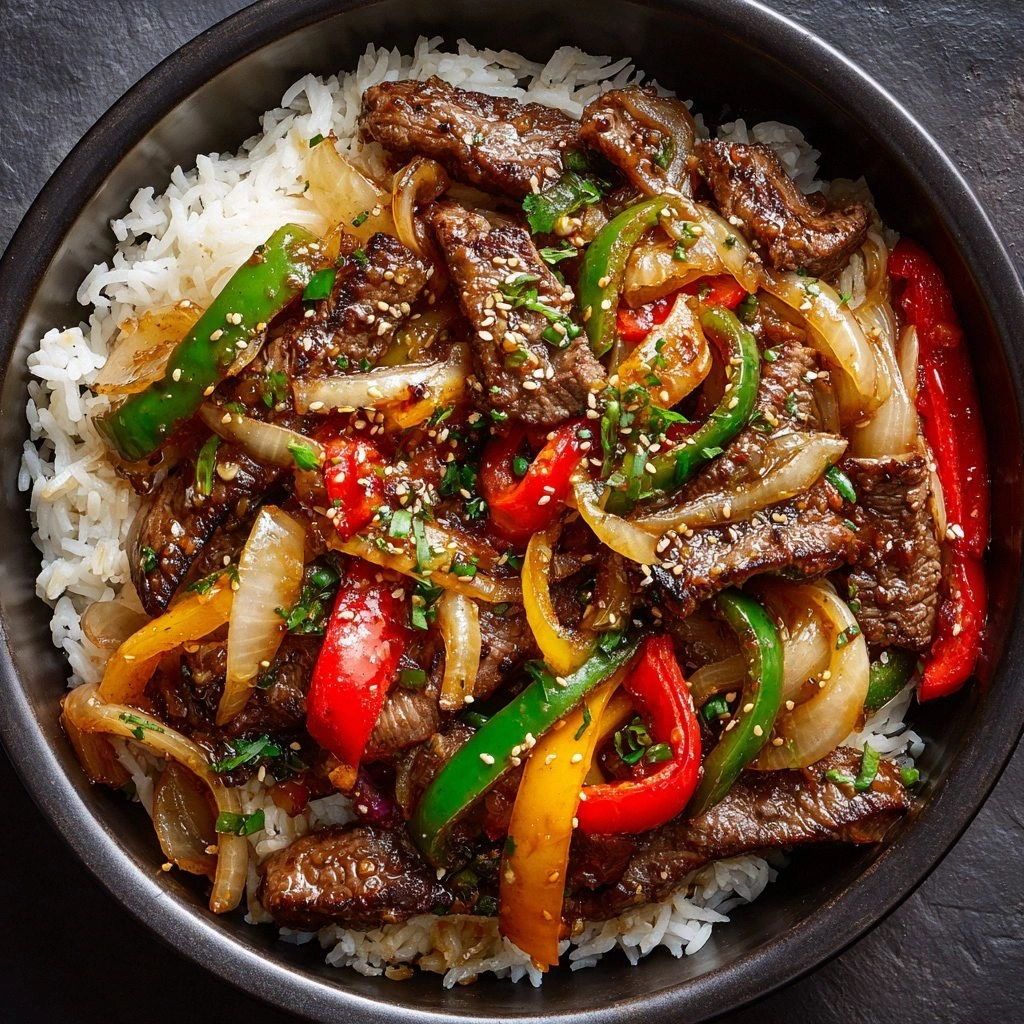
It was a Thursday night, the kind of night where you’re halfway through a Netflix binge, your fridge is a sad gray, and the only thing that can salvage the evening is a plate of sizzling, peppery goodness. I had just finished a long day, my hands were trembling from the weight of spreadsheets, and I thought, “If only I had a dish that could turn this chaos into a celebration.” That’s when I pulled the recipe for Sizzling Chinese Pepper Steak from an old family cookbook, and the kitchen became a stage for a culinary performance I’d never seen before. The moment the sizzling pan hit the stove, the air was filled with the sharp, almost electric scent of garlic and ginger dancing with the deep umami of soy and oyster sauce. The sound was a metallic hiss that sent goosebumps up my arms. The sight? A glossy, peppery strip of beef glistening like a jewel, surrounded by a rainbow of bell pepper and onion slices that crackled as they met the hot surface. The taste, oh, the taste—bold, savory, with a subtle kick that lingered on the tongue like a good memory. And the feel? The satisfying snap of the pepper when it was cooked just right, the tender chew of the steak, the buttery aroma of sesame oil. I knew instantly that this was not just another dinner; it was a statement, a promise that you can bring a restaurant-quality dish into your home without spending a fortune or a fortune of time.
I dare you to taste this and not go back for seconds. The moment you bite, the flavors explode: the sweet crunch of bell pepper, the savory depth of the sauce, and the subtle heat from the pepper flakes that playfully tease the palate. If you've ever struggled with a dish that feels like it’s missing something, this will be the fix you’ve been searching for. The secret? A quick, almost reckless stir-fry that lets the ingredients breathe and mingle in a way that no slow-cooked meal can replicate. Picture yourself pulling this out of the pan, the whole kitchen smelling incredible, the steam curling like a fragrant cloud. You’ll find that the sauce coats the steak like velvet, the pepper adds a bright, almost citrusy zing, and the onions provide a caramelized sweetness that balances everything. It’s a symphony of textures and tastes that you’ll want to play over and over.
What sets this version apart from the countless other “pepper steak” recipes you’ll find online is the meticulous balance of each element. From the choice of beef to the timing of the stir, every detail has been fine-tuned to bring out the best in each component. Most recipes get this completely wrong—using the wrong cut of meat, overcooking the vegetables, or drowning the dish in sauce. Here, the steak stays juicy, the peppers stay crisp, and the sauce is just thick enough to cling without overpowering. I’ll be honest—I ate half the batch before anyone else got a chance to try it, and that’s saying something. The result is hands down the best version you’ll ever make at home, and once you taste it, you’ll wonder how you ever settled for anything else.
So, if you’re ready for a culinary adventure that will have your taste buds dancing, let me walk you through every single step. By the end, you’ll wonder how you ever made it any other way. And trust me, the journey is just as thrilling as the destination. Let’s dive in.
What Makes This Version Stand Out
- Flavor: The sauce is a harmonious blend of soy, oyster, and hoisin that creates a layered umami profile, complemented by the bright heat of pepper flakes.
- Texture: The steak is seared to a perfect caramelized crust while remaining tender inside, and the bell pepper retains a satisfying crunch that snaps like thin ice.
- Speed: This dish comes together in under 30 minutes, making it ideal for busy weeknights without sacrificing quality.
- Visual Appeal: The vibrant colors of the peppers and onions contrast strikingly with the glossy, dark sauce, creating a plate that looks as good as it tastes.
- Ingredient Quality: Using high‑grade beef and fresh aromatics ensures that each bite delivers maximum flavor.
- Crowd‑Pleaser: Whether you’re feeding a family or hosting guests, this dish delivers an instant wow factor that keeps everyone coming back for seconds.
- Make‑Ahead Potential: The sauce can be prepared ahead of time and reheated with a splash of water to keep it silky and delicious.
- Versatility: The recipe’s core can be adapted with different proteins or vegetables, making it a flexible staple in your culinary repertoire.
Alright, let’s break down exactly what goes into this masterpiece…
Inside the Ingredient List
The Flavor Base
The heart of this dish lies in its sauce. Soy sauce, oyster sauce, and hoisin combine to create a robust umami backbone that lifts the beef and vegetables alike. The garlic and ginger infuse the oil with aromatic warmth, while the sesame oil adds a nutty depth that balances the sweetness of the hoisin. If you skip the sesame oil, the sauce will taste flat and lack that subtle, toasted finish. Swap the soy sauce with tamari if you’re gluten‑free, but keep the same salt content to avoid a salt crash.
The Texture Crew
Bell pepper and onion are the textural pillars. Bell pepper brings a crisp snap that cuts through the richness of the sauce, and onion offers a caramelized sweetness when sautéed just right. If you prefer a milder flavor, use a green bell pepper, but the red will give you a sweeter, more vibrant finish. For a crunchy twist, add a handful of sliced celery or snap peas right at the end of cooking.
The Unexpected Star
Black pepper and chili flakes are the unsung heroes that deliver that fiery edge. The pepper’s bite is sharp and aromatic, while the chili flakes provide a lingering heat that doesn’t overwhelm. If you’re sensitive to spice, reduce the chili flakes to a quarter teaspoon or omit them entirely. Conversely, for heat lovers, double the amount and you’ll have a dish that’s practically a fire‑starter.
The Final Flourish
A splash of water, a drizzle of sesame oil, and a sprinkle of scallions finish the dish with moisture, aroma, and a pop of color. The water helps the sauce thicken and coat the beef without becoming gloopy, while the scallions add a fresh, herbal brightness that cuts through the richness. If you’re short on time, you can skip the scallions, but the dish will feel a little less polished.
Everything’s prepped? Good. Let’s get into the real action…
The Method — Step by Step
- First, heat a large wok or skillet over high heat until it’s smoking. Add a splash of vegetable oil, then slide in the sliced beef. Let it sear without moving for 30 seconds so it develops a deep, caramelized crust. This is the moment of truth—if you stir too early, you’ll lose that beautiful sear.
- Once the beef is browned on one side, flip it and add the minced garlic and ginger. Stir quickly for about 10 seconds until the aromatics release their fragrance, then push the mixture to one side of the pan.
- Add the sliced bell pepper and onion to the empty space. Sauté for 2–3 minutes, stirring constantly, until the vegetables are bright and just starting to soften. The peppers should still have that satisfying snap.
- Pour in the soy sauce, oyster sauce, and hoisin sauce, then stir to coat all the ingredients. Let the mixture come to a gentle simmer; this allows the flavors to meld and the sauce to thicken slightly.
- In a small bowl, whisk together the cornstarch, flour, and water until smooth. This slurry will be the thickening agent that turns the sauce into a glossy glaze.
- Slowly pour the slurry into the pan while stirring vigorously. The sauce will begin to thicken almost immediately. Keep stirring until it’s glossy and coats the back of a spoon.
- Add the black pepper and chili flakes, then give everything one final stir. The pepper should be evenly distributed, and the chili flakes should give a subtle, lingering heat.
- Finish with a splash of sesame oil and a handful of sliced scallions. Toss everything together, ensuring the scallions are bright and fresh. Serve immediately over steamed rice or noodles.
That’s it — you did it. But hold on, I’ve got a few more tricks that will take this to another level…
Insider Tricks for Flawless Results
The Temperature Rule Nobody Follows
Many people cook this dish on medium heat, which results in a soggy texture. The trick is to use a scorching hot pan. Keep the heat at the highest setting you can manage. If the pan is too hot, the beef will burn; if it’s too cool, the sauce will become watery. A quick test: sprinkle a single drop of water onto the pan; if it sizzles and evaporates instantly, you’re at the right temperature.
Why Your Nose Knows Best
The aroma of the dish is a guide to its readiness. When the sauce is thick enough, it will release a sweet, caramelized scent. If you’re still waiting for that aroma, give it another minute. A strong, pleasant fragrance indicates that the sugars in the onions and peppers have caramelized just right.
The 5‑Minute Rest That Changes Everything
After cooking, let the steak rest for five minutes on a plate covered loosely with foil. This allows the juices to redistribute, keeping the meat tender and moist. A common mistake is cutting into the steak immediately, which releases the juices and leaves the meat dry.
The Secret Sauce Ratio
Use a 2:1 ratio of soy sauce to oyster sauce. This balance ensures a deep umami flavor without the dish becoming too salty. If you find the sauce too thick, add a tablespoon of water to thin it out.
The Quick Chill Trick
If you’re preparing the dish ahead of time, let it cool completely, then store it in an airtight container in the fridge for up to 48 hours. When reheating, add a splash of water and heat on medium until it’s steaming hot. The water prevents the sauce from drying out.
The Scallion Surprise
Add scallions in two stages: half at the end of cooking for a fresh, bright note, and the rest after serving for a more pronounced flavor. This technique ensures that the scallions don’t wilt completely and lose their crunch.
Creative Twists and Variations
This recipe is a playground. Here are some of my favorite ways to switch things up:
Spicy Kimchi Pepper Steak
Swap the bell pepper for kimchi and add a tablespoon of gochujang. The fermented tang of the kimchi pairs beautifully with the umami sauce, creating a dish that’s both spicy and savory.
Mushroom & Spinach Version
Replace the onions with sliced shiitake mushrooms and stir in a handful of fresh spinach at the end. The earthy mushrooms add depth, while the spinach adds a burst of green.
Pork Belly Pepper Steak
Use thin slices of pork belly instead of beef for a richer, fattier flavor. The pork’s fat renders into the sauce, creating a silky mouthfeel.
Vegetarian Tofu Delight
Cube firm tofu, sear it until golden, and then stir‑fry with the vegetables and sauce. The tofu absorbs the flavors, making it a satisfying plant‑based alternative.
Thai Basil Fusion
Add a handful of Thai basil leaves and a splash of fish sauce instead of soy. The basil’s peppery aroma gives the dish an unmistakable Thai twist.
Lemon Zest Kick
Grate a lemon zest into the sauce right before serving. The citrusy brightness cuts through the richness and adds a fresh note.
Storing and Bringing It Back to Life
Fridge Storage
Store the cooked dish in an airtight container in the refrigerator for up to 48 hours. The sauce will thicken slightly; add a tablespoon of water when reheating to restore its silky texture.
Freezer Friendly
Pack the steak and sauce separately in freezer bags. Freeze for up to 3 months. When ready to use, thaw overnight in the fridge, then reheat as described above.
Best Reheating Method
Reheat on medium heat, adding a splash of water or broth to keep the sauce from drying out. Stir frequently until steaming hot. The dish will taste as fresh as the day it was first cooked.