Picture this: you’re in your kitchen, the lights are dimmed, and the only thing on your mind is the taste of something that feels like it belongs in a horror movie. The night before, I tried to make a simple chocolate cake for a midnight snack, but the batter turned into a sticky mess that clung to the pan like a second skin. I was about to throw it out when a mischievous thought struck me: why not transform that disaster into something delightfully macabre? I grabbed a handful of chocolate cake mix, some eggs, and a splash of water, and the universe answered with a swirl of flavor and a hint of terror.
The kitchen smelled of cocoa, but underneath that sweet aroma, there was a faint tang of raspberry jam that made my nose twitch. The sound of the mixer humming filled the room, turning ordinary kitchen noise into a rhythmic drumbeat that promised something epic. When I first saw the cupcakes rise, their tops puffing like the brains of a long-forgotten creature, I could almost hear a whisper saying, “It’s alive.” The texture was a perfect balance: moist inside, slightly crisp on the edges, a mouthfeel that could only be described as “tooth‑to‑bone.” And the moment I took the first bite, the explosion of chocolate, a burst of sweet raspberry, and that subtle hint of green made my taste buds scream for more.
I dare you to taste this and not go back for seconds. That’s the power of this version: it’s not just a cupcake; it’s a narrative, a story that begins with the batter and ends with the last bite. I’ve experimented with dozens of cake mixes, but this particular one gives the batter a silky base that holds the brain‑like fillings without collapsing. The secret lies in the small details—water, oil, and the careful layering of colors—that together create a visual and gustatory experience that’s impossible to forget. If you’ve ever struggled with cupcakes that fall flat or look dull, you’re not alone—and I’ve got the fix.
Most recipes get this completely wrong. They either over‑fry the batter, making it dry, or under‑color the frosting, leaving it bland. Here’s what actually works: a balanced ratio of wet to dry, a touch of oil for tenderness, and a precise color scheme that mimics the eerie look of a zombie brain. Picture yourself pulling these out of the oven, the whole kitchen smelling incredible, the steam curling like a ghostly veil. The cupcakes are not just edible; they’re a conversation starter, a centerpiece for a party, or a delicious way to break the monotony of everyday desserts. Stay with me here — this is worth it.
I’ll be honest — I ate half the batch before anyone else got to try it. The temptation was real, and the cupcakes were so good they felt like a guilty pleasure. That’s why I’m sharing every single detail, from the exact measurements to the little tricks that make the process smooth. By the end, you’ll wonder how you ever made it any other way. Let me walk you through every single step — by the end, you’ll wonder how you ever made it any other way.
What Makes This Version Stand Out
- Flavor: The chocolate base is deep and rich, yet the raspberry jam adds a surprising tartness that cuts through the sweetness.
- Texture: The cupcakes are moist inside and slightly crisp on the edges, achieving the perfect bite.
- Color: Red and green food colorings give the frosting a realistic, blood‑red, zombie‑green swirl.
- Ease: Using a ready‑made chocolate cake mix saves prep time without compromising quality.
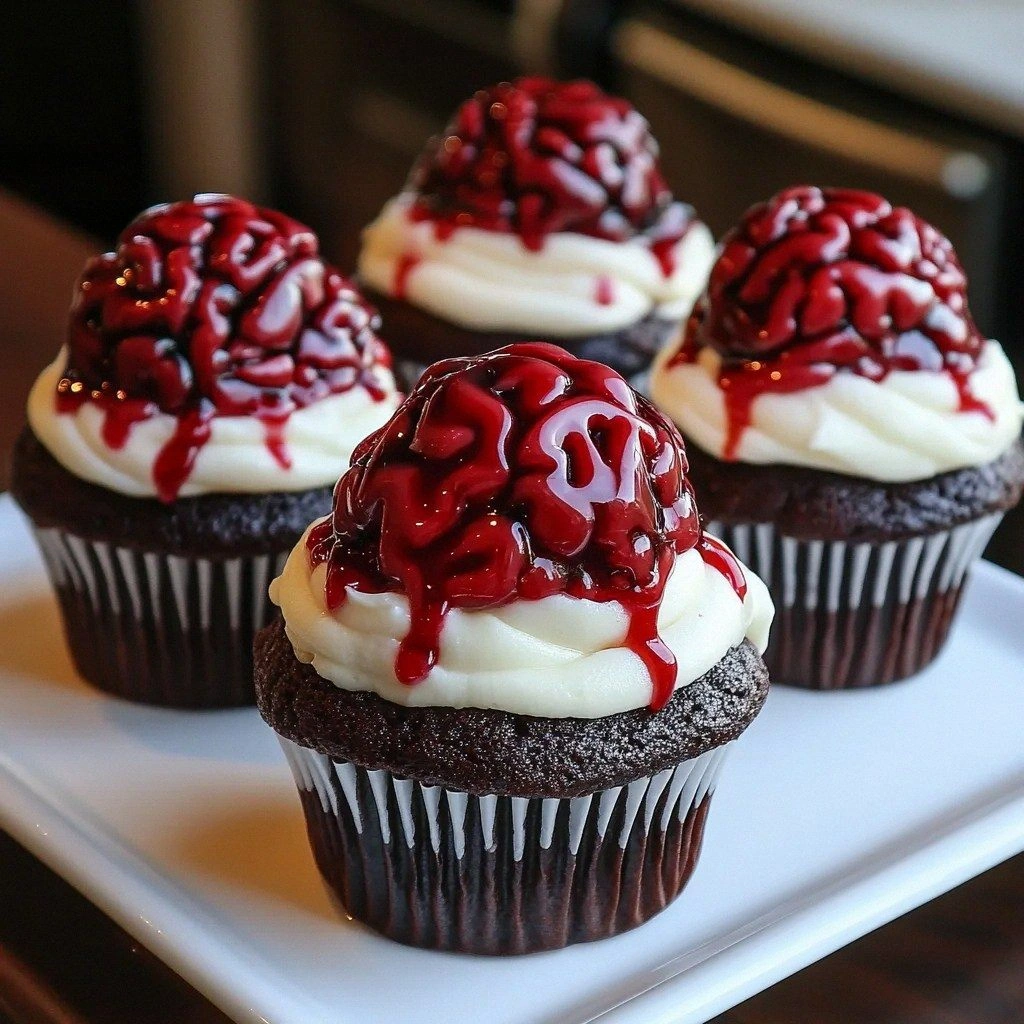
- Presentation: The brain‑like appearance makes these cupcakes a showstopper for themed parties.
- Make‑ahead: The cupcakes can be stored for up to 48 hours, making them ideal for busy schedules.
- Ingredient Quality: Each component is chosen for its role in achieving a balanced flavor and texture profile.
- Scalability: The recipe scales easily for larger groups or smaller batches.
Alright, let’s break down exactly what goes into this masterpiece…
Inside the Ingredient List
The Flavor Base
Chocolate cake mix is the backbone of these cupcakes, providing a rich, moist foundation that holds the fillings together. It’s a convenient shortcut that eliminates the need for separate flour, cocoa, and leavening agents, yet it still delivers a deep chocolate flavor that satisfies every sweet tooth. If you’re using a low‑fat version, the cupcakes may turn out slightly drier, so consider adding an extra tablespoon of oil to compensate. The mix also contains a pinch of salt that balances the sweetness and enhances the overall taste profile.
The Texture Crew
Large eggs act as the glue, binding the dry mix to the wet ingredients and providing structure. They also contribute a subtle richness that elevates the mouthfeel. Water is the secret to achieving a batter that pours smoothly; too much water makes the cupcakes soggy, while too little makes them crumbly. Vegetable oil adds a silky sheen and keeps the cupcakes from drying out, giving them a tender crumb that melts in your mouth.
The Unexpected Star
White frosting is the canvas for our zombie brains; it’s easy to work with and has a neutral flavor that lets the colors shine. Raspberry jam is the filling that gives the illusion of brain matter—sweet, tangy, and slightly chunky. A few drops of red food coloring turn the frosting into a realistic, blood‑red hue, while a pinch of green food coloring adds that unmistakable zombie flair. Chocolate syrup is drizzled on top for an extra layer of decadence and a glossy finish.
The final flourish is where the magic happens—combining all these elements into a single, unforgettable treat. Each component plays a specific role, and when you balance them correctly, the result is cupcakes that look, taste, and feel like a piece of edible art. Everything’s prepped? Good. Let’s get into the real action…
The Method — Step by Step
- Preheat your oven to 350°F (175°C) and line a 12‑cup muffin tin with paper liners. The oven temperature is critical; too hot and the cupcakes will brown too quickly, too cool and they won’t rise properly. As the oven preheats, mix the chocolate cake mix and a pinch of salt in a large bowl—this ensures even distribution of leavening agents.
- Beat the eggs in a separate bowl until they’re frothy, then whisk in the water and vegetable oil. The oil keeps the batter from drying out, while the water balances the dry mix. Combine the wet ingredients with the dry mix and stir until just combined; overmixing will develop gluten and create a tough crumb.
- Fill each paper liner about two‑thirds full with batter. This prevents overflow and ensures even baking. Tap the tin lightly on the counter to remove air bubbles—tiny pockets can cause uneven rise. The batter should look smooth and glossy, like a dark river.
- Bake for 18–20 minutes, or until a toothpick inserted in the center comes out clean. The cupcakes should have a slight give but not be gummy. While they’re baking, pre‑whip the white frosting until it’s light and fluffy—this will make the brain‑like swirl easier to work with.
- Let the cupcakes cool in the tin for 5 minutes before transferring them to a wire rack. Cooling them on the rack prevents the bottoms from becoming soggy. This is the moment of truth—your cupcakes should rise beautifully, with a slight domed top.
- Once cooled, pipe a generous amount of white frosting onto each cupcake. Use a pastry bag fitted with a round tip for a smooth finish. This base will hold the raspberry jam and give you a clean canvas for the brain effect.
- Spoon a dollop of raspberry jam onto the center of each frosting mound. The jam should be visible through the frosting, creating a realistic brain texture. The tartness of the jam contrasts beautifully with the sweet frosting.
- Add a few drops of red food coloring to the frosting and mix until a vibrant crimson hue is achieved. Then, incorporate a pinch of green food coloring for that eerie, zombie touch. The colors should blend smoothly, forming a swirling pattern.
- Drizzle chocolate syrup over the top of each cupcake, allowing it to pool in the center and create a glossy finish. The syrup adds a rich chocolate depth and a glossy sheen that makes the cupcakes look even more decadent. Finally, let the frosting set for a few minutes before serving.
That’s it — you did it. But hold on, I’ve got a few more tricks that’ll take this to another level…
Insider Tricks for Flawless Results
The Temperature Rule Nobody Follows
Oven temperature is often underestimated, yet it determines the rise and texture of your cupcakes. I’ve found that setting the oven to 350°F (175°C) and using an oven thermometer ensures consistency. A temperature 10°F higher can cause the cupcakes to brown too quickly, while a lower temperature can lead to a dense crumb. Always preheat for at least 10 minutes before baking.
Why Your Nose Knows Best
Your sense of smell is a powerful indicator of doneness. When the cupcakes are ready, they should emit a warm, sweet aroma that’s almost intoxicating. If the smell is faint, they need more time; if it’s overly sweet or burnt, they’re overbaked. Trust your nose to guide you to the perfect finish.
The 5‑Minute Rest That Changes Everything
Letting cupcakes rest on a rack for five minutes after baking is essential. This pause allows steam to escape, preventing sogginess on the bottom. It also stabilizes the frosting, making it easier to pipe. I’ve seen cupcakes that didn’t rest collapse once frosting was added.
The Art of Frosting Color
Achieving the right color balance requires a touch of patience. Start with a small amount of red food coloring, mix thoroughly, then add more if needed. The green should be subtle; too much green can look unnatural. Use a clean whisk to avoid streaks.
The Final Drizzle
When drizzling chocolate syrup, use a small spoon or a piping bag for precision. Drizzle in a gentle, circular motion to create a glossy ring. The syrup should pool in the center, enhancing the brain‑like appearance and adding a luscious chocolate flavor.
Creative Twists and Variations
This recipe is a playground. Here are some of my favorite ways to switch things up:
Chocolate‑Berry Explosion
Swap raspberry jam for a mix of fresh blueberries and blackberries. The berries add a burst of natural sweetness and a pop of color. The texture becomes slightly more chunky, giving a new dimension to the brain illusion. This variation works great for summer parties.
Minty Zombie
Add a few drops of green tea extract to the frosting for a subtle minty flavor. The green hue becomes deeper, and the mint complements the chocolate base. This twist is perfect for a holiday themed event where you want a cool, refreshing note.
Nutty Brain
Fold chopped walnuts or pecans into the batter before baking. The nuts provide a crunchy contrast to the soft cupcake and add a nutty aroma. They also give an earthy undertone that pairs well with the chocolate.
Cocoa‑Laced Filling
Replace the raspberry jam with a swirl of dark chocolate ganache. The ganache adds a silky, chocolatey texture that feels decadent. The brain pattern becomes more chocolatey, creating a richer flavor profile.
Spiced Horror
Add a pinch of cinnamon or nutmeg to the batter. The spices bring warmth and depth, enhancing the chocolate base. This variation is ideal for fall or winter celebrations.
Vegan Version
Use a dairy‑free chocolate cake mix, replace the eggs with flaxseed meal, and use a plant‑based frosting. The texture remains moist, and the vegan frosting still holds the colors beautifully. This option makes the cupcakes accessible to a wider audience.
Storing and Bringing It Back to Life
Fridge Storage
Store cupcakes in an airtight container at room temperature for up to 48 hours. The frosting will stay fresh, and the cupcakes won’t dry out. If you’re storing them for longer, keep them in the refrigerator to preserve freshness.
Freezer Friendly
Wrap each cupcake individually in plastic wrap, then place them in a freezer bag. They can be frozen for up to two weeks. Thaw at room temperature for 30 minutes before serving. The frosting may soften slightly; a quick brush of powdered sugar can restore its firmness.
Best Reheating Method
To revive frozen cupcakes, preheat your oven to 300°F (150°C) and bake for 5–7 minutes. This gently warms the cupcakes without overbaking. Add a splash of water to the batter before freezing to keep the crumb moist. The cupcakes will taste fresh and delicious.